

 11:01 am - May 7, 2026
When the Nikkei 225 ticked above 60,000 for the first time in its history on Thursday morning in Tokyo, traders on the Tokyo Stock Exchange floor momentarily stopped to watch the number flicker into place. Then it slipped. The index gave back 1.5% by the closing bell, settling at 58,707.60. This type of reversal is unsettling in the gut but feels mechanical on the screen. For a short while, Asia appeared to accept the record-breaking rally that Wall Street had given it the previous evening.
Then everyone was reminded of their true position by oil prices. In early Thursday trading, Brent crude was up another 1.5%, moving closer to $103 per barrel. The same barrel cost roughly seventy dollars just two months prior, prior to the start of the Iran war in late February. Such a jump is short-lived as an abstraction. Eventually, it appears in Indian transport contracts, Korean factory invoices, and Singapore Airlines’ jet fuel prices.
| Date of trading session | Thursday, April 23, 2026 |
| Region covered | Asia-Pacific equities (Japan, South Korea, Hong Kong, China, Australia, Taiwan, India) |
| Nikkei 225 intraday high | 60,013.98 — first time above 60,000 |
| Nikkei 225 close | 58,707.60, down 1.5% |
| Brent crude (early Thursday) | $103.39/barrel, up 1.5% from the prior close |
| WTI crude | $94.66/barrel, up 1.8% |
| Pre-war Brent level | Around $70/barrel before late February 2026 |
| Strait of Hormuz importance | Roughly 20% of global oil consumption normally transits |
| War duration at session | Eighth week of US–Iran conflict |
| S&P 500 prior close | Record 7,137.90, up 1% |
| Notable mover (NYSE) | GE Vernova +13.7% on strong AI-data-center orders |
| Currency snapshot | USD/JPY at 159.53; EUR/USD at $1.1696 |
Before easing back to 6,414.57, South Korea’s Kospi momentarily broke the previous record of 6,500. With first-quarter GDP growth of 1.7%, higher than anticipated and boosted once more by AI-related semiconductor demand, the nation’s chip exporters had cause for celebration. Taiwan’s Taiex fell 1.6%, Hong Kong’s Hang Seng fell 1.1%, Shanghai fell 0.8%, and India’s Sensex fell 0.6%. The ASX 200 in Australia fell 0.8%. Strangely consistent, the pattern was a slight bounce followed by a subdued fade.
It makes sense why investors were inclined to think the worst was behind them. A ceasefire had been extended by Trump. The S&P 500 on Wall Street had broken through 7,100 for the first time. Strong orders for data center turbines caused GE Vernova’s stock to rise by nearly 14%. This kind of corporate news causes you to momentarily forget that a war is raging across the Persian Gulf. It seems as though investors are running two ledgers in their minds and only checking the worse one when necessary, as if the AI trade has become emotionally detached from geopolitics.
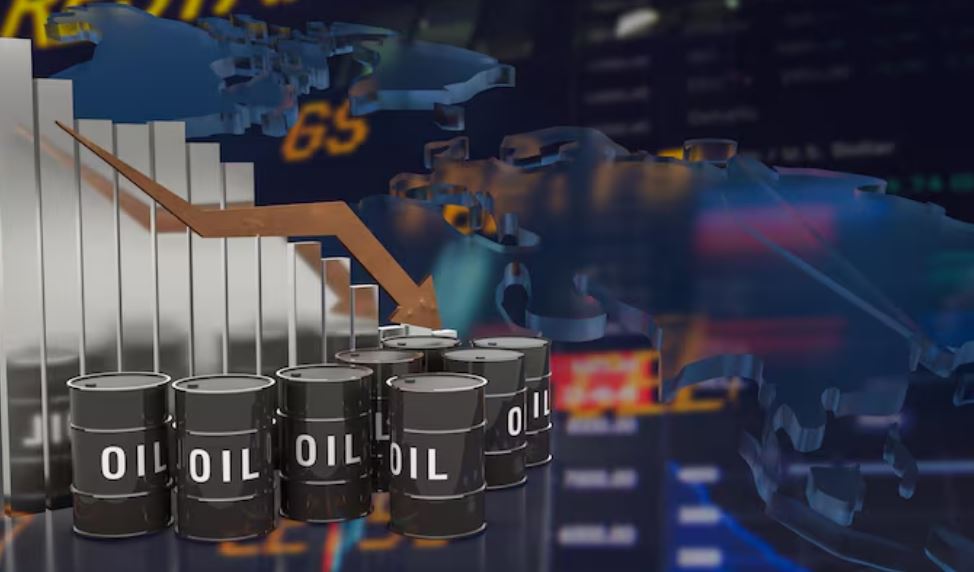
However, two of the ships were taken by the Revolutionary Guard after Iran opened fire on three ships in the Strait of Hormuz on Wednesday. The majority of maritime traffic through a waterway that typically transports about one-fifth of the world’s oil is still stopped. In a note on Thursday morning, ING strategists Warren Patterson and Ewa Manthey made it clear that the market will continue to reprice supply shocks as expectations for a deal wane. It’s still unclear if peace negotiations will take place at all or if they will resume this month or next.
As this develops, the simple explanation is that Asia is imitating Wall Street out of habit. The more difficult and truthful one is that Asian markets are simultaneously pricing two futures that are incompatible. One where Japanese tech exporters and Korean and Taiwanese chipmakers continue to benefit from AI capital expenditures. Another where $100 oil persists long enough to strain already tight budgets due to inflation. Volatility persists if both continue to run concurrently. Someone will be gravely mistaken very quickly if one breaks. We don’t know which way it tips based on Thursday’s numbers. They simply inform us that even when the room is smiling, it is still tense.