

 11:01 am - May 7, 2026
The American Stock Exchange has a certain stubbornness. It has undergone so many renaming, swallowing, restructuring, and rebranding that even professionals who track markets occasionally forget what to call it. The current label is NYSE American. NYSE MKT prior to that. NYSE Amex Equities prior to that. Just AMEX prior to that. And long before any of those, it was just a group of men on Broad Street’s curbside yelling at one another and waving their arms at brokerages whose windows opened like opera boxes above them.
I can’t stop thinking about that earlier version. The curb market, which was fenced off by police on a section of asphalt between Exchange Place and Beaver Street, was described by journalist Edwin C. Hill in 1920 as a roaring, swirling whirlpool. Purchasers yelled. The clerks yelled down. In the open, orders were filled. The sky was the only roof. It sounds disorganized, almost theatrical, and it was. However, it was successful. It was successful enough that by 1921 the brokers had finally relocated indoors, into a Starrett and Van Vleck-designed building on Greenwich Street, and the curb exchange was formally transformed into something more respectable.
| Information | Details |
|---|---|
| Name | NYSE American (formerly American Stock Exchange / AMEX) |
| Type | Stock Exchange |
| Founded | 1908 (as New York Curb Market Agency) |
| Headquarters | New York City, New York, United States |
| Owner | Intercontinental Exchange |
| Currency | United States Dollar (USD) |
| Former Names | New York Curb Exchange, AMEX, NYSE Alternext U.S., NYSE Amex Equities, NYSE MKT |
| Acquired By NYSE Euronext | October 1, 2008 |
| Trading Specialty | Small-cap and mid-cap equities, ETFs |
| Notable Innovation | First ETF (SPDR, 1993) |
| Trading Mechanism | Electronic with 350-microsecond “speed bump” |
For many years, the American Stock Exchange—which was eventually renamed in 1953—was regarded as the New York Stock Exchange’s smaller sibling. The curb crowd was despised by the Big Board, as the NYSE was called. In 1910, the Times reported that the term “cats and dogs” was used to disparage the types of stocks that were traded there. For years, that snobbery persisted. Nevertheless, by the end of the 20th century, AMEX had quietly emerged as the birthplace of some of the most significant financial products of the contemporary era.
Of course, the ETF is the main one. The Standard and Poor’s Depositary Receipts, also known as SPDRs or Spiders, were introduced in January 1993 by Nathan Most and Steven Bloom under the direction of Ivers Riley. Looking back, it seems almost too clever that the exchange that was once ridiculed for trading strange securities went on to create the framework that currently governs retail investing. There’s a sense that the tenacious curb spirit—willing to try things the larger exchange wouldn’t—never truly vanished.
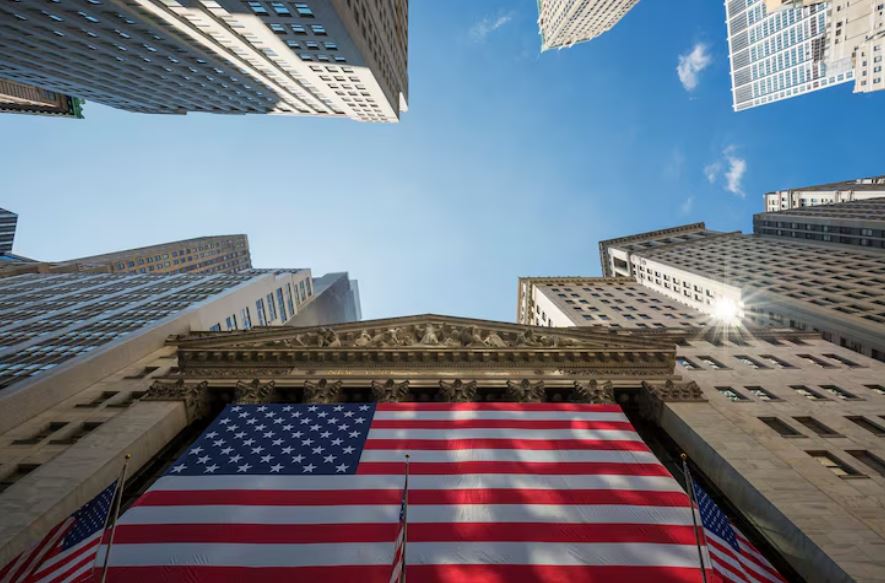
Everything was meant to be updated with the 1998 merger with the Nasdaq’s parent organization, the National Association of Securities Dealers. It didn’t. The agreement fell through. In the end, NASD sold AMEX to GTCR Golder Rauner, a private equity firm, in 2003. The deal was finalized in 2005. NYSE Euronext acquired it three years later. Next, NYSE Euronext was acquired by Intercontinental Exchange. Ownership is constantly shifting. In some way, the exchange itself continues.
Small-cap firms that aren’t quite ready for the main NYSE board now primarily use NYSE American as a venue. It makes use of a 350-microsecond speed bump, which was purposefully slowed down following the SEC’s 2016 approval of IEX. The goal is to lessen high-frequency traders’ advantage. Traders continue to debate whether that operates as cleanly as promised. Chip stocks like Intel and AMD drove everything higher yesterday, with the S and P 500 closing at 7,259 and the Nasdaq setting yet another record. Those headlines are not produced by NYSE American. These days, it hardly ever does.
However, there is still something there if you pass the old building on Trinity Place. Not exactly nostalgia. It’s more like a reminder that, in the end, markets are made of people, even if those people have been replaced by servers working in cool rooms all over New Jersey. The curb has vanished. The yelling has stopped. Despite the odds, the exchange is not.