

 8:27 am - April 18, 2026
When you read a scientific paper and discover the authors are no longer hedging, a certain kind of dread descends. Despite their seriousness, earlier climate reports consistently left a door open, a corridor of possibility, a scenario in which humanity came together just in time.
Although it doesn’t completely close that door, the most recent report from the Intergovernmental Panel on Climate Change is the first to give you a sense of the draft.
| Category | Details |
|---|---|
| Organization Name | Intergovernmental Panel on Climate Change (IPCC) |
| Established | 1988 — jointly founded by the United Nations Environment Programme and the World Meteorological Organization |
| Headquarters | Geneva, Switzerland |
| Current Report | Sixth Assessment Report (AR6) — Working Group I on Physical Science Basis |
| Key Finding | Global temperatures have already risen nearly 1.1°C above pre-industrial levels (1850–1900 baseline) |
| Critical Threshold | 1.5°C warming could be reached within the next two decades — a full decade earlier than previous projections |
| Report Release | 2021 (AR6 Working Group I); synthesized with subsequent Working Groups through 2023 |
| Member Countries | 195 countries participate in the IPCC process |
| Key Warning | Some climate changes already underway are irreversible over hundreds to thousands of years |
| Core Message | Every fraction of a degree of warming avoided matters — immediate, decisive emissions cuts are non-negotiable |
In the way that surprises you, the results aren’t completely novel. For decades, scientists have been measuring the loss of ice sheets, monitoring warming trends, and forecasting future events. This time, it’s different because of the accumulation—the overwhelming amount of data that has transformed some aspects of “projected risk” into “observed reality.” Previously mentioned in future-tense paragraphs, droughts are now occurring.
News feeds are overflowing with events that were previously deemed statistically unlikely. Even for those who have been paying attention, the gap between the present and the future has collapsed in a way that is truly unsettling.
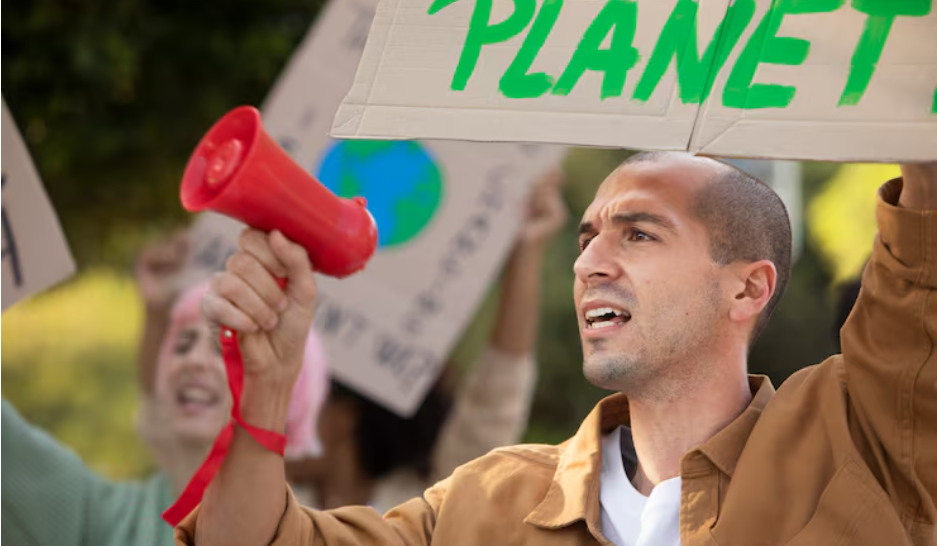
The planet has already warmed by almost 1.1 degrees Celsius above the pre-industrial baseline due to greenhouse gas emissions caused by humans, according to the IPCC’s Working Group I report. To the uninitiated, that figure might seem insignificant—after all, one degree can make the difference between a warm and slightly warmer afternoon.
However, that number is huge on a planetary scale. It is shifting the limits of where species can survive and flourish, changing ocean chemistry, and reshaping weather systems. Reading through the complex technical jargon gives the impression that Earth’s systems are being pushed in ways that have never been seen in all of recorded human civilization.
The updated timeline is what makes this report feel more concerning than its predecessors. Scientists now predict that global warming could reach 1.5 degrees Celsius in the next 20 years, which is about ten years earlier than previous IPCC estimates.


This threshold is important because it indicates the point at which some risks—such as more frequent extreme weather events, extensive coral reef die-offs, and disruptions to food and water systems that impact hundreds of millions of people—become significantly more serious. Though it’s not quite a cliff edge, the distinction feels academic because it’s so close.
When the report was released, Helen Mountford of the World Resources Institute put it simply: “This should shock you into action if it hasn’t already.” It’s the kind of statement that could easily be interpreted as hyperbole, but the report provides hard-to-disregard data to support it.
Certain changes, like longer heat waves, rising seas, and faster ice melt, are occurring more quickly than scientists had previously estimated. Sitting with that is worthwhile. The models were conservative. They are being outpaced by reality.
Ordinary life goes on pretty much as usual outside the research facilities and conference rooms where this data is generated. People run air conditioners during increasingly harsh summers, drive to work, and board flights.
The odd discrepancy between the scope of what science is describing and the rate at which behavior and policy are truly changing is difficult to ignore. Countries have pledged. A few have advanced. However, the IPCC report’s calculations still don’t add up to staying within safe warming limits.
The careful optimism feels earned rather than performative, and the report takes care not to discourage hope. The scientists write that there is still a limited way to keep global warming to 1.5 degrees by the end of this century.
But this decade calls for swift, drastic action: drastically reducing emissions, achieving net-zero greenhouse gas emissions by the middle of the century, and reorganizing the production and consumption of energy. By design, the IPCC does not address the question of whether that is politically feasible. The terrain is the only thing it maps.
Whether this report will influence governments more than others is still up in the air. Urgent findings, alarming declarations, promises made at international summits, and the gradual loss of momentum when leaders return home to deal with more pressing political pressures are all part of a grim pattern.
However, there is something different about this report’s specificity. Once used to soften these conclusions, terms like “likely,” “probable,” and “possible” have been replaced by stronger language. A potential future is no longer being projected by science. It’s recording a developing one.
As this develops, a question that permeates all the data and policy discussions is: at what point does the evidence become unreasonable? The most recent report from the IPCC might be the closest thing to a solution to date.