

 5:13 pm - April 8, 2026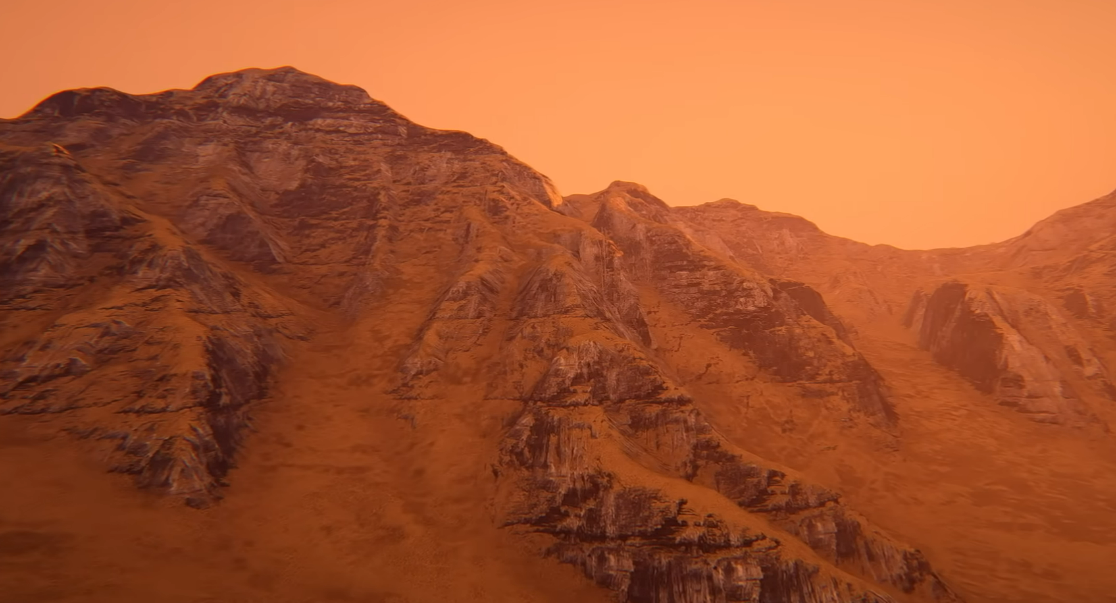
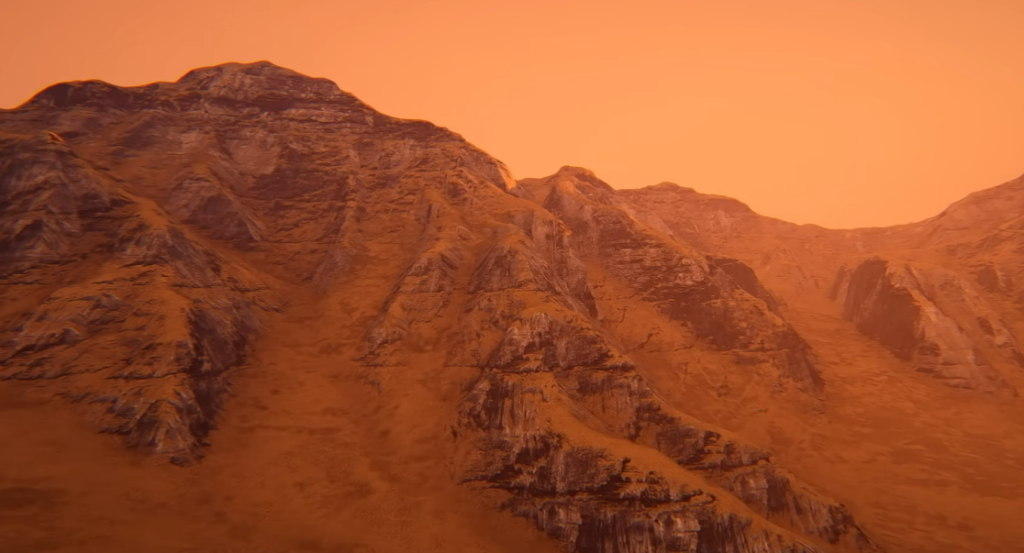
Mars has traditionally presented a terrain that seems barren, cold, and perpetually deserted, exuding a subdued sense of mystery. Its dusty plains go on forever, interrupted by valleys and channels that resemble the dry riverbeds found in Earth’s deserts. For many years, the structures served as mute evidence that something strong had once flowed there, sculpting the terrain with incredible tenacity before vanishing.
In the last ten years, Mars researchers have diligently examined rock structures and mineral deposits that clearly point to a wetter past. Although such hints, which were preserved in stone, were especially helpful in directing investigations, they were never able to provide a complete explanation for the disappearance of the massive amount of water. The question persisted obstinately, spurring more inquiry and making scientists pay closer attention to the planet itself.
Researchers started discovering something quite powerful in altering their understanding by putting NASA’s InSight lander into orbit and capturing seismic waves. At certain depths, seismic waves moving through Mars exhibited distinct behaviors, slowing down in ways that were remarkably obvious markers of subterranean liquid water. Advanced models were used to evaluate these results, which showed a huge reservoir of water trapped inside broken rock that never escaped but instead migrated inside.
| Category | Details |
|---|---|
| Discovery | Massive underground liquid water reservoir |
| Location | Beneath Mars’s crust, approximately 5 to 20 kilometers deep |
| Evidence Source | Seismic data from NASA’s InSight lander |
| Estimated Volume | Enough water to cover Mars with a global ocean |
| Scientific Importance | Potential habitat for microbial life |
| Geological Explanation | Water trapped in porous rock layers |
| Timeline | Water likely moved underground billions of years ago |
| Reference | NASA InSight Mission / Proceedings of the National Academy of Sciences |
The significance of this subterranean reservoir seems to be extremely multifaceted, providing answers to puzzles that have plagued scientists for generations while also creating completely new opportunities. Mars may still have one of its most valuable resources, as evidenced by the projected amount of water in these deep strata that might cover the planet in a worldwide ocean. Such a finding, made possible by extremely effective seismic analysis, challenges long-held beliefs about the planet’s evolution.
The discovery not only surprised planetary scientists, but it also significantly enhanced their capacity to reconstruct the previous climate of Mars. It now seems sense to associate surface features like canyon systems and dried deltas with the theory that water withdrew underground instead of entirely disappearing. Researchers created a more comprehensive account by combining surface and deep data, combining disparate pieces of knowledge to create a logical planetary history.
Hearing this revelation now brings back memories of a late-night lecture I went to years ago, when a geophysicist said that Mars was a world with stories hidden beneath its stillness.
In the context of life, the discovery of liquid water located far below the surface is especially novel. On Earth, bacteria that depend on chemical energy and survive without sunlight flourish in subterranean habitats that were formerly thought to be entirely hostile. These instances offer strikingly compelling evidence that life adapts in ways that frequently go beyond predictions, giving scientists new hope for Mars.


Researchers came to the conclusion that the Martian reservoir may endure for a very long time by examining the temperature and pressure conditions below earth. The water’s depth prevents it from freezing solid, while the geothermal heat that rises from below keeps it liquid. Despite the severe weather above, this natural equilibrium produces an atmosphere that feels remarkably resilient.
This finding is especially helpful for further research because it opens up possibilities that go much beyond just scientific interest. Long-term presence would be far more feasible if underground water could sustain human missions by supplying drinking water, creating oxygen, and even producing fuel. Future explorers could function more independently and depend less on expensive supply voyages from Earth by utilizing local resources.
However, there are still significant engineering obstacles to overcome in order to reach the reservoir. The depth is more than what can currently be drilled on Earth, necessitating technology advancements that scientists are just starting to envision. Even while these challenges are significant, they are not deterrents because human ingenuity frequently develops quickly when spurred by obvious opportunities, as history has demonstrated.
Mars itself has grown more alluring as a travel destination, drawing interest in both its surface and its interior. The subterranean reservoir is a secret chapter that will be slowly explored once technology advances enough to do so. Humanity gets closer to comprehending its neighboring planet with every new finding that is meticulously recorded and examined.
Mars, a location where water once existed but vanished forever, was for decades a symbol of loss. That view has now significantly improved, giving way to a more optimistic interpretation that advocates preservation rather than extinction. The world just put its most precious resource out of sight; it didn’t lose everything.