

 12:22 pm - March 27, 2026
I can still picture myself standing close to Norris Geyser Basin, the steam flowing up from the earth like old breath and the air heavy with the tang of sulfur. A ranger nodded subtly toward the valley where the ground had been rising silently for months, unseen and unsaid. On the inside, what appeared to be tranquil was anything but.
Geologists have been monitoring a consistent upward trend over Yellowstone for almost 19 miles since the middle of 2025. Although the ground beneath the park has moved before, this specific occurrence has raised new concerns, some of which are based in reality and some of which have been fueled by internet hysteria. On websites overrun with exaggerated assertions and unreliable phone footage, Yellowstone is trending once more.
USGS experts maintain that the situation is steady. Every tremor and pulse is precisely tracked by their monitoring instruments, which are incredibly sensitive and effective. For a landscape sculpted by steam and pressure, they characterize the activity as regular. Still, it’s hard to avoid wondering what exactly qualifies as normal when you find out that the park recorded more than 200 little earthquakes in a single month.
The concept of a catastrophic “supervolcano” eruption has drawn public attention, but we’ve ignored what’s actually more dangerous: hydrothermal explosions. These violently rapid, unpredictable phenomena are caused by boiling subterranean water rather than magma. Geyser basins have been instantly reshaped, rocks have been flung, and new craters have occasionally been torn wide.
| Item | Details |
|---|---|
| Location | Yellowstone National Park, United States |
| Concern | Rising ground deformation and earthquake swarms |
| Key Event | 19-mile-wide ground uplift (Norris Uplift Anomaly) since July 2025 |
| Seismic Activity | Over 200 minor earthquakes in late 2025 |
| Expert Assessment | USGS maintains alert level at “normal” |
| Main Risk | Hydrothermal explosions, not volcanic eruption |
| Public Reaction | Heightened concern on social media; some viral misinformation |
| Expert Institutions | Yellowstone Volcano Observatory, U.S. Geological Survey |
| Reference | https://www.usgs.gov/volcanoes/yellowstone |
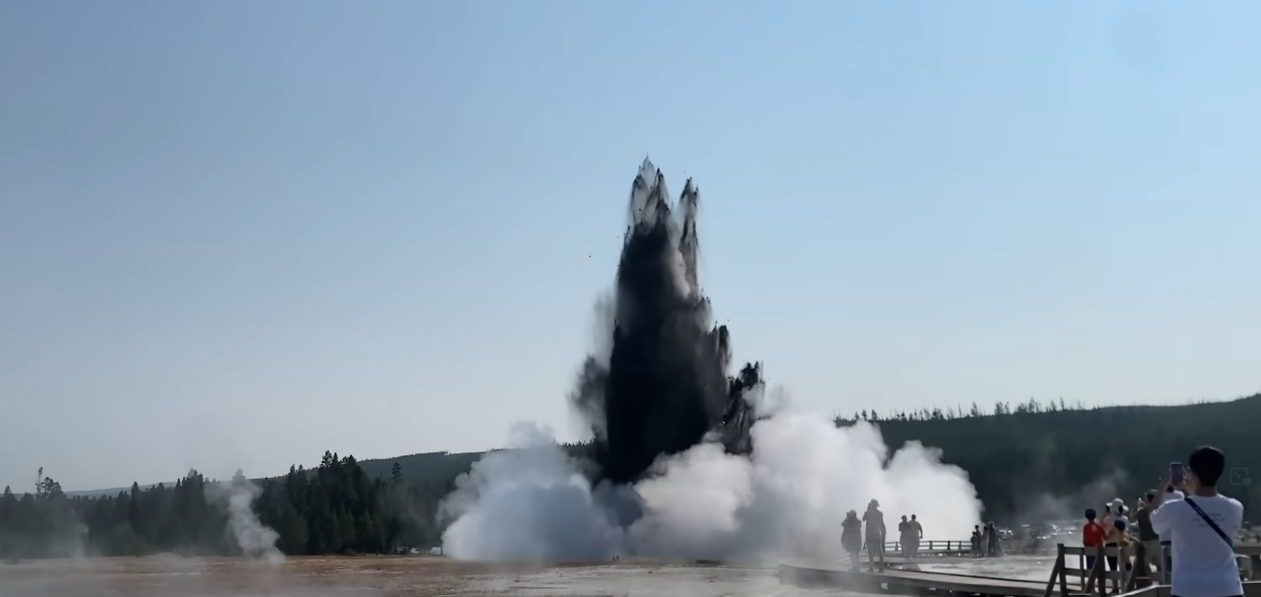
A hydrothermal explosion unexpectedly shook Biscuit Basin in July 2024. Trails were ripped apart, debris flew into the air, and visitors had to leave. Even though there were no injuries, the lesson was very clear: steam can be even more harmful than fire. Hydrothermal events frequently offer no time for escape and are silent until they burst.
Even more fascinating is what is beneath Yellowstone Lake. Researchers have discovered a complex maze of sealed domes, cratered lakebeds, and active vents using thermal imaging and sonar mapping. Recently, massive mineral deposits have sealed off some domes, forming geological pressure cookers that could violently explode if disturbed.


Decades of careful study have led to these conclusions, which imply that the lakebed might be more dynamic than previously thought. However, the dominant public narrative frequently ignores this intricacy in favor of more dramatic but improbable situations. It’s difficult to overlook the irony.
I’ve talked to residents who live close to the park’s edge, and one thing keeps coming up: trust, but double check. Although they admire the scientists keeping an eye on the region, they are concerned that public message tends too much in the direction of reassuring. “Normal for Yellowstone” seems reassuring—until you learn that it involves frequent geyser outbursts, continuous ground movement, and unexpected explosions.
Some geologists are keeping a close eye on this new phase, particularly those who research hydrothermal fields. Underwater instruments are picking up on minute acoustic and temperature variations. The teams are now quite proficient at deciphering anomalous activity thanks to the integration of AI-driven monitoring systems. They also stress that hydrothermal systems don’t always make their presence known in advance.
In the meantime, social media has evolved into a magnifying glass and a megaphone. Taken completely out of context, viral footage of bison galloping across broad plains has been exploited to imply coming disaster. Yellowstone is active, but not erupting, according to research. The real dangers are less dramatic and more subtle.
Researchers intend to drastically lower future mortality from unplanned explosions by concentrating their efforts and resources on hydrothermal modeling. This method, which combines geophysics with real-time data analysis, is especially novel. Thanks to more recent satellite technologies and cloud-based artificial intelligence, this integration is surprisingly inexpensive and could eventually offer advanced warning of deadly steam rather than lava.
The problem is made even more difficult by the park’s cultural value. Yellowstone is a symbol of natural wonder, beauty, and perseverance. However, beneath that idyllic exterior is a restless engine. an overheated setup. The interplay of gas, water, and shattered rock is extraordinarily intricate.
Scientists are defending that image, not destroying it, by embracing transparency. It is the right of visitors to know what they are walking on. Additionally, from an engineering standpoint, being open and honest about the hazards facilitates the preparation of infrastructure—such as signs, evacuation procedures, and trail design—in a proactive rather than reactive manner.
The uplift may persist or it may flatten in the upcoming months. The seismic activity may subside. Alternatively, they may re-concentrate close to a hydrothermal dome. In any case, the objective is to maintain public interest without resorting to exaggeration, not to incite panic.
Mythology is not necessary for Yellowstone’s grandeur. Its true story of moving ground, boiling water, and invisible power is compelling enough. And it needs to be properly understood and told when its next chapter comes, as it undoubtedly will.