

 8:12 am - April 1, 2026
This past November, IBM quietly but steadily shifted the tone from speculation to practicality as it unveiled its newest quantum machines. It wasn’t just another dazzling lab demonstration or roadmap update. It made it abundantly evident that we are getting closer to developing quantum systems that are designed to function—at scale, in real-world circumstances, and with real-world effect.
Featuring 218 next-generation adjustable couplers and 120 highly linked qubits, the IBM Quantum Nighthawk processor is especially unique. Complex processes that can now reach the realm of 5,000 two-qubit gates are made possible by these couplers, which let each qubit to communicate with four of its neighbors in a grid-like arrangement. IBM wants to treble that figure by 2027 and continue to explore unexplored computing frontiers.
Nighthawk is a more integrated chip rather than just a quicker one. And that distinction is important. The usefulness of a quantum computer in resolving practical issues depends on the density and depth of links between qubits. By greatly enhancing this connectedness, IBM is providing researchers and developers with a tool that feels far more flexible than what was previously available.
The IBM Quantum Loon, which is somewhat smaller in terms of raw qubits but far more ambitious in its goals, was introduced alongside Nighthawk. This 112-qubit processor is designed to test every piece of hardware needed for fault tolerance, which has long been regarded as the ultimate goal of quantum computing. In addition to performing intricate computations, fault-tolerant systems identify, isolate, and correct their own mistakes in real time.
| Category | Detail |
|---|---|
| Announcement Date | November 12, 2025 |
| Quantum Processors | IBM Quantum Nighthawk (120 qubits), IBM Quantum Loon (112 qubits) |
| Key Advancement | Demonstrated hardware for fault-tolerant quantum computing |
| Projected Milestone | Quantum advantage by 2026, fault-tolerant system (Starling) by 2029 |
| Technical Leap | Up to 30% more circuit complexity; 10x error decoding speed increase |
| Fabrication Facility | 300mm wafer manufacturing at NY Creates, Albany NanoTech |
| Software Stack | Qiskit with 24% accuracy boost, 100x cost reduction in error mitigation |
| Supporting Ecosystem | Algorithmiq, Flatiron Institute, BlueQubit, Qiskit HPC integration |
| Impact Scope | Chemistry, optimization, machine learning, materials science |
| Long-Term Goal | Scalable, fault-tolerant quantum systems for practical global use |
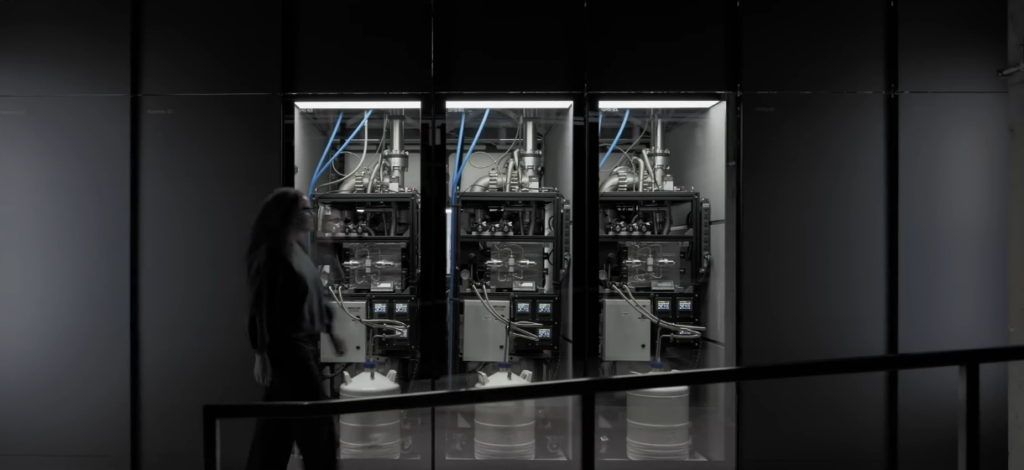
Due to the extraordinary fragility of quantum bits, or qubits, this is very advantageous. When disturbed by noise or temperature fluctuations, they often drift, flip, or deteriorate. Error correction will distinguish functional quantum platforms from toys, namely real-time error decoding with novel architectures such as qLDPC codes. Notably, IBM reached this milestone a full year ahead of plan, and their new technology decodes faults 10 times faster than the industry standard.
IBM has also launched an open “quantum advantage tracker” through partnerships with academic institutions and quantum software firms. In essence, it serves as a scoreboard that allows several international tests to be recorded and objectively verified, assisting the scientific community in differentiating between hysteria and real discoveries. This is a refreshingly honest and practical step in a subject that is occasionally overflowing with inflated claims.
IBM takes a very calculated strategy. Hardware, software, fabrication, and community are all expanding. These new CPUs are being produced in Albany’s state-of-the-art NanoTech Complex on 300mm wafers. This change is quite effective because it cuts build times in half and enables researchers to test several designs simultaneously. IBM has already raised chip complexity tenfold because of the facility’s ability to precisely etch superconducting circuits using cutting-edge technologies.


One engineer characterized the cleanroom as “a place where physics meets art” during a tour of their workflow. It’s a good phrase. Today’s quantum technology, which includes stacked coupler stacks and shimmering wafers, resembles sculpture more than electronics.
The software aspect is just as important. Dynamic circuits, or programs that can change in real time based on measurement results, are now supported by IBM’s Qiskit platform. This has resulted in a 24% increase in accuracy and a 100-fold decrease in error mitigation costs due to hybrid quantum-classical techniques. IBM is providing developers with tools that feel less experimental and more like real solutions by strategically integrating with traditional HPC settings.
The CTO of BlueQubit made a comment that really stood out to me. He said that some of their peak-circuit trials had already begun to show early indications of surpassing traditional methods. He declared, “Quantum is no longer hypothetical as we enter a new era.” I kept thinking about that statement. It was like seeing a prototype car silently finish its first long-distance drive, grounded and cautiously hopeful.
IBM intends to incorporate other computational libraries into Qiskit in the upcoming years, such as modules for complicated optimization problems, differential equations, and molecular simulations. By doing this, they are proactively connecting quantum computing to important issues such as AI training, sustainable energy, medicine development, and logistics.
The long-term goal is audacious. IBM anticipates releasing the Starling CPU, which has full-scale fault-tolerant features, by 2029. Blue Jay, a huge 2,000-qubit chip, is expected to arrive by 2033. These endpoints are not merely hypothetical. With Loon already testing important parts and Nighthawk increasing circuit complexity, every step makes quantifiable progress toward that future.
By means of strategic alliances, transparent validation procedures, and a remarkably transparent hardware roadmap, IBM has established itself as a leader in both quantum speed and trust. They are demonstrating to the community what is and is not working.
It is refreshing to see that kind of openness. Although it’s not usually the most glamorous aspect, it’s frequently the most potent in technology.