

 5:30 pm - March 30, 2026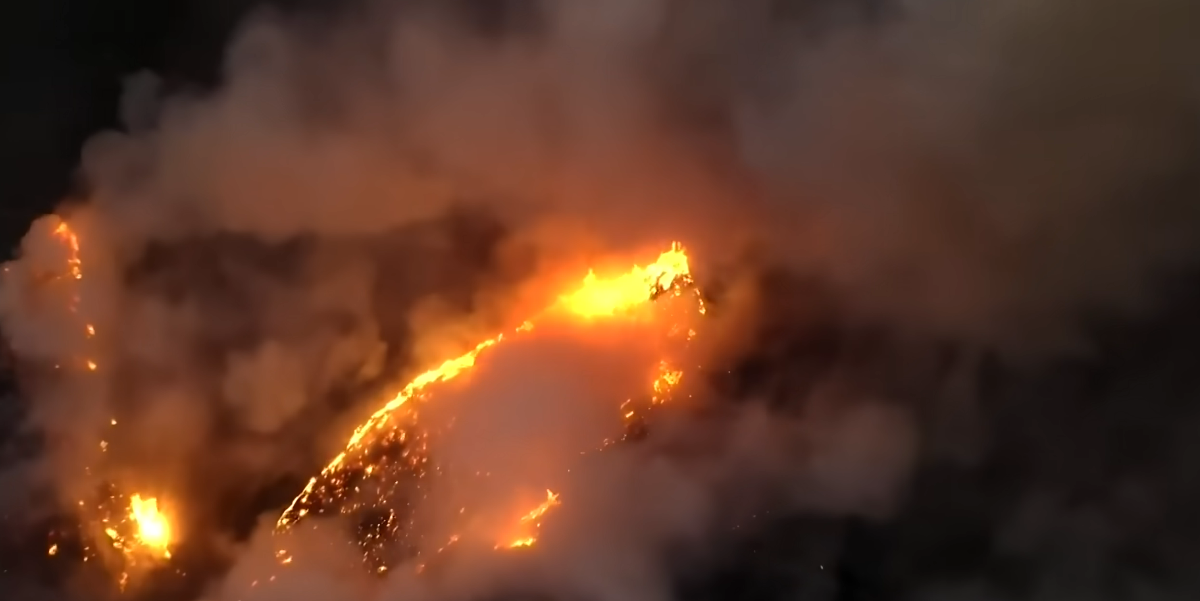
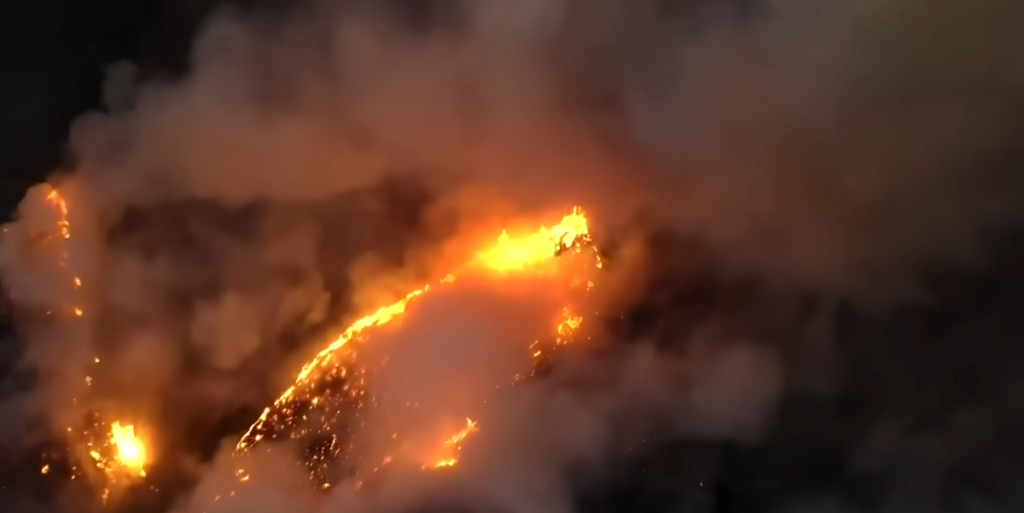
When the Palisades fire exploded across Sunset Boulevard the next morning, the air was heavy with that metallic smell that accompanies extreme heat and clings obstinately to sidewalks and businesses. As if testing the limits of gravity, flames had risen through a two-story bank, continuing to move far more quickly than firefighters had expected and forcing neighborhoods into rushed evacuations that felt both chaotic and tragically normal.
These flames have been acting more like restless systems and less like seasonal occurrences in recent years, accumulating force like a swarm of bees that are all at once disturbed. The winter months now reveal patterns that are subtly but clearly changing beneath our feet, as what once followed a fairly predictable summer arc now unfolds with remarkably similar intensity.
The chaparral landscapes and oak-dotted slopes that developed alongside sporadic burns are examples of how fire has always affected coastal southern California. However, throughout the last 20 years, the pattern has become much more coherent for scientists, demonstrating that extended dry spells and rising temperatures are not separate factors but rather related indicators. The fiercest Santa Ana winds now coincide with the dry season, which used to taper by late October, resulting in extremely hazardous and unusually persistent circumstances.
| Item | Details |
|---|---|
| Event | January 2025 California Wildfires (Palisades & Eaton Fires) |
| Impact | At least 28 fatalities, 16,000+ structures destroyed |
| Climate Driver | Human-induced climate change increased Fire Weather Index (FWI) intensity by 6% and frequency by 35% |
| Notable Conditions | Exceptionally dry fall, strong Santa Ana winds, prolonged dry season |
| Long-Term Trend | Fivefold increase in summer burned area (1996–2021) vs. earlier period (1971–1995) |
| Credible Reference | World Weather Attribution Study – January 2025 |
In comparison to milder decades, researchers found that the Fire Weather Index showed a 35% increase in the frequency of exceptional January fire weather and a 6% increase in intensity. In practice, the figures work like turning a dial a little higher on a stove that is already hot, even though they might seem little on paper. Hillsides become extraordinarily resilient fuel beds that are just waiting for a spark, and the impact is greatly enhanced when vegetation stays dry deep into winter.
Rainfall patterns over the last ten years have alternated between unusually dry stretches and bountiful winters, resulting in growth followed by desiccation. Repetition of the cycle with progressively warmer air turns into an extremely effective ignition engine. As I stood at Griffith Park one unusually warm January afternoon, I was taken aback by how the grass continued to crackle beneath my feet, as if summer had not let go.
A large portion of this change has been attributed by scientists to rising surface temperatures and an increasing vapor pressure deficit, which indicates how thirsty the atmosphere has gotten. Even when total rainfall does not collapse, the air becomes more aggressive in its ability to draw moisture from plants and soil as it warms, leaving landscapes noticeably drier. The end effect is a longer fire season that intensifies much more quickly once flames start to show.


Parts of California have seen a fivefold rise in burned forest area during the late 1990s when compared to previous decades; scientists attribute this development primarily to warming brought on by human activity. Despite the uncertainty surrounding exact percentages, the conclusion derived from climate modeling and observational data is remarkably unambiguous in its nature. The belief that these trends are not random noise is strengthened by the fact that eight of the eleven climate models predict an increase in the danger of January fire conditions.
Conditions for rapid spread were highly reliable during the January 2025 incident due to months of little rainfall and exceptionally strong Santa Ana winds. When winds speed up through mountain passes, forcing dry air toward the ocean, flames react almost instantly, spreading outward and upward at a startling rate. According to fire crews, suppression efforts were especially difficult because of the environment’s decreased tolerance, not a lack of expertise.
Infrastructure exposed its own weaknesses outside of meteorology. Water systems that were built to withstand regular urban fires were overburdened by the demand in several neighborhoods at once. Hydrant pressure decreased significantly in several places, highlighting the need for especially creative and progressive expenditures. In future crises, bolstering water storage, updating pressure control, and incorporating satellite-based monitoring may prove to be quite beneficial.
Evacuating persons with limited mobility and those with lesser incomes was particularly challenging. Blocks of Altadena, where generations of riches had been meticulously restored over decades, were turned to ash in a matter of hours. Because of the unequal distribution of the harm, recovery will necessitate rules that are both incredibly transparent and purposefully fair.
Strategies for adaptability are encouragingly progressing. Officials are now able to map hotspots and smoke plumes with astonishingly accurate tools, tracking fire behavior in almost real time by utilizing satellite data from organizations like NASA and NOAA. These increasingly effective and reasonably priced solutions give communities the chance to foresee hazards rather than just respond to them.
The increasing versatility of predictive modeling can be attributed to strategic collaborations among state agencies, academic institutions, and technology companies. Firefighting resources may be distributed much more quickly with the use of machine learning systems that analyze fuel moisture trends and wind routes. Together with proactive land management techniques like vegetation thinning and managed fires, risk can be significantly decreased.
Mitigation continues to be equally important in the context of warming. Rethinking urban design, investing in renewable energy, and lowering emissions are not lofty goals; rather, they are doable actions that can progressively lessen the underlying pressure. These actions might eventually show themselves to be quite resilient in stabilizing climate patterns and lessening the severity of fire weather occurrences.
Extreme fire conditions may become an additional 35% more likely if global warming continues to reach 2.6°C by the end of the century. It is a sobering trajectory, but it also makes the stakes clear. By taking strong action now, communities and policymakers may change the course and create fundamentally solid and surprisingly affordable resilience.