

 9:55 am - April 1, 2026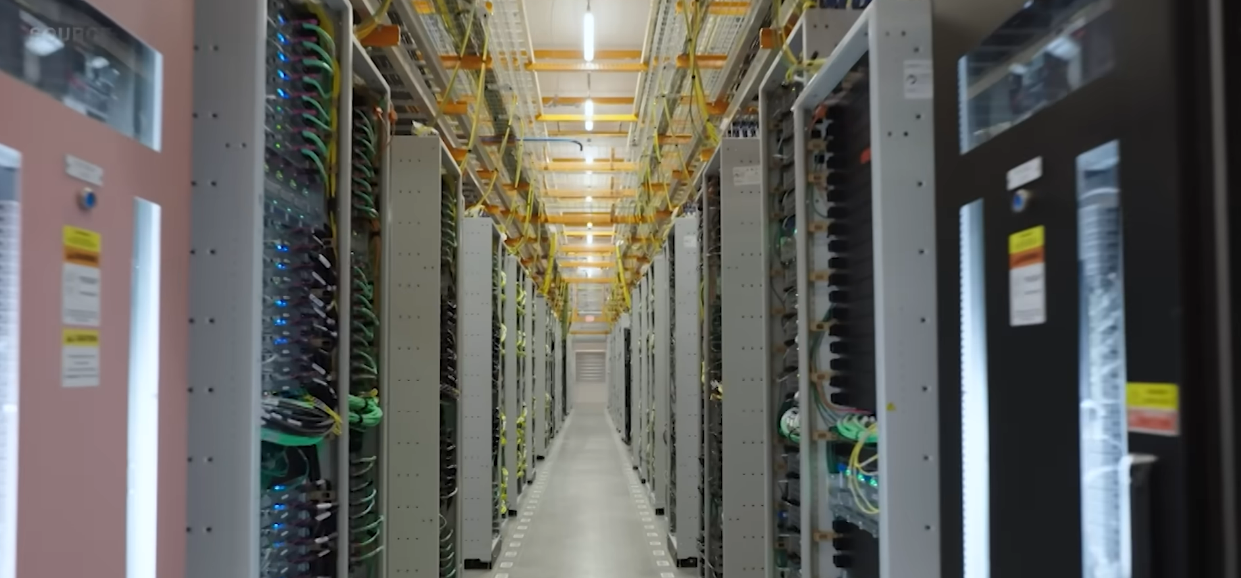
Some locations mutter their cautions. Signs on lawns on Phoenix’s outskirts encourage people to save water. Concerns about disappearing streams are common among farming people in the arid interior of Chile. These are tales on AI as well as climate change.
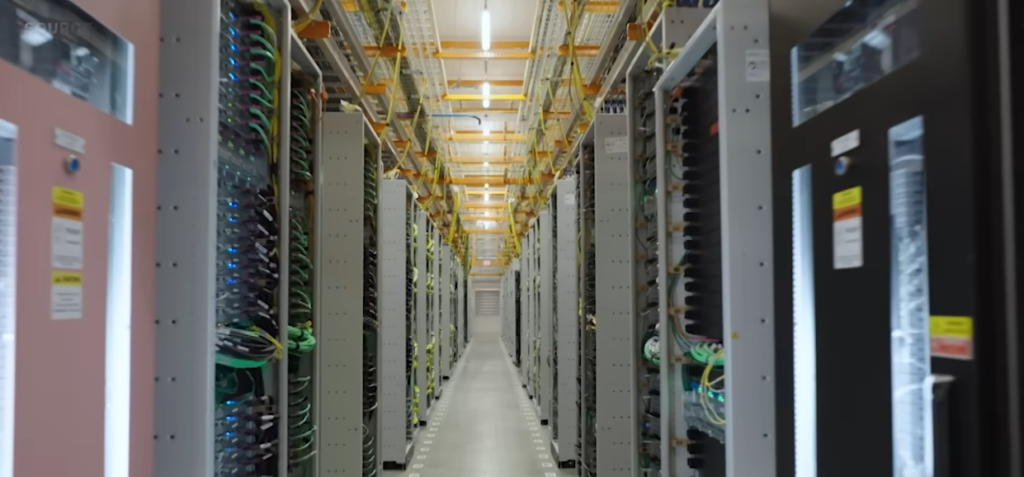
Even with its abstract appearance, artificial intelligence is becoming more and more linked to something very tangible: water. A network of servers is responsible for processing data, producing heat, and requiring cooling for every chatbot response or created image. Furthermore, that cooling frequently depends significantly on water that evaporates into the atmosphere.
These days, the majority of large-scale AI data centers use evaporative cooling systems, which are incredibly good at preventing server overheating. They use water in a very wasteful manner, though. There are about eight liters lost to the atmosphere for every ten that are drawn. Multiplying that by millions of searches and thousands of servers quickly adds up the invisible costs.
The growth of AI data centers in recent months has put a great deal of strain on local water infrastructure in a number of U.S. states. More than 50 facilities may be found in Arizona alone, many of them are grouped close to towns that are already having water problems. Concern over this expansion has been raised by both locals and municipal planners who are trying to strike a balance between ecological constraints and technological advancement.
| Aspect | Detail |
|---|---|
| Daily Water Use (Large Data Center) | Up to 5 million gallons per day |
| Per-Query Water Footprint | 500 ml per 20–50 AI queries (equivalent to a 16-ounce bottle) |
| Annual Global Consumption | Estimated 560 billion liters (2025); projected 1,200 billion liters by 2030 |
| Cooling Method | Mostly evaporative cooling (80% water loss through evaporation) |
| Regions of Concern | Arizona, Chile, China, India, Texas, Netherlands, UAE |
| Tech Company Pledges | Microsoft, Google, Meta: Aim to be “water-positive” by 2030 |
| Protest Locations | Chile, Netherlands, Uruguay (local pushback against data center builds) |
| Indirect Water Use | 60% of data center water tied to electricity generation from water-reliant plants |
| Example Impact | Training a model like ChatGPT = ~185,000 gallons of water |
| Source Links | Investopedia, Bloomberg |
A local hydrologist shown me a heat map of groundwater depletion superimposed with future data center construction zones while I was visiting Georgetown, Texas. The overlap was quite similar to corridors that are prone to drought. He clarified, “We are not drained by a single center. It is that accumulated pressure is ignored by their location.
Many enterprises have chosen the exact regions that are least equipped to handle additional demand by taking advantage of government tax advantages and closeness to renewable energy systems. But their reasoning still makes sense. The sun is ample, the land is cheap, and the labor is available. Regretfully, water is not.


A big model, like GPT-3, requires substantial cooling infrastructure in addition to electricity to train. Researchers estimate that about 185,000 gallons of water were used just to train that model. Several hundred homes may be supported for a month with that amount. And it goes beyond that. Each subsequent question continues to erode, one drop at a time.
This development is significant in light of the growing worldwide water insecurity situation. Almost two-thirds of the world’s population encounters water stress on some level at least once a year. When drinking water and agriculture face competition from tech infrastructure, decisions become ethical rather than just practical.
Large tech companies have reacted, although warily. In order to achieve its goal of being “water positive” by 2030, Microsoft plans to refill more water than it uses. Google has made investments in technologies for conservation and site-level reporting. Condensed moisture recycling systems powered by AI are being piloted by Meta.
Still, there is skepticism. A large portion of the water replenishment is determined by complicated offsets, such as paying for wetland restoration in one place while using water in another. To compensate for Brazilian logging, it’s similar to planting trees in Norway. Maybe mathematically sound, but not in the right context.
Water footprints have been drastically decreased by some operators by the integration of closed-loop cooling systems. These systems are especially useful in arid areas since they reuse water without causing it to evaporate. However, smaller operators may find it difficult to meet the infrastructure requirements and increased energy costs associated with them.
Additionally, indirect water use is a topic that is rarely spoken up. Approximately 60% of the water used in a data center is for energy generating rather than cooling. Water is used to cool reactors and spin turbines in the majority of power plants, including renewable-hybrid ones. Heavy water withdrawal upstream may therefore be indirectly caused by even a “efficient” data center.
As a proposed hyperscale data center threatened to disrupt municipal water sources in Uruguay, protests broke out. Residents of the Netherlands have contested permits due to the lack of clarity in the environmental effect disclosure. These eruptions are not unique. They show that people are becoming more conscious of the ways that local ecosystems and internet expansion interact.
Using treated wastewater rather than freshwater, several entrepreneurs are currently testing reclaimed water systems through strategic collaborations with municipalities. With this strategy, sustainability has been increased without compromising effectiveness. Adoption is still constrained by public perception and regulatory red tape, though.
When a mid-sized AI company in India put a solar-powered, modular water reuse system on top of its data center, I thought it was really creative. Not only was it clever engineering, but it also represented a profoundly symbolic change in priorities from size to stewardship.
Water transparency reports are more prevalent now that AI deployment has exploded, but there are still gaps. The annual usage of all facilities may be detailed in a report, although regional differences may be overlooked. Accountability and advancement are delayed when researchers and citizens are left in the dark due to a lack of precise data.
From medical diagnostics to personalized education, artificial intelligence is predicted to transform many fields in the years to come. However, that change requires tangible scaffolding, and water is an irreplaceable foundation.
Clearer disclosures, more stringent environmental regulation, and innovation that doesn’t deplete our resources are all necessary if we want to create a future that is both intelligent and sustainable. Some industry executives are encouragingly paying attention.

