

 12:20 pm - April 10, 2026
Something unprecedented occurred in 2024 somewhere in the southern portion of the Great Barrier Reef, in the area between Proserpine and Gladstone that had for decades mostly escaped the worst that warm oceans can do to living coral. When Australian Institute of Marine Science dive teams descended through water that should have been sufficiently temperate to provide protection, they discovered bleaching. extensive bleaching. The kind that transforms what was once a scene of colorful fans and branching buildings into something eerily silent and spectral. There had never before been significant bleaching effects in that southern area. It happened for the first time in 2024.
Because they need to be translated, the numbers from AIMS’s annual monitoring program are the type that most people tend to overlook. In 2024, the southern reef’s coral cover decreased by 30.6%, the biggest single-year decrease for that area since the program’s inception in 1986. A record-breaking 25% of the coral cover on the northern reef, which stretches from Cape York to Cooktown, was lost in a single year.
74% of the reefs in the system as a whole exhibited bleaching effects. The coral cover on some individual reefs was reduced by 70%. By April 2024, 80% of the 462 individual coral colonies at One Tree Reef had bleached, and by July, 44% of those colonies had died. At certain locations, the rapidly expanding Acropora corals—the architectural species that construct reef structure and propelled the recovery between 2017 and 2024—saw mortality rates as high as 95%. These are the corals that were meant to aid in the reef’s recovery.
| Topic | Details |
|---|---|
| Subject | The Great Barrier Reef — 2,300 km of coral reef off Queensland, Australia; ~10% of the world’s total reef systems |
| 2024 Bleaching Extent | 74% of surveyed reefs affected; most spatially extensive bleaching ever recorded on the reef |
| Southern Reef Decline | Coral cover fell 30.6% in 2024 — largest annual decline in that region since monitoring began in 1986 |
| Some Reefs Lost | Up to 70% of coral cover at the most severely affected survey sites |
| Global Scale | 4th global coral bleaching event (NOAA); 84% of the world’s reef areas exposed to bleaching-level heat stress from 2023–2025 |
| Frequency Change | In the 1980s: ~25–30 years between severe bleaching events. Now: approximately every 6 years on average |
| Recovery Time Needed | Fast-growing corals: 10–15 years minimum; entire reef systems: decades |
| Key Species Lost | Acropora corals — fast-growing, reef-building; suffered up to 95% mortality at some 2024 sites |
| 2025 University of Queensland Modelling | Reef could recover if warming stays below 2°C; at current emissions trajectory (~2.8°C), average coral cover by 2100 could fall to just 4% |
| Economic Stake | The Great Barrier Reef contributes billions to Australia’s economy annually; ~1 billion people globally benefit from coral reefs directly or indirectly |
The bleaching was not isolated. The reef experienced a series of stressors in the summer of 2024, including Cyclone Jasper and subsequent floods that carried sediment and freshwater throughout reef regions. In the southern reef, heat stress peaked between 2.3 and 2.5 degrees Celsius above previous summer maxima. Satellite monitoring revealed 12 to 15.5 degree-heating weeks at some inshore locations—levels never seen before. It was not just a warm reef. In ways that were not intended to be captured by earlier iterations of the monitoring scale, it was off the chart. In order to acknowledge that the worst scenarios it had previously modeled as theoretical were now occurring, NOAA’s Coral Reef Watch program had to add new alert levels to its bleaching index.
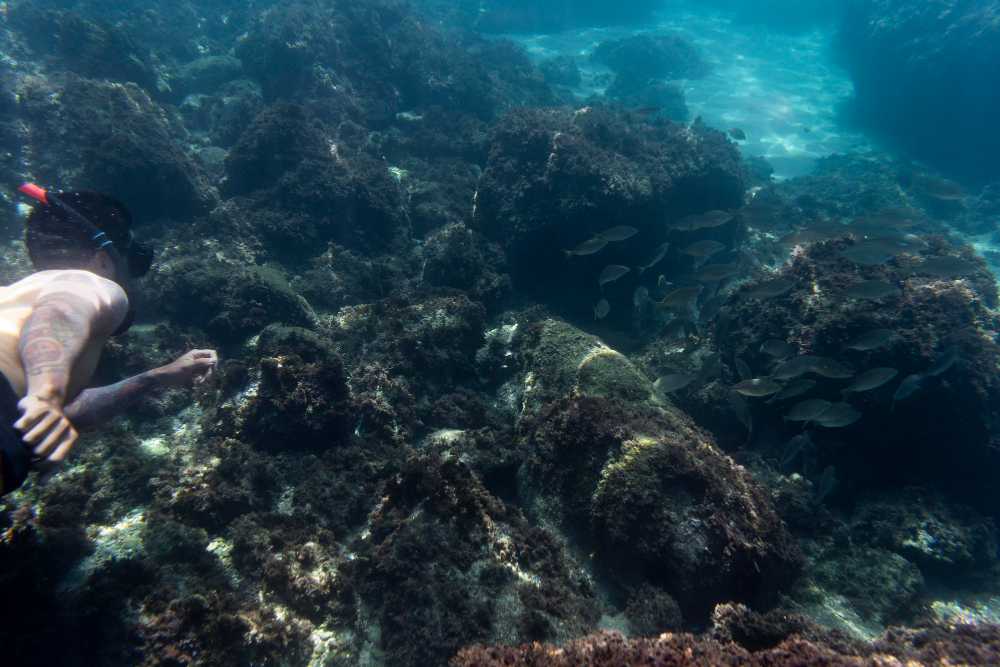
The rhythm of it is the deeper issue. Approximately every 25 to 30 years, a severe bleaching event was predicted in the 1980s; it was frequently enough to pose a serious threat and infrequently enough to permit recovery in between. That time frame has been reduced to an average of roughly six years. In less than thirty years, the Great Barrier Reef has now seen seven mass bleaching events, six of which have happened since 2016. Even the fastest-growing species of coral reefs require at least ten to fifteen years to recover completely from severe bleaching. Reef systems as a whole require decades. These days, the interval between events is sometimes expressed in months. Julia Baum, a marine biologist, once said something that sticks with you: “It’s like getting hit by a serious disease every couple of years, or at such short intervals that you don’t have time to recover in between.” That was back in 2018. Since then, the events have accelerated.
The bleaching in 2024 was a part of the fourth global coral bleaching event, which began in early 2023 and continued until at least mid-2025, according to NOAA’s official declaration. In 82 countries and territories, 84% of the world’s coral reef areas experienced heat stress severe enough to result in bleaching during that time. It is nearly impossible to comprehend the magnitude of that figure. Twenty-one percent of reefs were impacted by the global event of 1998. 2010 attained 37%. The 2014–2017 incident, which at the time seemed disastrous, struck 68%. The magnitude of what transpired between 2023 and 2025 is different, and the scientific community is clearly having difficulty articulating an escalation that surpasses the vocabulary they created to characterize earlier crises.
How much and what kind of the damaged reef can recover is still unknown. By July, about 16% of monitored coral colonies had recovered somewhat from the 2024 bleaching peak, demonstrating the persistence of biological resilience. A qualified form of hope was provided by a University of Queensland study published in late 2025.


Detailed modeling of the Great Barrier Reef’s 3,800 individual reefs revealed that, if global warming is kept below 2 degrees Celsius, the reef may recover—not to its former state, but to a functional one. A gradual rebuilding may be possible below 2 degrees due to the natural variation in coral heat tolerance, the presence of cooler refugia, and the connectivity between reefs. Those natural defenses are overpowered above two degrees. According to the modeling, the average coral cover across the Great Barrier Reef will only be 4% by the end of the century at current global emissions trajectories, which put the planet on course for roughly 2.8 degrees of warming by 2100. Not extinct. However, it underwent a functional transformation that would be unrecognizable to anyone who dives it now.
There is a sense that the scientific community is going through a sort of silent grief as they watch the data build up over years of coral monitoring. They are dedicated to accuracy and objectivity while describing something that is obviously eluding them. According to Dr. Mike Emslie of AIMS, the survey data reveals “an emerging trend” in which over the previous fifteen years, swings between recovery and decline have grown more pronounced and violent. It’s a careful framing. Additionally, it is more concerning in its moderation than hyperbole. There is still time to alter the trajectory. However, it has been getting smaller for decades, and 2024 made it even smaller.