

 9:01 am - April 2, 2026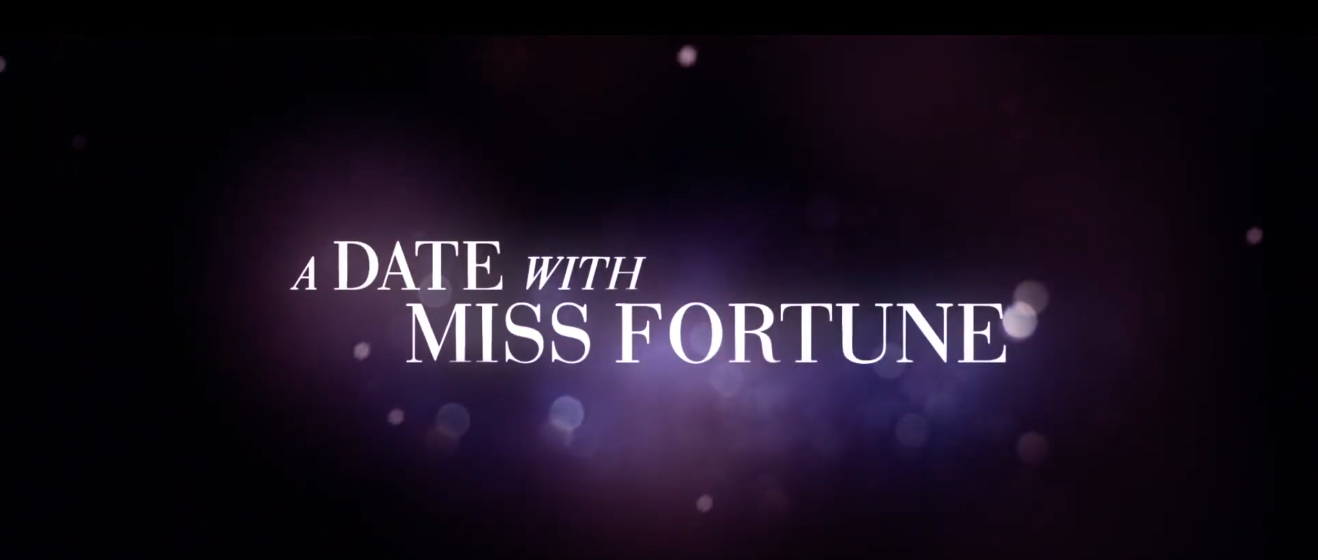
There is a certain type of romantic comedy that seems to have been put together in a lab; the meet-cute is flawlessly planned, the miscommunication is stretched just long enough to last ninety minutes, and the conclusion is exactly where everyone expected it to be. And then there’s A Date With Miss Fortune, a 2015 Canadian movie that, despite its formula, has the messy, embarrassing, and sometimes painful weight of a real relationship—something that most of its genre counterparts subtly lack.
Ryan Scott and Jeannette Sousa, who play the main couple, Jack and Maria, wrote the screenplay. Their own marriage served as the basis for the narrative. It may not seem important, but that detail is crucial.
| Category | Details |
|---|---|
| Film Title | A Date With Miss Fortune |
| Release Year | 2015 (filmed), 2016 (Canadian release) |
| Genre | Romantic Comedy |
| Director | John L’Ecuyer |
| Writers / Lead Stars | Ryan Scott & Jeannette Sousa |
| Supporting Cast | Joaquim de Almeida, Vik Sahay, Claudia Ferri |
| Notable Cameos | Nelly Furtado, George Stroumboulopoulos, Shawn Desman |
| Country of Origin | Canada |
| Language | English |
| Award Nomination | Canadian Screen Award – Best Original Song (“Almost Had It All”), 5th Canadian Screen Awards, 2017 |
| Nomination Recipient | Daniel Stimac |
| Inspiration | Based on the real-life marriage of Ryan Scott and Jeannette Sousa |
| Reference Website | IMDb – A Date With Miss Fortune |
The way Maria’s belongings gradually, almost imperceptibly, take over Jack’s apartment and the argument that isn’t really about the bathroom trash but rather about something deeper that neither character quite knows how to name yet are examples of how specific certain scenes are. These aren’t made-up scenes by authors trying to be relatable. They have a memory-like quality.
Freshly laid off and quietly humiliated, Jack Radner is introduced at a diner as he prepares to escape to London in search of what he claims is creative inspiration. He does what a certain type of man does under duress when his ex-wife enters the room wearing a ring that most likely cost more than his monthly rent: he freaks out and begs a stranger to cooperate.
In three seconds, Maria Monis, who was seated close by, could have written him off. Rather, she does something much more intriguing. She assists. She seems to understand embarrassment in a way that people who have experienced it deeply tend to, not because she is immediately charming.
The film, which was directed by John L’Ecuyer, alternates between the present and the future so that viewers can see where things are going before the characters fully comprehend how they got there. It’s a structural decision that performs better than it ought to.


The flash-forwards are used more for a kind of loving inevitability than for dramatic irony. You’re not witnessing the breakup of a couple. You’re witnessing two individuals gradually come to the realization that neither of them will escape this situation unscathed.
The culture between them is what actually complicates things, not just for plot convenience. Maria comes from a Portuguese family that is big, boisterous, and very present—the kind where there is someone with an opinion about you in every room.
The film’s dramatic weight comes from Joaquim de Almeida’s portrayal of her father, who looks at Jack the way a man looks at a slow leak in his ceiling with a controlled ferocity. De Almeida may have previously portrayed disapproving patriarchs, but in this role, he adds enough particular gravity to keep the character from becoming ridiculous.
In contrast, Jack has only his father and is an only child. His world is much less garlicky, quieter, and more internally structured. It’s funny to watch him navigate Maria’s family for the first time, not because Portuguese families are funny by nature, but rather because the movie recognizes that all big, traditional families, no matter where they come from, can be a little intimidating to outsiders.
Even though the movie sometimes relies too much on cultural humor for easy laughs, there is a universality beneath the ethnic specificity.
The movie’s title and most intriguing tension originate from the fortune teller, or medium, as it were. Senhora Maria functions as a villain even though she isn’t portrayed as one. Maria, who takes these things seriously in the manner that people who were raised in a religious environment frequently do, listens to her assessment of Jack as a poor fit.
Jack doesn’t understand why a stranger with a deck of cards has more power over his relationship than he does because he doesn’t believe in anything of the sort. There is actual friction. One person believes in signs, while the other only believes in what they can see. This is the kind of argument that couples have for years without ever being able to fully resolve.
The weakest parts of the movie occur when it tries to use plot devices that the plot hasn’t quite earned. When a condom wrapper appears at a family get-together, it’s played for shock value. A superstitious breakup feels constricted. Additionally, the conclusion, in which Jack effectively abducts the fortune teller in order to bring her to Maria, is precisely the kind of thing that works in romantic comedies and would call for a restraining order in real life. It’s difficult to remain annoyed, though.
The movie moves swiftly, and Scott and Sousa have a chemistry that is hard to fake, perhaps as a result of years of practice.
It seems appropriate that Daniel Stimac’s “Almost Had It All” is nominated for a Canadian Screen Award. Somewhere in the third act, when most romantic comedies have a brief moment where it seems like everything is over, the song most likely earns its title.
The majority of the movie takes place in Toronto, giving Canadian audiences the comfort of familiar surroundings in addition to brief appearances by Nelly Furtado and George Stroumboulopoulos, characters whose presence makes it obvious who the movie is at least partially addressing.
No one’s favorite movies in the genre will be replaced by A Date With Miss Fortune. Its structure is formulaic, its tone is sometimes erratic, and some of its humor hasn’t aged well. At its core, however, is a sincerity that is more difficult to produce than wit.
Two individuals wrote about their real lives, cast themselves in them, and gave it to a director to transform into something that people could relate to. Either extreme love or extreme confidence are required for that. Observing the outcome, it appears that both.

