

 10:49 am - March 27, 2026
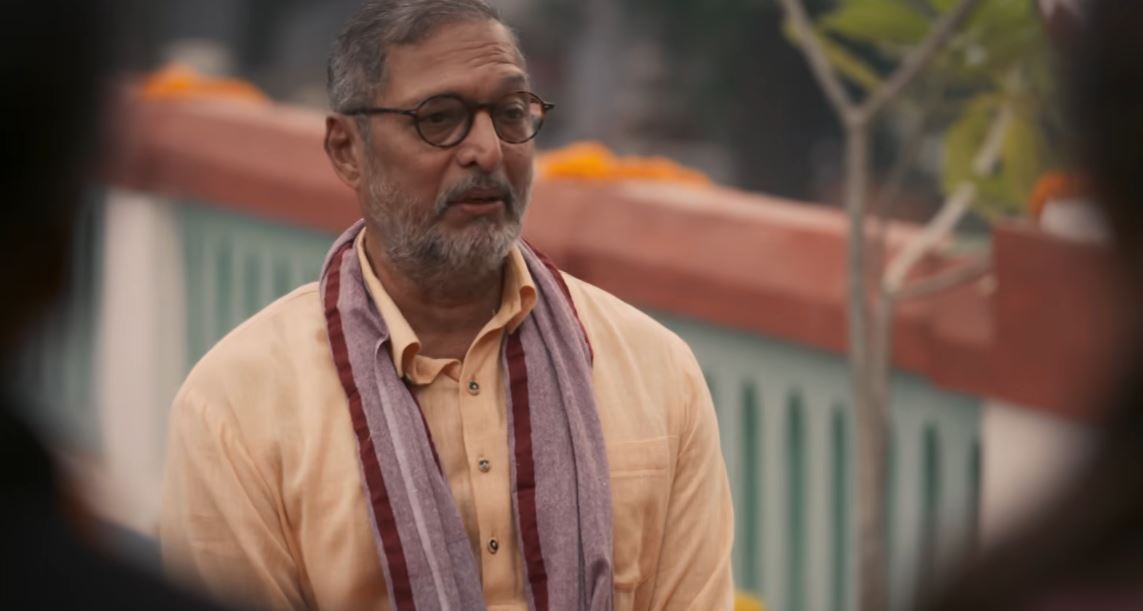
Sankalp’s opening image perfectly captures Prakash Jha’s vision: a magnificent home in Patna with rooms arranged like a gurukul, formal, hierarchical, and humming with quiet purpose. The corridors bear the weight of old authority. The camera follows Nana Patekar’s character Kanhaiya Lal as he moves inside, much like followers follow a teacher. Take caution. With a mixture of admiration and discomfort. It takes ten minutes or so to comprehend that this man has dedicated decades to creating a network of devoted civil servants who have been trained by his coaching center and are obligated to him in a way that falls somewhere between duty and devotion. If that sounds familiar from Indian political history, it’s because the show specifically references the Chanakya–Chandragupta mythology, which holds that the true power in any kingdom resides not in the throne but rather in the man behind it.
Nana Patekar made her OTT debut with Sankalp, which debuted on Amazon MX Player on March 11, 2026. The question of how Patekar would adapt to the streaming format, where the camera stays closer and longer, had been building since the project was announced back in 2023 under the working title Laal Batti. Patekar has been one of the most distinctively watchable performers in Indian cinema for decades. The majority of critics have quickly come to the conclusion that he was practically destined for it. In one scene, Kanhaiya Lal gives his favorite protégé, who is still very much alive, a shraadh ceremony, a Hindu rite for the dead. It’s eerie, dramatic, strange, and somehow entirely in character. Reviews immediately pointed it out. It’s the kind of occasion that merits a lifetime of goodwill.
| Category | Details |
|---|---|
| Title | Sankalp |
| Type | Indian Hindi-language socio-political drama web series |
| Platform | Amazon MX Player |
| Release Date | March 11, 2026 |
| Director | Prakash Jha |
| Producers | Jyoti Deshpande, Dishaa Jhaa |
| Production Companies | Jio Studios, PJP Films |
| Creator / Writer | Reshu Nath; Screenplay by Prasad Kadam; Dialogues by Chandan Kumar |
| Lead Cast | Nana Patekar (Kanhaiya Lal), Mohammed Zeeshan Ayyub (Aditya Verma), Kubbra Sait (DCP Parveen Sheikh), Sanjay Kapoor (Prashant Singh), Neeraj Kabi (Waqar Mapillah) |
| Episodes | 10 episodes, all released March 11, 2026 |
| Total Runtime | ~7 hours 50 minutes |
| Inspired By | Ancient Chanakya–Chandragupta chronicles |
| IMDb Rating | 6.8/10 (22,000+ ratings) |
| Times of India Rating | 3.5/5 |
| Bollywood Hungama Rating | 2.5/5 |
| Notable Milestone | Nana Patekar’s OTT debut |
| Reference Website | Amazon Prime Video — Sankalp |
A mentor-versus-protégé dynamic with real weight is the main source of conflict. Mohammed Zeeshan Ayyub portrays Aditya Verma, an IPS officer created by Kanhaiya Lal’s system; he is a hothead, arrogant, and ultimately incapable of blindly obeying the older man’s orders. The rift is the driving force behind everything that happens after Aditya unintentionally shoots Kanhaiya Lal during a confrontation in Patna and then declines to leave the force as requested. This alienation presents a chance for Delhi’s Chief Minister Prashant Singh (played by Sanjay Kapoor) and his advisor Waqar Mapillah (played by Neeraj Kabi) to turn Aditya into a weapon against the man who used to be his mentor. The Times of India described it as “a thought-provoking exploration of how power operates — not just in politics, but in the relationships that shape it,” which sums up the show’s sincere aspirations.
Throughout, Neeraj Kabi is quietly superb, giving what may be his best performance in a career full of powerful performances. DCP Parveen Sheikh, played by Kubbra Sait, is restrained in a way that seems intentional; there is obviously more in reserve. Zeeshan Ayyub skillfully manages the storyline of a character who is both the show’s protagonist and something akin to its antagonist. The female cast members, including Kubbra Sait and Meghna Malik as Suhasini, who critics have referred to as “the soul of the show,” carry portions of the series that the male leads are unable to. Regarding Sanjay Kapoor’s Chief Minister, it’s a little confusing in the early episodes when he repeatedly says “What the f**k is happening” with less context. However, as the stakes become more apparent, he steadies. Over the course of its runtime, the role gets better.
However, the reservations are genuine. The show earns those hours unevenly, and ten episodes totaling almost eight hours is a substantial request. Certain character tracks vanish for several episodes before reappearing with little explanation. According to Bollywood Hungama’s review, the pacing is appropriate for a time before streaming viewers developed the same level of impatience. Additionally, there is a development in the last fifteen minutes that carries the exact wrong weight—something truly perplexing shows up just when the show should be tightening, and it doesn’t fully recover. It was described by the Hollywood Reporter India as a “welcome return to basics,” which is reasonable and a little tactful.
When you watch Sankalp, you are treated to an excellent show that periodically breaks up with decisions that make you wonder who was present when they were accepted. The story’s framework is solid. The Chanakya framework gives the show a philosophical foundation that most political dramas avoid, and Reshu Nath’s premise—power manufactured through mentorship and institutional loyalty, classrooms replacing battlefields—is genuinely intriguing. There might have been fewer things to criticize if there had been a tighter cut, perhaps six or seven episodes. However, Prakash Jha has never produced compact television, and a program that believes its viewers will stick with it has merit. In the upcoming weeks, the numbers will provide an answer to the question of whether the audience agrees.




