

 7:36 am - March 26, 2026
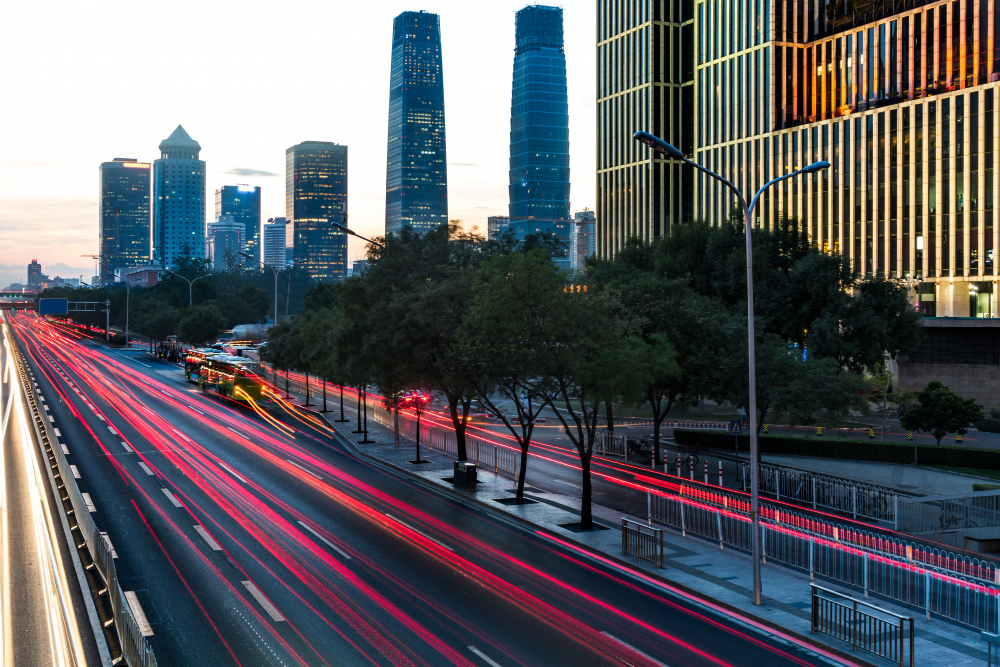
At first, the change is subtle. When cars get close, a traffic light turns green—not too early, not too late. When no one is around, a streetlamp dims; when footsteps reverberate across the pavement, it brightens once more. Before they fill up, trash cans send out signals. Even though none of these incidents seem particularly dramatic, taken as a whole, they suggest that cities are subtly becoming more responsive.
The rhythm felt different when I recently strolled through a crowded downtown area. Buses appeared less unpredictable, traffic flowed in smoother waves, and even the air seemed a little clearer. It’s difficult to ignore these minor changes. Urban environments are starting to change as a result of smart infrastructure, which is driven by sensors and data systems. The change is not dramatic. It resembles a background recalibration more.
| Category | Details |
|---|---|
| Concept | Smart Infrastructure / Smart Cities |
| Key Technologies | IoT Sensors, AI Analytics, Smart Grids |
| Primary Goal | Improve urban efficiency and sustainability |
| Major Applications | Traffic management, energy, waste, safety |
| Example Cities | Singapore, Barcelona, Amsterdam |
| Growth Trend | AI in smart city market expected ~19% CAGR |
| Urban Challenge | Rapid urbanization & resource pressure |
| Key Players | Municipal governments, engineering firms, tech providers |
| Reference Source | https://www.tomorrow.city |
This change is clearly the result of pressure. As urban populations continue to rise, resources are being stretched beyond the capacity of conventional infrastructure. To handle complexity, cities are using connected systems, such as networks of sensors, cameras, and analytics. Real-time traffic flow adjustments lessen congestion in places like Singapore. Although it sounds technical, the results are noticeable: fewer irate drivers, quieter intersections, and shorter commutes.
Another view is provided by energy management. Regardless of activity, streetlights in older neighborhoods frequently run at maximum brightness all night. That is altered by intelligent systems. Motion sensors use dynamic lighting adjustments to save energy without sacrificing safety. Residents might not even be aware of what’s going on above them. However, as these tiny efficiencies add up, the energy demand is subtly decreased. There is ongoing discussion about whether these savings outweigh the investment, particularly for smaller municipalities.
Unexpected changes are also occurring in waste management. These days, some cities use sensor-equipped bins that only alert collection teams when necessary. Trucks now move based on data rather than strict schedules. Although it may seem insignificant, witnessing a garbage truck avoid a nearly deserted street illustrates a larger trend: infrastructure is becoming more adaptable. Cities seem to be learning from their own patterns, albeit slowly and imperfectly.
Another area where smart infrastructure is altering behavior is public transportation. Real-time analytics in Barcelona modify bus frequency in response to passenger demand. Platforms show arrival times that are accurate. Although this might seem like a small improvement, decisions are influenced by reliability. There are fewer cars on the road when commuters have faith in transit schedules. However, it’s still unclear if these systems will work well in bigger, less structured cities.


Monitoring air quality adds a more intimate element. Urban neighborhoods are equipped with sensors that monitor pollution levels and provide data to public dashboards. Residents may receive alerts about rising particulate matter in certain situations. The technology is both comforting and unsettling when one is standing close to a busy avenue and observing traffic crawl while pollution levels rise. It raises awareness while also highlighting the vulnerability of urban settings.
Transportation and utilities are just two examples of smart infrastructure. The buildings themselves are evolving. Energy-efficient buildings react to occupancy by automatically adjusting lighting and temperature. Certain office buildings in Amsterdam have floor-by-floor energy use regulations. The building subtly changes throughout the day, but employees may not notice. Although the initial costs are still high, investors appear to think that these efficiencies will result in long-term savings.
Predictive analytics is also becoming more and more important. In order to predict traffic jams, energy consumption, or even possible infrastructure failures, AI systems examine patterns. Alerts are sent to maintenance teams before issues worsen. Thinking is changing from reactive to proactive. However, skepticism persists. Cities are chaotic, unpredictable places, and data systems are only as good as their inputs.
Concerns about privacy are always present. Cameras and tracking systems frequently coexist with sensors that gather environmental and traffic data. The efficiency is welcomed by some locals. Some fear that surveillance will infiltrate daily life. The viability of striking a balance between privacy and convenience is still up for debate. As this develops, it seems as though cities are conducting experiments in real time without fully understanding the long-term effects.
The direction appears clear even in the face of uncertainty. Policymakers, engineers, and urban planners are progressively incorporating intelligence into infrastructure. Smart traffic lights, adaptive grids, and predictive maintenance are examples of small changes that add up to something bigger. Static systems are giving way to responsive environments in cities.
There is no big announcement when the transformation takes place. It shows up in little things like a smoother commute, a quieter intersection, or a streetlight that reacts to footsteps. Urban life is being transformed by smart infrastructure through accumulation rather than spectacle. The daily experience of living in a city is also starting to feel less chaotic as these systems grow, though it’s still unclear if this tranquility will last or if new complications will arise.