

 10:39 am - March 26, 2026
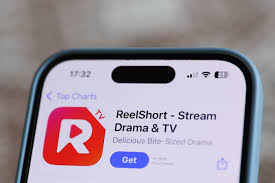
The microdrama app market just posted numbers that are impossible to ignore: ReelShort, the leading mobile short-form drama platform, generated $1.2 billion in consumer spending last year alone. That’s not a rounding error. That’s a business. And according to Henry Soong, founder of Watch Club, the industry hasn’t even hit its stride yet. He thinks it’s still in its MySpace era.
If he’s right, the Facebook moment hasn’t happened yet. And Soong is building what he believes comes next.
What the Microdrama App Market Actually Is
If you haven’t encountered microdramas yet, the format is straightforward: scripted, mobile-first shows shot vertically, designed to be watched on your phone in punchy episodes, each one ending on a cliffhanger engineered to keep you tapping. The content leans hard into genre. Secret billionaire romances. Werewolf mothers-in-law who disapprove of the match. Office enemies who turn out to be soulmates. Think soap opera DNA spliced with TikTok’s scroll mechanics. The genre sounds absurd until you look at the revenue figures.
ReelShort didn’t invent the format. The microdrama app market took root in China, where the combination of mobile-first consumption habits, cheap production costs, and an appetite for serialized melodrama created the conditions for the category to explode. What the Chinese market proved was that people would pay, episode by episode, for this kind of content, even when each episode runs only a few minutes. The unlock mechanic, pay a small amount to watch the next chapter, turns out to be extraordinarily effective when the cliffhanger is engineered well.


Soong laid out his thinking on a recent episode of TechCrunch’s Equity podcast, where he told hosts Rebecca Bellan and senior reporter Amanda Silberling that the microdrama app market is sitting where social media sat before Facebook reorganized everything MySpace had fumbled. The infrastructure exists. The audience is real. The business model works. What’s missing, in his view, is the product that gets it right for a Western audience in a deliberate, sustainable way.
Why Quibi Failed While the Microdrama App Market Thrived
The obvious ghost in this room is Quibi. Jeffrey Katzenberg and Meg Whitman burned through $2 billion trying to make premium short-form mobile video work in the United States, and shut down less than a year after launch. The microdrama app market, by contrast, has scaled to billions in revenue without the Hollywood infrastructure, the A-list talent deals, or the investor fanfare. That gap is worth understanding.
Quibi’s failure wasn’t purely a content problem, though content was part of it. The platform launched expensive, polished shows that felt like TV episodes cut into smaller pieces rather than content native to the phone screen. It also launched at the start of a pandemic when people were suddenly home with access to full-sized screens, killing the commute use case the product was designed around. The business model required a subscription before users knew whether they liked anything on the platform.
Microdramas solved these problems without trying to. The content is shot vertically from the start, not reformatted. The unlock model means users can sample before committing. The genre conventions, melodrama, romance, fantasy, do the engagement work without needing prestige production values. Mobile market analysts tracking app revenue trends have noted that category-native formats consistently outperform reformatted content on mobile platforms, and the microdrama app market is a clean example of that principle at scale.
Watch Club’s Bet Against the Engagement Trap
Where Soong and Watch Club diverge from the existing players in the microdrama app market comes down to a deliberate design choice: he wants to build a social experience rather than optimize purely for engagement the way TikTok does. That’s a meaningful distinction, and a harder one to execute.
TikTok’s engagement optimization is extraordinarily effective at keeping users on the platform. It is less effective at making users feel good about the time they spent. The compulsive scroll, the passive consumption, the algorithmic feed that removes any sense of choice: these mechanics drive session length while often undermining the sense that watching was worth it. Social experiences, ones built around shared viewing, recommendations between friends, genuine community around content, tend to create more durable retention even if raw session metrics look lower in the short term.
Watch Club is targeting a different audience than ReelShort and Drama Box as well, though the specifics of that positioning weren’t fully detailed. The implication is that the current microdrama app market leaders have captured one audience segment deeply, and there are adjacent audiences, likely younger, more social, more Western, who haven’t been reached yet by a product designed specifically for them.
The AI Question Nobody Can Avoid
There’s one more variable reshaping the microdrama app market faster than anyone expected: artificial intelligence. Silberling, who covers the space closely for TechCrunch, weighed in on the podcast about whether AI is coming for the werewolf billionaire romance script. The short answer is that it already is, in parts.
Production costs for microdramas are already low by television standards, but AI tools are pushing them lower still. Script generation, voice synthesis, even AI-generated visual sequences are being tested by players across the microdrama app market. The question isn’t whether AI changes the economics of this format. It will. The question is whether AI-assisted production maintains the one thing that makes these shows work: the emotional hook that gets a viewer to pay for the next episode.
Genre melodrama is formulaic by design. That makes it more susceptible to AI generation than prestige drama, but it also means that what differentiates one microdrama platform from another comes down to execution details: pacing, casting, the specific construction of the cliffhanger. Investors tracking entertainment format disruption have started paying close attention to which microdrama operators can maintain quality as production scales through automation.
Where the Microdrama App Market Goes Next
ReelShort’s $1.2 billion proves the category is real. The microdrama app market is no longer a curiosity or a China-only phenomenon. It’s a global business with established players, a working monetization model, and an audience that keeps growing. The MySpace analogy is apt precisely because MySpace was also a real business with real users before Facebook reorganized the space around better product decisions.
Watch Club’s pitch is that those better product decisions haven’t been made yet in microdramas. That the platform built around intentional social experience, native Western content sensibilities, and a user base that hasn’t been captured by the current leaders, is still there to be built.
The full conversation with Soong on TechCrunch Equity is worth the listen if you want the detail on how he’s thinking about that build. The microdrama app market is moving fast. The Facebook moment, if it comes, probably comes sooner than anyone is modeling.