

 10:39 am - March 26, 2026
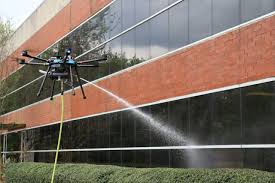
The Lucid Bots Series B closed at $20 million, and the Charlotte, North Carolina robotics company has a problem most startups would trade anything for: more customer requests than hours in the day to handle them. Co-led by Cubit Capital and Idea Fund Partners, the round brings total funding to $34 million for a company that makes drones and robots for commercial window cleaning and building maintenance.
The pitch is not complicated. Buildings need to be cleaned. The people doing that work face real physical danger on swing stages dozens of floors up. The labor pool willing to take those jobs is shrinking. Lucid Bots builds the machines that fill that gap, sells them to cleaning companies, and manufactures everything in the United States. Andrew Ashur, the company’s founder and CEO, founded the business in 2018 after watching window washers on a dangerously windy day while a student at Davidson College. The swing stage knocked into the building. He decided there had to be a better way.
The Lucid Bots Series B: What the Money Is For
The company plans to use the capital primarily for hiring. Ashur mentioned, with some humor, that they have run out of parking spots at their manufacturing facility. That is a good problem to have. It is also a sign that the business has hit a real operational constraint: demand outrunning capacity. In the venture-backed world, when a founder says they need headcount to meet demand rather than headcount to search for demand, that is a different conversation with investors entirely.
The Lucid Bots Series B is a bet on a different thesis from what dominates robotics headlines right now. Humanoid robots, dancing machines, lab demos designed for conference keynotes. Lucid Bots’ products clean office towers and waterproof university stadiums. Unglamorous. Profitable for their customers. Ashur put it plainly: the company sells performance that shows up in customers’ profit and loss statements, not in press releases.


That distinction matters because the robotics funding market has been chasing spectacle. The humanoid space has absorbed billions in capital from investors who believe general-purpose robots are coming faster than the technology currently supports. Companies in that segment are mostly pre-revenue or early-revenue and burning hard to get to product-market fit. The Lucid Bots Series B sits at the other end of that spectrum.
Five Years to 100 Units. Then Things Changed.
The company’s sales trajectory deserves scrutiny, and it is honest about the slow start. It took Lucid Bots five years to ship its first 100 robots. Now it is approaching 1,000. That inflection is what a Series B investor is buying: not the first five years, but the slope of the next two.
Getting there required convincing investors to back a founder with a liberal arts background and no robotics engineering credentials. Ashur studied economics and Spanish. He launched Lucid Bots initially as an actual cleaning company, taking contract jobs to understand the industry from the inside before building hardware for it. Two years of job sites, cleaning chemical burns, and operational learning gave the team a clearer picture of what the product needed to do. That approach, learning the business before building the tool, is rarer than it should be in hardware startups, and it tends to produce more durable products.
The company designs and manufactures its drones and robots in the U.S., which carries both a cost premium and, in the current political climate around domestic manufacturing, a potential marketing advantage. The National Association of Manufacturers has tracked growing customer preference for domestically produced industrial equipment, a shift driven partly by supply chain concerns after 2020 and partly by federal procurement trends that favor American-made goods.
Lucid Bots Series B Signals Expansion Beyond Windows
The Lucid Bots Series B comes as the company is pushing into adjacent categories. Painting, waterproofing, and sealing are the next markets, using the same underlying hardware platform. Ashur said the company waterproofed a large university stadium using the same core robot frame it uses for window cleaning. Before Lucid Bots had even begun marketing the capability, it was receiving around 50 inbound leads per month for painting and coating work.
That kind of pull-through demand changes the unit economics conversation. A robot that cleans windows is valuable. A robot that cleans windows, waterproofs facades, applies coatings, and potentially paints surfaces is a platform. The revenue per unit goes up. The customer lifetime value goes up. The argument for a higher valuation in the next round gets easier to make.
Data from the robots flows back into the company’s software, which is used to improve both products over time. That feedback loop is how hardware companies build defensibility: not through patents alone, but through proprietary operational data that competitors cannot easily replicate. The more job sites Lucid Bots’ machines work on, the better the underlying software becomes, and the harder it is for a new entrant to catch up on performance.
Who Pays, Who Benefits, and What the Risk Looks Like
The customer base is commercial cleaning companies, not building owners directly. That is a meaningful distinction. Cleaning companies operate on thin margins and make capital purchases carefully. A drone or robot has to pay for itself in reduced labor cost, reduced insurance exposure from fewer workers at height, or both. The Occupational Safety and Health Administration lists working at elevation as one of the leading sources of fatal workplace injuries in the U.S. Any tool that removes a worker from a dangerous position and replaces them with a machine has a straightforward safety ROI to sell alongside the operational one.
The risk is execution. Scaling hardware manufacturing is expensive and difficult. Hiring to meet demand sounds like the right problem to have until the new hires need to be trained, integrated, and made productive before the next wave of orders ships. Supply chain dependencies for components matter too, particularly for a company that manufactures in the U.S. and presumably sources some parts internationally.
The Lucid Bots Series B gives the company the capital to try. Whether the parking lot problem at the manufacturing facility becomes a capacity problem, a quality control problem, or a hiring pipeline problem will tell you more about the next round’s terms than any press release will.
Ashur has said the company gets more demo requests than it has hours to fill them. That clock is now running against a $20 million check. The board will want to see the sales pipeline clear and the headcount productive before the next raise comes due.