

 10:29 am - March 26, 2026
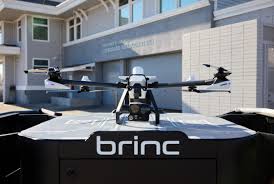
The Brinc Guardian police drone launched Tuesday with a pitch that would stop any skeptic mid-sentence: it is, its creators claim, the closest thing the industry has ever produced to a police helicopter replacement. That is not a modest claim. It is, however, a very specific one, and the specs behind it are worth examining before writing it off as founder hyperbole.
Brinc, the drone startup backed by investors including Founders Fund, built Guardian around a market thesis that is straightforward even if the execution is not. There are roughly 20,000 police departments and 30,000 fire departments across the United States. Brinc’s chief executive believes the top half of that market will eventually put a 911-response drone on the roof of every station. Do the math on licensing, hardware, and maintenance contracts, and you arrive at the number Brinc is putting out publicly: a $6 billion to $8 billion addressable market, domestic and international combined.
What the Brinc Guardian Police Drone Actually Does
The Brinc Guardian police drone flies at up to 60 mph and stays airborne for 62 minutes per charge. It carries thermal imaging cameras alongside two 4K cameras, all with zoom capable of reading license plates from altitude, according to the company. Add a spotlight and a loudspeaker louder than a police siren, and you have a package that, on paper, covers the primary functions departments use helicopters for: pursuit, surveillance, crowd management, and scene assessment.
The charging station, which Brinc calls a “charging nest,” handles battery swaps without human intervention. It can also be stocked with defibrillators, flotation devices, and Narcan. That last detail matters. A drone that reaches a cardiac event or an overdose before paramedics do is not just a surveillance tool; it becomes a medical first responder. That repositions the product’s value proposition in a budget conversation with a city council.


Then there is the connectivity angle. The Brinc Guardian police drone embeds a Starlink satellite panel directly into its airframe, which the company says is a first for a commercially produced quadcopter. Starlink gives the drone internet connectivity anywhere on the planet, removing the range ceiling that limits most municipal drone programs to a tight geographic radius around a base station. For rural departments with no realistic path to helicopter coverage, that is a genuine operational difference.
The DJI Gap and Why the Brinc Guardian Police Drone Exists Now
The business context behind this launch is as important as the hardware. For years, DJI held what amounted to an unofficial monopoly on the drone market, including inside American law enforcement and fire agencies. That changed when the Trump administration moved to ban foreign-made drone models from entering the country. The policy created a vacuum. Someone was going to fill it.
Brinc is not the only company competing for that position, but it is moving fast. The company recently partnered with the National League of Cities on a program to scale drone-as-first-responder deployments across communities nationwide. That partnership is not charity. It is a customer pipeline dressed as a civic initiative, and it is a smart one. Getting a city’s emergency management office familiar with your hardware before the procurement process starts is the kind of business development that doesn’t show up in a product launch press release.
The regulatory environment is moving in Brinc’s direction too. The FAA’s framework for beyond-visual-line-of-sight drone operations has been evolving, and municipalities that want to run autonomous drone programs now have a clearer path to doing so than they did three years ago. That timing is not coincidental. Companies building in this space have been watching the regulatory clock as closely as the product roadmap.
The Revenue Model Behind the Brinc Guardian Police Drone
Hardware margins in the drone business are notoriously thin. The companies that make real money build recurring revenue on top of the device: software subscriptions, maintenance contracts, data services, training programs. Brinc has not publicly detailed its pricing or contract structure for Guardian, but any drone-as-first-responder program involves ongoing operational costs that lock customers in well beyond the initial purchase. Public safety agencies do not swap vendors easily. Once a department’s dispatch system is integrated with your drone’s software, the switching costs are high.
That stickiness is the actual business. The drone is the entry point.
The $6 billion to $8 billion market figure Brinc’s CEO is citing reflects total addressable market, not near-term revenue. TAM projections at a product launch are almost always optimistic. A more grounded question is what share of those 20,000 police departments Brinc can convert in the next three to five years, at what price point, and with what margin. Those numbers have not been disclosed. They rarely are at launch.
What Brinc does have is a real product, a geopolitical tailwind from the DJI ban, a civic partnership that gives it institutional access, and a founder willing to make specific, verifiable claims about what the hardware can do. That combination gets you through the door of a procurement office. Closing the contract is a different conversation, and it happens at the city budget level, where drones compete against overtime pay, squad cars, and everything else a department needs.
The Brinc Guardian police drone has the specs to win that argument on capability. Whether it wins it on price, and how fast, is what the next 18 months will answer. Guardian’s product page is live. The procurement line starts now.


