

 5:46 pm - March 24, 2026
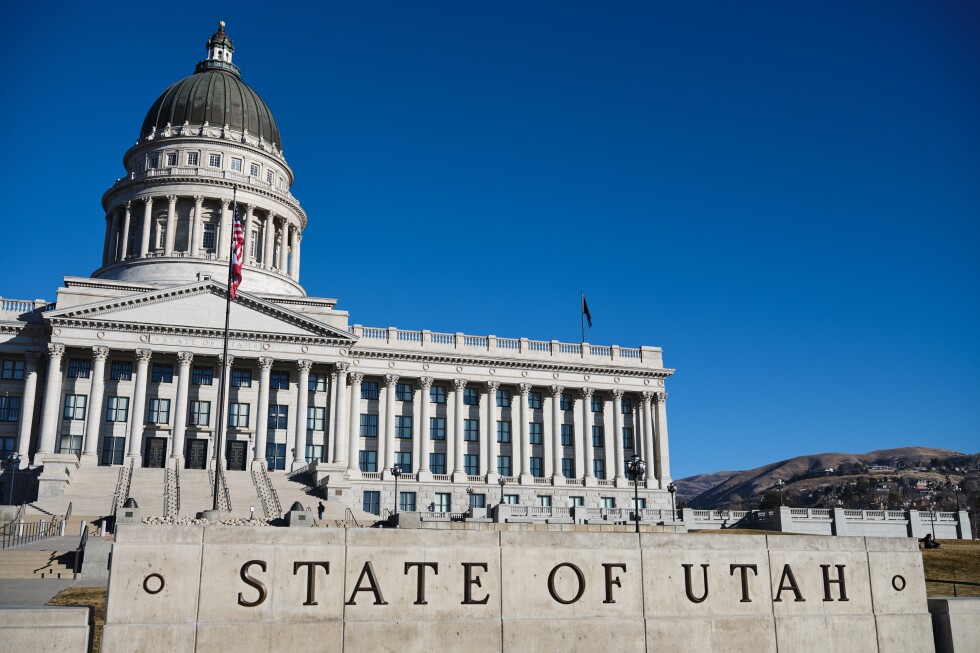
Two Republican members of Congress from Utah have filed a federal lawsuit seeking to block new U.S. House districts that could enhance Democratic prospects in the Salt Lake City area. U.S. Representatives Celeste Maloy and Burgess Owens, along with nearly a dozen local officials, submitted the lawsuit late Monday, arguing that a state judge overstepped constitutional authority by imposing a court-drawn congressional map.
The legal challenge comes as candidates face a March 13 deadline to file for reelection in Utah. According to the lawsuit, both representatives have not yet filed because the redistricting dispute has left uncertainty about which district they should seek to represent.
Constitutional Authority Over Utah Redistricting Challenged
The lawsuit centers on a decision made by state Judge Dianna Gibson, who rejected congressional districts drawn by Utah’s Republican-led Legislature. In November, Gibson imposed an alternative map submitted by advocacy groups that had sued the Legislature over Utah redistricting concerns. The judge ruled in August that the legislative districts violated anti-gerrymandering standards approved by Utah voters in 2018.
The Republican officials contend that both the U.S. Constitution and Utah Constitution grant redistricting powers exclusively to the state Legislature. Their lawsuit asserts that courts lack authority to draw congressional maps and requests that Utah’s districts revert to those approved by lawmakers in 2021 unless the Legislature produces new ones.
Impact on Salt Lake County Representation
The court-imposed map significantly alters how Salt Lake County votes are distributed across congressional districts. Instead of dividing the Democratic stronghold of Salt Lake County among all four districts, the revised map consolidates the county almost entirely within one district. This change could substantially boost Democrats’ chances of winning a seat in November, according to political observers.
Republicans currently hold all four of Utah’s U.S. House seats based on districts drawn after the 2020 census. The alternative map represents a departure from the Legislature’s approach to congressional redistricting in the state.


National Pattern of Redistricting Disputes
Utah joins several states embroiled in legal battles over House voting districts ahead of the midterm elections. A New York judge recently ordered a commission to redraw the only Republican-held House seat in New York City, ruling that the district unconstitutionally dilutes minority voting power. Republicans quickly appealed that decision.
Additionally, the U.S. Supreme Court is considering an appeal of a Democratic-backed congressional redistricting plan approved by California voters. Missouri courts are also weighing multiple legal challenges to a new House map passed by that state’s Republican-led Legislature.
Redistricting gained unusual urgency after President Donald Trump encouraged Republicans in Texas to reconfigure their House districts to gain electoral advantage. This prompted a mid-decade gerrymandering battle that has continued to unfold in Democratic-led Maryland and Virginia this month.
State Supreme Court Expansion Adds Complexity
Meanwhile, the Legislature’s attorneys have asked Utah’s state Supreme Court to overturn Gibson’s ruling. However, the political landscape surrounding this appeal recently shifted when Governor Spencer Cox signed legislation expanding the high court from five justices to seven members.
New justices appointed by the governor and confirmed by the state Senate could be in place to help decide the congressional map’s fate. Cox has denied that the court expansion is politically motivated, despite the timing coinciding with the redistricting dispute.
Katharine Biele, president of the League of Women Voters of Utah, one of the groups that submitted the alternative map, defended the court-imposed districts. According to Biele, “The map currently in place is fair and legal.”
Republicans have also begun collecting signatures for a November ballot initiative that would repeal Utah’s anti-gerrymandering standards. Utah lawmakers previously pushed back this year’s filing deadline for congressional candidates from January 8 to March 13, acknowledging the ongoing redistricting uncertainty. The federal court has not yet indicated when it will rule on the Republican lawmakers’ request to block the court-drawn map.


