

 5:44 pm - March 24, 2026
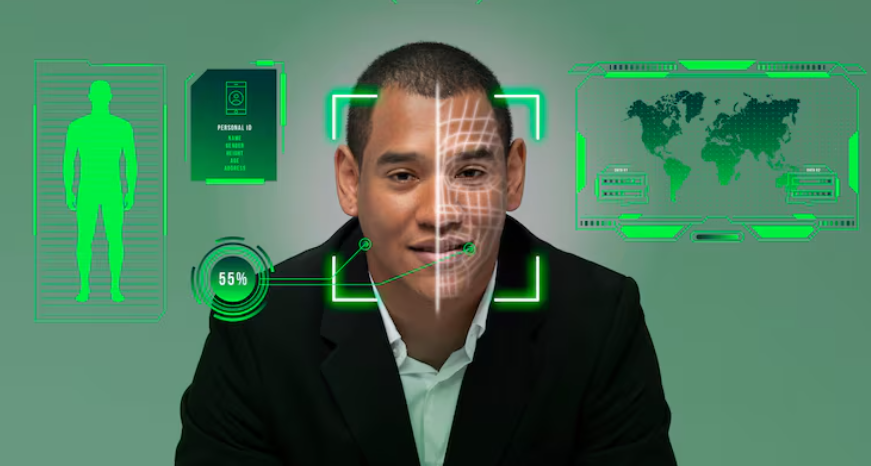
Standing in line, phone in hand, and searching through emails for a PDF that someone requested three days ago is a scene that keeps happening. A utility bill, a proof of address, or a scan of a passport. The ritual now seems strangely antiquated, almost robotic, as if it ought to have vanished long ago. However, it hasn’t.
This was supposed to be resolved by digital identity. The promise was that. Less friction, fewer documents, and quicker verification. In certain respects, it is already taking place. For instance, Open Banking subtly altered how millions of people in the UK exchange financial information, eliminating the need for repeated checks. However, there’s a feeling that the future isn’t as clear-cut or certain as it once seemed as the larger system takes shape.
| Category | Details |
|---|---|
| Topic | Digital Identity Systems |
| Core Technologies | AI, Blockchain, Biometrics, Zero-Knowledge Proofs |
| Key Concepts | Self-Sovereign Identity (SSI), Verifiable Credentials |
| Economic Impact | Fraud reduction, compliance cost savings, efficiency gains |
| Major Challenge | Trust, privacy, interoperability |
| Example Region | United Kingdom Digital ID Framework |
| Industry Interest | 85% of UK SMEs willing to adopt Digital Company ID |
| Reference | https://www2.deloitte.com |
It’s possible that competing visions are becoming more important to digital identity than a single solution. Users are juggling logins, apps, and biometric scans—still fragmented, but in a more sophisticated way—while governments are developing centralized frameworks and businesses are experimenting with decentralized models.
The concept itself has changed. Identity is now more than just a username or a document. It’s evolving into something layered, fluid, and strangely behavioral. a person’s typing habits, login location, and app navigation. AI is subtly piecing these signals together and learning to identify individuals based on their habits as well as their credentials. It functions. Mostly. However, it also creates a subtle unease: how much of a person is being watched to confirm their identity?
Policymakers are beginning to believe that infrastructure is the true prize. Verifiable credentials, consent-based data sharing, and interoperable systems are the foundation of the ID, not the ID itself. Everything else follows if those are successful. Instead of taking days, renting a house might only take a few minutes. It may become automatic to switch energy providers. Access to healthcare could seem less bureaucratic. That’s the idea.
However, it still feels uneven to be inside the system today.
In one area, proponents of blockchain are advocating for self-sovereign identity, contending that people ought to fully own their data. The argument is convincing: cryptographic proofs verifying what must be known, no central authority, and no needless exposure. You’re older than eighteen. You meet the requirements. You are real. Nothing more.


However, it’s difficult to ignore the conflict when observing adoption in the real world. Private key management is not intuitive. Losing access can have disastrous consequences in addition to being inconvenient. Even though regular users claim to value privacy, it’s still unclear if they want that degree of responsibility.
Governments are taking a different course at the same time. Digital ID frameworks that are centralized offer scale, standardization, and trust. The UK’s recent initiative, which aims to establish a system that functions across sectors—housing, healthcare, and finance—reflects this way of thinking. It’s controlled, organized, and possibly simpler to put into practice.
However, it has a tension of its own. Not everyone has faith in institutions. Concerns about data misuse, surveillance, and the covert growth of digital oversight persist. Convenience seems to be weighed against something less concrete—control—based on public responses.
Companies, on the other hand, appear more practical. Identity is a cost issue for them. Delays in verification, fraud, and compliance all add up. The concept of Digital Company ID, which allows companies to instantly verify one another, is becoming more popular. According to some estimates, billions could be saved every year. Investors appear to think that this aspect of the ecosystem will advance more quickly than solutions aimed at consumers.
However, fragmentation persists even here. distinct platforms, standards, and expectations. Ironically, identity is still erratic.
It’s difficult to ignore how AI is subtly taking over as the connective layer. Identity systems should be improved rather than replaced. real-time access adaptation, behavior analysis, and fraud pattern detection. It is subtle, frequently undetectable, but becoming more and more important. However, it comes with risks of its own, such as bias, mistakes, and unclear decision-making. It’s still unclear how easily an algorithm‘s judgment that something doesn’t look right can be contested.
A more general cultural change is also taking place. Individuals are growing more conscious of their online presence, wary of data, and picky about who they trust. They also anticipate flawless experiences. quicker login times. fewer steps. less resistance. Digital identity is situated in the center of this tension as these expectations pull in opposing directions.
As this develops, there’s a sense that the sector is moving toward something noteworthy but perhaps not cohesive. Multiple systems, conflicting philosophies, and overlapping standards are all changing simultaneously.
It’s possible that there won’t be a single identity in the future. Rather, a group of identities. Temporary, purpose-driven, and contextual. One for everyday online interactions, one for healthcare, and one for finance. linked but not entirely combined. Some issues might be resolved by that. It could produce new ones.
The notion that digital identity would settle into a neat, universal system is becoming less and less certain. Something more intricate is taking its place. messier. Maybe more human.
It’s difficult to avoid wondering if the system is changing quickly enough or if it’s just changing in too many directions at once while standing in that line and continuing to look for a document on a phone.


