

 5:43 pm - March 24, 2026
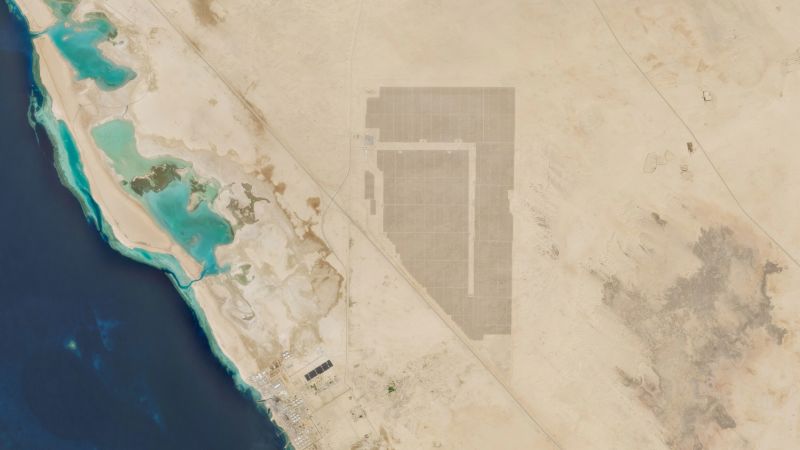
Saudi Arabia is experiencing an unprecedented solar energy boom, with the country rapidly building massive solar farms across its desert landscape. Al Shuaibah 2, currently the nation’s largest solar installation located about 60 miles south of Jeddah, boasts a capacity exceeding 2 gigawatts and can power approximately 350,000 homes, according to ACWA Power. However, even larger projects are already under development as the kingdom races to meet its ambitious renewable energy targets.
The pace of Saudi Arabia’s solar expansion has been remarkable, with experts noting no other country is moving faster. In 2020, the kingdom had virtually no renewable energy capacity, but by the end of 2025, it is projected to reach 12 gigawatts of solar power, according to Nishant Kumar, renewable and power analyst at Rystad Energy. This rapid growth has propelled Saudi Arabia into the top 10 global markets for annual new solar capacity for the first time, based on BloombergNEF data.
Massive Investment Drives Saudi Arabia Solar Expansion
The momentum shows no signs of slowing as Saudi Arabia pursues its goal of generating 50% of electricity from renewable sources by 2030. In July, ACWA Power announced an $8.3 billion investment alongside companies including state-owned Saudi Aramco to develop 15 gigawatts of renewable energy projects, predominantly solar. Rystad projects that more than 70 gigawatts of solar will be installed by the decade’s end, complemented by onshore wind installations.
Major infrastructure developments are planned to run on clean energy, including the $500 billion futuristic city of NEOM and a luxury Red Sea tourism project. These ambitious undertakings demonstrate the kingdom’s commitment to integrating renewable energy into its economic diversification strategy known as Vision 2030.
Economic Factors Fuel Renewable Energy Push
The transformation appears striking for a nation built on oil wealth, but experts say Saudi Arabia’s solar surge makes strong economic sense. “Solar is so cost competitive, it makes financial sense,” said Karen Young, a senior research scholar at the Center on Global Energy Policy at Columbia University. The kingdom faces accelerating electricity demand driven by cooling needs and water desalination requirements.
Additionally, solar costs have plummeted due to an influx of cheap Chinese-made panels flooding the market. The past two years have seen “just unprecedentedly low prices,” according to Dave Jones, co-founder of climate think tank Ember. Battery costs have also fallen dramatically, with average prices dropping by 40% in 2024 alone, making solar energy more flexible and attractive.


Saudi Arabia possesses ideal conditions for solar development, including reliable sunshine throughout most of the year, abundant cheap land, and inexpensive grid connections. The country also benefits from economies of scale, as all installations are vast, allowing negotiation of lower equipment and construction costs, said Abdullah Alkattan, Middle East and North Africa energy transition analyst at BloombergNEF.
Oil Revenue Strategy Drives Clean Energy Investment
Another key driver behind the renewables push is displacing oil from domestic electricity generation to sell it overseas instead. Under Vision 2030, Saudi Arabia pledged to source 50% of electricity from clean energy and 50% from gas by decade’s end. Burning oil domestically is inefficient, and removing it from the electricity mix frees it up for sale on global markets, where profit margins are higher, Alkattan explained.
However, some experts urge caution about the extent of Saudi ambitions. Ana Missirliu, a climate policy analyst at Climate Action Tracker, noted that while the shift is significant compared to doing nothing previously, it remains insufficient compared to what’s needed. Climate Action Tracker rates Saudi Arabia’s overall climate policies and action as “critically insufficient.”
Renewables comprised only around 2% of Saudi Arabia’s electricity mix at the end of 2024, Missirliu said. Despite substantial additions through 2025, she believes the 2030 target is far from feasible. In contrast, Rystad projections show Saudi Arabia on track to achieve more than a third of electricity from renewables by 2030, with the 50% goal achievable a few years later.
Petrostate Renewable Push Contrasts With US Policy
The development sends an important message regardless of whether targets are met, Missirliu noted. “Even a petrostate like Saudi Arabia knows and recognizes that renewables are unavoidable.” This contrasts sharply with current US policy, where the Trump administration is attempting to strangle solar and wind projects in favor of an “energy dominance” strategy focused exclusively on fossil fuels.
Saudi Arabia’s approach represents “truly an ‘all of the above’ energy strategy, which is where it is actually more engaged on clean tech and renewables than the US is now,” Young said. The country is also interested in developing a domestic solar manufacturing supply chain, including battery storage, and producing electric vehicles.
Other Middle East countries including the United Arab Emirates, Oman, and even Iran are also building out renewable energy capacity. However, this solar expansion doesn’t signal the end of the fossil fuel era in Saudi Arabia. The kingdom remains committed to obtaining 50% of electricity from natural gas, and power consumption is increasing so rapidly that renewables aren’t yet displacing large amounts of fossil fuels, Kumar noted.
As COP30 climate negotiations unfold in Brazil, experts will be monitoring whether Saudi Arabia’s domestic solar investments translate into more constructive engagement on global climate policy. The country has historically played a disruptive role in climate negotiations, and whether that stance might shift remains uncertain.


