

 5:43 pm - March 24, 2026
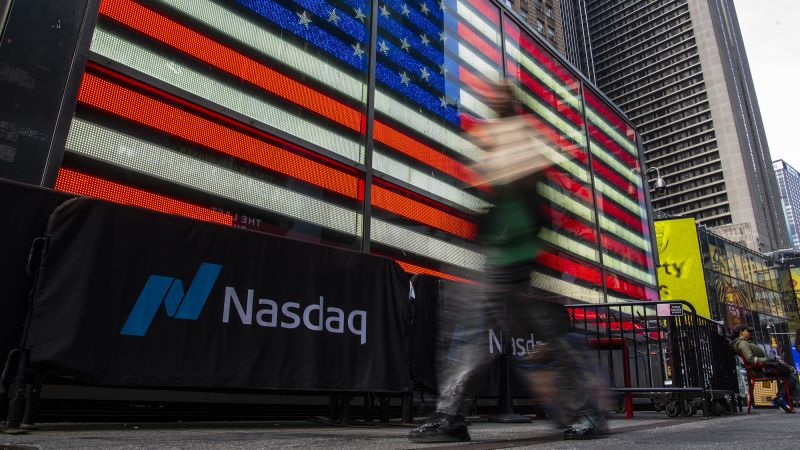
Tech stocks experienced significant losses this week as investor concerns mounted over expensive valuations and the sustainability of the artificial intelligence boom. The Nasdaq Composite fell 3.04% across the week, marking its worst weekly performance since early April, while major AI-related stocks took substantial hits amid growing skepticism about whether massive AI spending will deliver expected returns.
The tech-heavy Nasdaq closed lower by 0.21% on Friday, according to market reports. The benchmark S&P 500 gained 0.13% on Friday after recovering from earlier losses of as much as 1.3% during the trading session. The blue-chip Dow closed higher by 75 points, or 0.16%, after sliding more than 400 points earlier in the day.
AI Valuations Spark Market Concerns
After a monthslong rally in technology stocks, skepticism is mounting about whether high-flying tech companies will continue to produce superior returns. Wall Street’s fear gauge, the CBOE Volatility Index, jumped as much as 16% earlier in the day as a tech sell-off weighed on market sentiment. Additionally, CNN’s Fear and Greed index hovered in “extreme fear” territory and briefly hit its lowest level since April.
Major banking executives voiced concerns about elevated valuations this week. Stocks came under pressure as the CEOs of Goldman Sachs and Morgan Stanley raised questions about current market prices, while Wall Street’s expectations for positive earnings surprises continues to rise following recent months of strong stock performance.
“There are some concerns percolating under the surface with AI valuations,” said Scott Wren, senior global equity strategist at Wells Fargo Investment Institute. The growing unease reflects increasing skepticism about whether the enormous amounts of money being spent on artificial intelligence will be justified by actual returns.
Leading AI Stocks Take Heavy Losses
Nvidia shares and Palantir shares, two stars of the AI trade, fell roughly 7.1% and 11.2% on the week respectively, with each experiencing their worst week since April. Meanwhile, Oracle shares slid 8.89% this week, recording their worst weekly performance this year. Oracle had soared 36% in one day in September after announcing a deal with OpenAI but has nearly erased all of those gains since then.


The sharp reversals in these AI-focused companies highlight renewed uncertainty about the artificial intelligence wave sweeping through markets. However, some analysts believe the concerns may be overblown. “While there are some early yellow flags worth monitoring around circular and debt financing, much of the concern appears to be somewhat overdone in our view,” said Garrett Melson, portfolio strategist at Natixis Investment Managers Solutions.
OpenAI Controversy Adds to Tech Stock Pressure
Contributing to market jitters this week, OpenAI found itself under scrutiny after top executives backtracked from earlier comments suggesting government help might be needed to pay for roughly $1.4 trillion in chips and infrastructure the company has announced. The incident raised questions about the financial viability of major AI initiatives and the companies partnering with OpenAI.
“Nearly every major technology company in the US equity market has celebrated their entanglement with a company that lacks the resources to meet its obligations,” Mike O’Rourke, chief market strategist at JonesTrading, said in a note. “These companies have each invited a much greater degree of uncertainty into their financial forecasts.”
Government Shutdown Compounds Market Uncertainty
While concerns about tech valuations dominated headlines, the prolonged US government shutdown, which became the longest in history this week, also lingered in the background affecting investor sentiment. Consumer sentiment hit its lowest level since June 2022, according to the University of Michigan’s latest survey, with many respondents citing the shutdown as a key concern.
In contrast to the morning’s losses, stocks bounced off their lowest levels on Friday as investors bought the dip and embraced hopes that the government shutdown might come to an end soon. Senate Minority Leader Chuck Schumer said Democrats were proposing a deal to end the shutdown, though it is not expected that Republicans will accept the offer.
Pressure to resolve the shutdown is expected to intensify as the Thanksgiving travel season approaches. However, the timing and terms of any potential agreement remain uncertain as political negotiations continue.


