

 5:50 pm - March 24, 2026
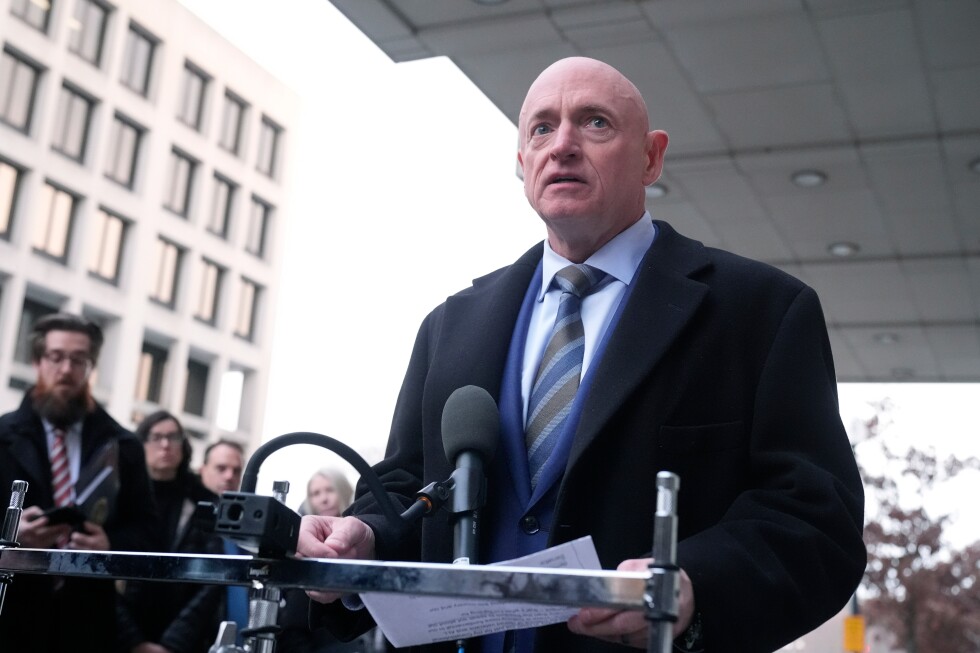
A federal judge expressed significant skepticism Tuesday about the Pentagon’s authority to censure Senator Mark Kelly, questioning whether any legal precedent supports punishing a sitting lawmaker who is also a military retiree. U.S. District Judge Richard Leon heard arguments in the Pentagon censure case involving the Arizona Democrat, who participated in a video urging troops to resist unlawful orders from the Trump administration. The judge did not issue an immediate ruling but indicated concerns about the constitutional implications of the military’s actions against Kelly.
Senator Kelly, a retired U.S. Navy captain, attended the hearing as his legal team challenged Defense Secretary Pete Hegseth’s January 5 censure. The disciplinary action stems from Kelly’s appearance in a November video alongside five other Democratic lawmakers, all military or intelligence veterans, encouraging service members to uphold their constitutional oaths.
Judge Questions Legal Precedent for Pentagon Censure
During the hearing, Judge Leon directly challenged Justice Department attorney John Bailey’s defense of the censure. According to the judge’s remarks, he stated he knows of no U.S. Supreme Court precedent to justify the Pentagon’s censuring of a sitting senator who also holds retired military status. Leon questioned whether the government was asking him to create new legal ground without established case law.
Bailey argued that Congress established authority for the military to oversee retirees through the Uniform Code of Military Justice. “Retirees are part of the armed forces,” Bailey told the court, asserting they remain subject to military jurisdiction even after formal retirement.
First Amendment Rights at Center of Dispute
Benjamin Mizer, representing Kelly, countered that no legal rulings support the concept that military retirees possess diminished free speech rights. The attorney emphasized that the First Amendment clearly protects Kelly’s participation in the video, which called for troops to resist illegal military directives. Mizer warned that creating such limitations would establish unprecedented restrictions on constitutional rights.
Additionally, Judge Leon raised concerns about broader implications beyond Kelly’s case. The judge noted that the Pentagon’s actions could create a chilling effect on free speech for numerous military retirees who wish to voice political opinions. This concern highlights the potential impact on thousands of former service members who maintain retired status while engaging in civilian life.


Political Fallout and Investigation Details
The controversy began when the 90-second video appeared on social media in November, posted initially on an account belonging to Senator Elissa Slotkin. Representatives Jason Crow, Chris Deluzio, Maggie Goodlander, and Chrissy Houlahan also participated in the recording. However, Kelly became the sole target of Pentagon investigation because he is the only participant who formally retired from military service rather than separating through other means.
Meanwhile, President Donald Trump responded to the video by accusing the lawmakers of sedition in a social media post, calling it “punishable by DEATH.” Defense Secretary Hegseth subsequently described Kelly’s censure as “a necessary process step” that could lead to demotion from his retired rank and reduction in retirement benefits. The Pentagon initiated its investigation in late November under federal law allowing retired service members to be recalled to active duty for potential court-martial proceedings.
Constitutional Questions Remain Unresolved
In contrast to the government’s position, Kelly’s legal team maintains that censuring a sitting senator for protected political speech violates fundamental constitutional principles. The case raises complex questions about where military jurisdiction ends and civilian rights begin for retired service members. These issues become particularly significant when the retiree also serves as an elected federal official with independent constitutional duties.
Judge Leon, appointed by Republican President George W. Bush, indicated he plans to issue a written ruling by next Wednesday. The decision could establish important precedent regarding the balance between military authority over retirees and First Amendment protections, particularly for those serving in public office.