

 5:44 pm - March 24, 2026
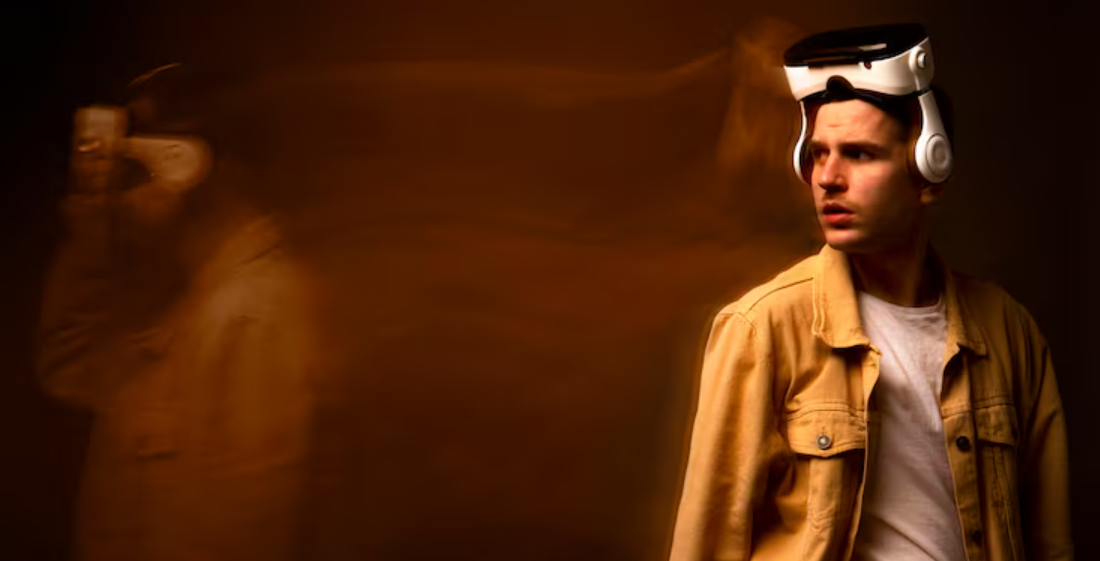
Not too long ago, I was watching a brief online video of a politician speaking at a podium, pausing in the middle of his sentence, and adjusting his tie when I felt like something wasn’t quite right. The lighting appeared appropriate. The voice had the well-known rhythm. However, the eyes remained unsettled. It lingered far too long. It’s getting harder to ignore the question that was brought up by that slight hesitation: what if none of this really happened?
Media produced by AI is no longer novel. It’s no longer merely a curiosity found in specialized online forums or research labs. Nowadays, it can be found everywhere—on social media, in advertising campaigns, and subtly incorporated into regular content. It blends in so well that most people are no longer even aware of it. Perhaps that’s the point.
| Category | Details |
|---|---|
| Topic | AI-Generated Media & Deepfake Technology |
| Key Technologies | Generative Adversarial Networks (GANs), Neural Networks, Voice Cloning |
| Major Players | OpenAI (Sora), Meta (Emu Video/Vibes), Independent AI Developers |
| First Emergence | Around 2017 (Deepfake tools become public) |
| Primary Concern | Misinformation, identity misuse, erosion of trust |
| Industries Affected | Media, politics, entertainment, cybersecurity |
| Detection Methods | Multimedia forensics, CNN-based detection models |
| Ethical Issues | Consent, identity ownership, manipulation |
| Cultural Impact | Rise of virtual influencers, synthetic storytelling |
| Reference | https://www.nature.com/articles/s42256-020-00244-9 |
Its underlying technology has advanced to an almost unsettling degree. At a glance, systems that have been trained on large datasets and have learned human expression patterns can now produce voices, faces, and entire scenes that seem real. Media creation has become a sort of machine competition thanks to generative models, particularly GANs. One machine creates images while another critiques them, increasing realism with each cycle. The end product is content that behaves like reality in addition to looking real.
It’s possible that this is where the true change is occurring—not in the technology per se, but rather in the way it permeates daily life.
AI is being covertly used by editors in movie studios to recreate actors, sometimes even those who have passed away. Time is saved. It is cost-effective. However, it also poses an unsettling question: if performances can be created after death, what precisely is being preserved—the art or merely the appearance of it? There is a subtle sense of awe mixed with discomfort when viewing these recreated scenes; it’s like witnessing a ghost act on command. Things become more hazy outside the studio.
Synthetic identities are now being tested on social media. Millions of people are becoming followers of virtual influencers who are completely fake but emotionally expressive. They share thoughts, upload pictures, and recommend goods. Some users engage with them as though they were actual people, making remarkably genuine remarks. It’s difficult to ignore how quickly audiences adjust, embracing these characters as part of the cultural fabric rather than as novelties. Expectations are quietly changing. In the past, authenticity had a purpose. It’s negotiable now.


The more serious issue is not only that AI can produce phony content, but also that it can produce convincing stories on a large scale. Once awkward and obvious, deepfakes have developed into something much more convincing. It only takes a few minutes to create a video that depicts events that never happened but looks professional enough to go viral before anyone questions it. It’s possible that the harm has already been done by the time doubt comes up.
There is a feeling that truth is no longer a fixed point of reference but rather something that is molded by reach and repetition.
This is particularly concerning during times of political unrest. Synthetic videos that portray disputes, speeches, or crises can be customized for particular audiences, supporting rather than refuting preconceived notions. No matter how sophisticated, it’s still unclear if current detection methods can keep up with the rate of creation. Every system created to detect manipulation gives rise to another created to avoid it. Thus, the cycle keeps going.
The concept of identity itself is beginning to feel unstable. Users can now license their likeness on certain platforms, thereby converting their faces into digital content that can be used again. At first, it sounds experimental, even lighthearted. However, it becomes challenging to distinguish between a face that has been replicated, remixed, or redistributed. There is a hint of plausible deniability. Was that a real video? Or just one more version?
As one observes this, a subtle realization begins to take shape: control is eroding, albeit slowly and almost politely.
However, not every outcome is harmful. AI-generated media is creating opportunities, such as enabling multilingual communication, giving voice to the voiceless, and enabling filmmakers to make movies without a budget. These are significant developments. actual ones. But they exist alongside a growing tension, a sense that the same tools enabling creativity can just as easily distort reality. It feels like an unresolved duality.
The most remarkable thing is probably how fast people adapt. Younger audiences in particular appear to be more interested in how something feels than whether it is real. More important than factual accuracy is emotional resonance. A story’s origin becomes less important if it connects. Although that change may not be noticeable right now, it will have long-term effects. Once lost, trust is hard to regain.
This trajectory has no obvious end. Systems for detection will get better. There could be regulations. Labels and security measures will be tested by platforms. However, none of it seems totally adequate. Neither the technology nor its uptake are slowing down.
We’re witnessing reality itself become negotiable, shaped not only by events but also by algorithms that interpret them, and it’s difficult not to feel like we’re at a turning point. The disturbing aspect is that the line hasn’t completely vanished. It’s disappearing.


