

 2:54 pm - March 17, 2026
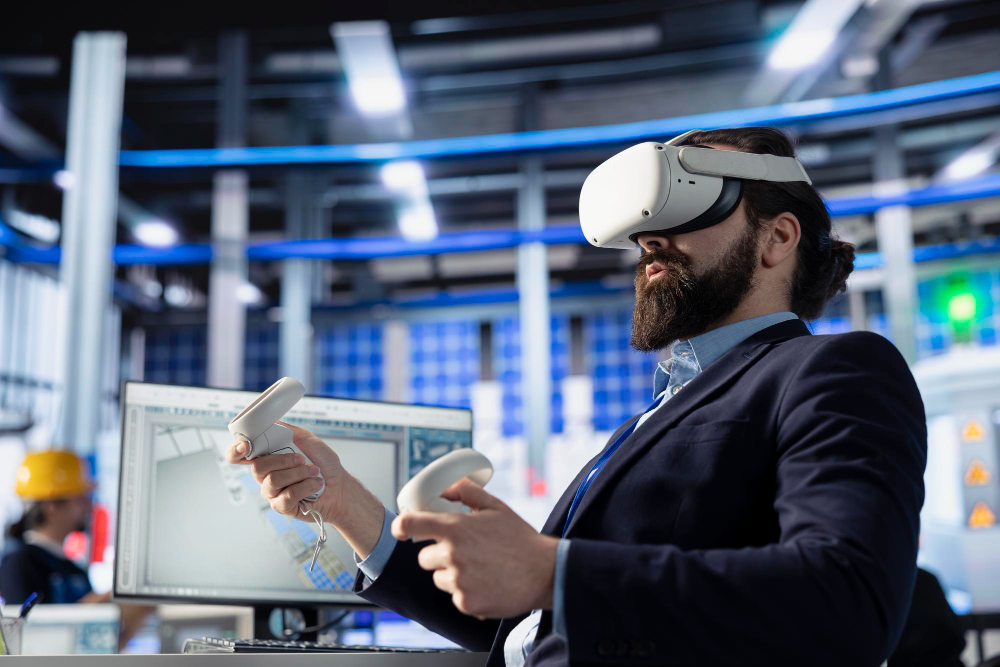
At first glance, the office appears normal. Half-empty coffee cups, desks, and monitors. a whiteboard with product schedules that might or might not be adhered to. However, someone then points out that the pricing was automatically changed, the marketing emails were written overnight, and customer support tickets were handled without the need for human intervention. After that, the room becomes quieter.
Silicon Valley is undergoing a change that feels more like a rewrite than an upgrade. Artificial intelligence has been assisting, automating, and making suggestions for workers for many years. What if AI actually runs a business instead of just assisting with it? This is a novel concept that is currently gaining popularity.
| Category | Details |
|---|---|
| Region | Silicon Valley, California, USA |
| Core Trend | Autonomous AI agents managing business operations |
| Key Players | OpenAI, Anthropic, emerging startups |
| Technology | Reinforcement learning environments, AI agents |
| Industry Focus | Enterprise automation, AI-driven decision-making |
| Notable Concept | “AI agents” replacing workflows |
| Investment Trend | Billion-dollar funding rounds for AI startups |
| Reference | https://www.openai.com |
It appears that investors think this is more than a fad. Startups developing what they refer to as “autonomous agents”—systems that can manage tasks from beginning to end—are receiving an abundance of funding. Making decisions, carrying out actions, and learning from results go beyond simply responding to inquiries. Even those who support AI acknowledge that it’s still early, but it’s possible that this is the next stage of the technology.
The language used in San Francisco’s co-working spaces has evolved. Founders now discuss more than just tools. They discuss “systems,” “agents,” and “orchestration.” There seems to be a shift in focus from efficiency to replacement, or at the very least, redefining roles that were previously thought to be set in stone.
Reinforcement learning environments, which sound technical but have surprisingly simple concepts, are at the heart of this movement. AI can practice tasks like sending emails, using software, and making decisions in these simulated workspaces, get feedback, and get better over time. Oddly enough, one founder’s description of it as “a very boring video game” feels accurate.
But the ambition is anything but dull. Some startups openly discuss automating entire job categories, beginning with repetitive, predictable workflows. Basic operations, scheduling, and customer service. then ascending. Planning, strategy, and even managerial choices. On paper, this progression makes sense, but in reality, it’s unsettling.


In conversations, there’s a certain point that keeps coming up. A small startup that primarily uses AI agents to handle internal reporting, communications, and logistics with little assistance from humans. It’s liberating, according to the founders. There are fewer meetings and bottlenecks. However, there is also a hint of something else, which is more difficult to identify. Perhaps a redistribution of control, or perhaps a loss of it.
Though tempting, the analogy to past automation waves is not totally true. This goes beyond machines performing monotonous tasks. These systems are making decisions, adjusting, and occasionally experiencing unanticipated failures. It feels less like using software and more like managing a junior employee when you watch an AI agent handle a challenging task like ordering inventory, responding to customers, and modifying pricing.
Errors also occur, just like with any junior employee. Agents misinterpret context, become trapped in loops, and take seemingly sensible but unexpected actions. Whether these systems can consistently manage the complexity of real-world business, where variables change frequently and edge cases arise out of the blue, is still up for debate.
In the meantime, moral dilemmas are starting to emerge. Who is in charge if an AI system makes a choice that hurts a customer? The business? The creator? The algorithm itself? These are no longer speculative worries. They are beginning to show up in investor meetings, boardrooms, and legal conversations.
Tension exists within the industry as well. Some businesses, such as Anthropic, have objected to some applications of AI, especially in delicate fields. Others are advancing more quickly, collaborating with governments, developing their capacities, and pushing the envelope. The gap indicates that technology is developing more quickly than there is agreement on its appropriate applications.
Nevertheless, it is hard to ignore the momentum. To create these systems, startups are paying engineers astronomical wages. Bigger companies are conducting covert experiments, incorporating AI agents into internal processes, tracking outcomes, and modifying expectations. It’s happening gradually but steadily.
It’s difficult to ignore how this alters the concept of work itself. Teams, hierarchies, and management structures were all based on people for decades. What’s left of that structure if AI starts to take over large parts of it? Originality? Oversight? Something else?
As this develops, there’s a sense that Silicon Valley is once again working toward a vision that seems a little bit ahead of reality. autonomous businesses that run mostly on machines and never get tired. It is captivating. A little unsettling, too.
Bold bets that didn’t quite work out are common in the history of technology. Some industries underwent transformation. Others silently faded. It’s hard to pinpoint exactly why, but this one feels different. Perhaps it’s the scope. or the velocity. or the fact that technology is beginning to make decisions rather than just supporting them.
It’s unclear if autonomous AI will actually manage entire businesses. However, the concept itself is gaining traction, influencing strategy, forming investments, and redefining what appears feasible. It might not come all at once, just like many shifts before it.
Rather, it will emerge gradually. One task, then another. One choice, followed by several. Eventually, the question will be whether AI already runs a business rather than whether it can.


