

 11:49 am - March 10, 2026
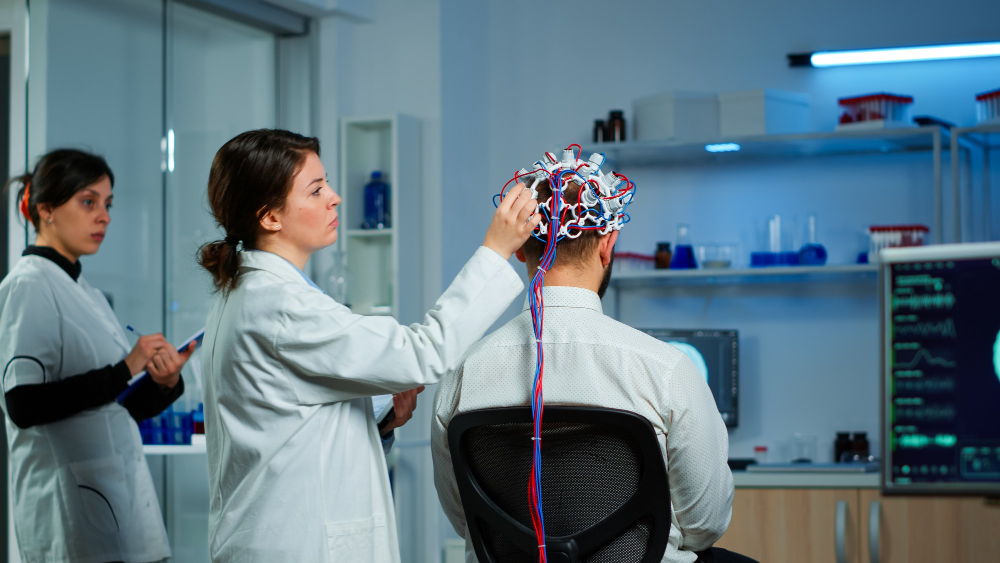
A team of scientists recently spent hours gazing at brain scans glowing on computer monitors on a quiet floor inside a hospital research wing in Chengdu, China. Thin neural pathways twisting like city highways seen from above, colorful clusters, and faint pulses of activity gave the images an almost abstract appearance.
However, those patterns might hold the answer to one of the oldest questions people have ever asked: the true origin of consciousness.
Philosophers stared at books and chalkboards for centuries as they debated the issue. Instead, neuroscientists are focusing on MRI and PET scans. And the evidence is starting to mount, sometimes in a frustratingly slow manner.
| Category | Information |
|---|---|
| Field | Neuroscience |
| Research Focus | Neural mechanisms behind human consciousness |
| Key Brain Regions Identified | Right parahippocampal cortex, middle cingulate cortex, precuneus |
| Research Method | Combined MRI and PET brain imaging |
| Study Subjects | Patients with disorders of consciousness and healthy individuals |
| Major Institution | Sichuan University |
| Published Research | Frontiers in Neuroscience |
| Reference | https://www.popularmechanics.com/science/health/a60000000/location-of-consciousness-brain |
The most recent hints come from Sichuan University researchers who studied patients with long-term consciousness disorders, such as severe brain injury and coma. Scientists found something interesting when they compared their brain activity to that of healthy people. When consciousness vanished, certain parts of the brain consistently displayed abrupt changes in activity.
The areas that stood out were the right parahippocampal cortex, the middle cingulate cortex, and the precuneus. These aren’t particularly well-known. However, in the field of brain science, they are recognized for managing some of the most human cognitive functions, such as self-reflection, memory, and attention.
Eyebrows were raised when those areas became silent during unconscious states.


Using a hybrid imaging technique that combined MRI and PET scans, the research team was able to observe the brain’s structure as well as its metabolic activity. Complex communication between brain networks—signals traveling across various regions like traffic through a busy downtown intersection—was demonstrated by healthy subjects.
The appearance of patients with severe consciousness disorders was drastically different.
Their scans revealed decreased brain network communication and decreased metabolic activity. There was more than one area that switched off. It appeared as though a whole dialogue between brain systems had stopped.
That concept has an oddly poetic quality. It is possible that consciousness does not reside in a single place. It may be present in the signals that travel back and forth between different parts of the brain, generating an internal dialogue that leads to awareness.
This is sometimes referred to by scientists as bidirectional processing. The brain uses sensory pathways to transmit information when we see something, like a bright light or a face across the room. However, the brain also interprets and refines what we see by sending signals back. According to the research, perception may happen without that feedback loop, but conscious awareness may not.
At first, that distinction seems subtle. However, it may help to explain why some brain injuries result in survivors who appear to be oblivious to their surroundings. Although the brain’s feedback systems are unable to complete the loop, the sensory signals continue to move forward.
Researchers are starting to view consciousness less as a mystical phenomenon and more as a quantifiable process as they watch this develop via brain imaging. The science is still cautious, though.
The authors of the study caution that their results are only preliminary. The brain is infamously complex, and the sample size was small. It’s possible that other networks or areas have just as significant roles.
Nevertheless, the results are consistent with a larger trend in neuroscience. Many scientists believed for decades that consciousness might be dispersed throughout the brain. Now there’s a growing sense that certain hubs—particularly those involved in attention, memory, and self-representation—act as central crossroads for conscious experience. Researchers are pursuing this question from various angles in labs all over the world.
Some are researching anesthesia by observing how certain brain signals slow down and cause consciousness to wane. Others are investigating altered states like psychedelic experiences or dreams. Researchers studying artificial intelligence are even participating in the discussion, in part because comprehending consciousness may help define what machines can—or cannot—become.
It’s difficult to ignore the impression that something more significant is taking place as these fields come together.
It has long been believed that human consciousness is an almost mystical quality that sets humans apart from machines, animals, and possibly even the rest of the cosmos. However, the mystery is gradually becoming a technical issue in neuroscience labs—difficult, yes, but possibly solvable.
And the conversation’s tone is altered by that change. In theory, scientists could measure consciousness if it really results from communication between brain networks. By examining neural connectivity patterns in patients who seem unconscious, some researchers have already tried to achieve this.
There are huge ramifications. One day, medical professionals may be able to ascertain whether a patient in a coma still has hidden awareness. Restoring communication between damaged brain networks may be the goal of new treatments. Even the moral dilemmas raised by decisions about life support may become more apparent.
However, the field is still hesitant. Simple explanations tend to elude consciousness. Every time scientists believe they have the answer, fresh information emerges that suggests the narrative is more nuanced.
However, there is no denying the progress. There’s a sense that science is moving closer to something significant when you look at those glowing brain scans—clusters of activity lighting up and fading. Maybe not a definitive response. Perhaps consciousness is too complicated for that. But nearer than previously. And that’s how revolutions in science sometimes start.


