 11:04 am - March 9, 2026
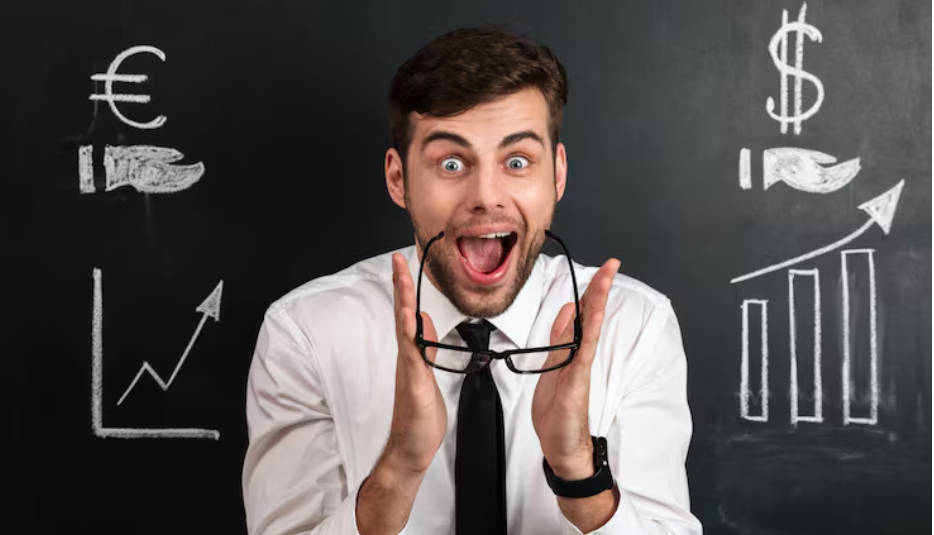
The economy is currently in a peculiar mood. Small indicators of it include the subdued tension in a grocery checkout line, the way people check their banking apps after paying their rent, and the uncomfortable jokes about layoffs that circulate through office hallways. The economy seems stable on paper. However, as you go about your daily life, it doesn’t feel quite that way.
The contradiction has been noted by economists. Growth persists, unemployment stays comparatively low, and the stock market continues to rise due in large part to a frenzy surrounding artificial intelligence firms. In financial districts from New York to Singapore, trading screens glow late into the night as investors celebrate new highs. However, there is a feeling that the foundation of all of this may not be as stable as the statistics indicate.
| Category | Details |
|---|---|
| Topic | Modern Economic Uncertainty |
| Key Concept | K-Shaped Economy |
| Major Drivers | AI investment boom, inflation, consumer debt |
| Key Institutions | Federal Reserve, Brookings Institution |
| Notable Economists | Mark Gertler (NYU), Ben Harris (Brookings) |
| Current Conditions | Low unemployment but weak hiring growth |
| Public Sentiment | Consumer confidence at decade lows |
| Structural Issue | Wealth concentration among high-income households |
| Economic Era | Post-pandemic global economy |
| Reference | https://www.federalreserve.gov |
The K-shaped economy, as economists refer to it, is partially to blame for the uneasiness. The scale feels different now, but the idea isn’t new. The AI boom and rising asset prices have greatly benefited wealthier households, who own the majority of the stock market. In the meantime, a lot of middle-class and lower-class workers are seeing their paychecks struggle to keep up with the rising cost of groceries.
The contrast is difficult to ignore. On Friday nights, restaurants in posh neighborhoods are still full, with lengthy lines and pricey wine lists. Discount stores a few miles away are packed with customers comparing prices on necessities. Both scenes are simultaneously present, exposing two distinct facets of the same economy.
For their part, investors appear both anxious and thrilled. The rise in artificial intelligence firms has caused markets to rise sharply, with valuations that are reminiscent of the dot-com bubble. Although many people think AI will actually increase productivity, the level of speculative enthusiasm begs the question of how long the rally can last.
According to some analysts, the overall economy may already appear weaker in the absence of the influx of AI investment capital. It’s possible that the technological boom is concealing underlying vulnerability, momentarily accelerating growth while more serious economic pressures develop covertly.


Another illustration of this odd equilibrium can be found in the labor market. Employers are not making aggressive hiring decisions, but they are also not firing a lot of employees. This period is sometimes referred to by economists as a “no hiring, no firing” economy. Although it sounds stable, that kind of stability can be brittle.
Imagine a workplace where no new opportunities arise, but everyone keeps their jobs. Employees cease to move. Raising gets smaller. Risk-taking diminishes. That cautious attitude gradually permeates the labor market like mist that descends on a city.
Hints of this change can be seen in the current discourse on work. A few years ago, during the post-pandemic employment boom, changing employers frequently resulted in better pay and working conditions. Many employees today are acting in the opposite way. They remain stationary. Not because they enjoy their work, but rather because it could be worse to lose it.
Meanwhile, the amount of consumer debt keeps increasing. Delinquencies on auto loans are gradually increasing, and credit card balances are rising. These trends imply that many households are stretching their finances farther than before, but they are not disastrous; economists frequently refer to them as a “yellow light,” not a red one.
The mood is further enhanced by inflation. Prices are still higher than what people became used to for decades, even though they are increasing more slowly than they did a few years ago. It is rare for the price of groceries, housing, and utilities to decrease after they have increased. Long after the inflation rate itself declines, the memory of those price hikes endures.
The significant discrepancy between economic data and public opinion could be explained by this lingering effect. Despite ongoing economic growth, surveys indicate that consumer confidence is close to decade lows. People seem to trust their own experiences more than official indicators as they watch this disconnect develop.
The calculation is straightforward in many households. Even though GDP may be increasing, the economy isn’t feeling very strong if rent increases more quickly than income. More information can be found in the monthly bank statement than in any national report.
Then there are the risks that aren’t clearly depicted in economic models, or the unknown risks. For example, in recent years, large private credit markets have expanded quickly, providing funding to businesses that traditional banks might not consider. Some business executives are subtly concerned that there might be hidden weaknesses there, just waiting for the wrong time to show up.
Jamie Dimon once used the vivid metaphor of cockroaches to explain these hidden dangers. If one bankruptcy occurs in a vulnerable industry, there’s always a chance that more may be lurking nearby.
As a result, the economy is in an odd position. Both robust and delicate. Uncomfortable and growing. It is sometimes compared by economists to Schrödinger’s well-known physics experiment, which involves a system in which two opposing realities coexist.
It can be unnerving to stand in that paradox. One thing is evident from the data. Sometimes one thing is suggested by everyday life. As this is happening, it’s hard not to have a sneaking suspicion that the economy is still unsure of its future.