

 10:59 am - March 9, 2026
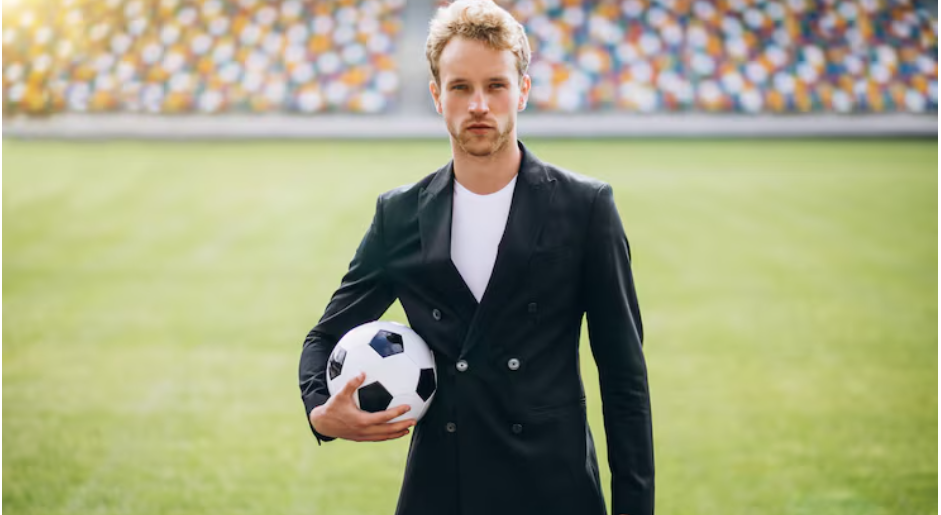
The Beckham name has a peculiarly enduring quality. The brand still has a certain gravity that attracts photographers, sponsors, investors, and fans to it even decades after his most well-known objectives. David Beckham’s estimated net worth today is $550 million, which is more akin to the balance sheet of a multinational corporation than a retirement amount.
Of course, football was where the story started. Beckham, a slender midfielder with a precise right foot and a propensity to practice long after practice sessions ended, made his Manchester United debut as a teenager in the early 1990s. Beckham’s teammates used to joke that he would be on the field bending free kicks into empty nets while others went to the locker room. Although it’s easy to romanticize those formative years, the reality is more straightforward: skill combined with unrelenting practice.
| Category | Details |
|---|---|
| Full Name | David Robert Joseph Beckham |
| Born | May 2, 1975 – London, England |
| Profession | Former Professional Footballer, Entrepreneur, Investor |
| Estimated Net Worth | ~$550 million |
| Major Clubs | Manchester United, Real Madrid, LA Galaxy, AC Milan, Paris Saint-Germain |
| Business Roles | Co-owner & President of Inter Miami CF, Co-owner of Salford City |
| Key Income Sources | Football salaries, endorsements, investments, club ownership |
| Spouse | Victoria Beckham (married 1999) |
| Major Brand Deals | Adidas, Pepsi, Maserati |
| Reference | https://www.forbes.com |
| Reference | https://www.intermiamicf.com |
As soon as the trophies arrived, money followed. Beckham contributed to league titles, FA Cups, and the historic 1999 Champions League victory at Manchester United. During those years, he was paid between $7 million and $10 million a year, which was modest by today’s football standards but respectable at the time. However, there was already a belief that Beckham’s worth went well beyond the field, especially among sponsors. The commercial machinery began to hum outside stadiums.
Beckham was one of the most well-known athletes in the world by the late 1990s. Magazine covers featured his hairstyles. Advertisers took notice. After signing deals with companies like Adidas and Pepsi, he eventually established a business network that is said to have brought in hundreds of millions of dollars during his career.
There was a sense that Beckham understood something that many athletes didn’t: image is currency, as evidenced by those endorsement deals.
That notion was strengthened by the 2003 transfer to Real Madrid. Florentino Pérez was assembling the “Galěicos,” a group of football stars intended to rule both marketing and athletics. Beckham was a perfect fit. While the club’s stores sold jerseys at a dizzying pace outside, fans inside the Santiago Bernabéu stadium waved white scarves under the bright Spanish lights. Beckham was more than just a midfield player for Madrid. An economic engine, he was.


Then came the 2007 transfer to the LA Galaxy in Major League Soccer, which at first baffled a lot of football traditionalists. Critics questioned whether Beckham was giving up on elite competition in favor of Hollywood glitz. However, the contract itself suggested a more complex plan.
Beckham negotiated revenue shares linked to ticket sales, sponsorships, and merchandise rather than just taking a salary. Although the base salary was roughly $6.5 million annually, the deal’s total value—which included marketing rights—was much higher. Later, some analysts speculated that the deal might eventually be worth hundreds of millions of dollars. The most intriguing clause of all came next.
A $25 million option for Beckham to buy a future Major League Soccer team was included in that contract. It seemed like an odd benefit at the time. It appears almost visionary today. Years later, Beckham exercised the option, forming Inter Miami CF, the team that started competing in 2020. According to multiple industry estimates, the team’s valuation has since surpassed $1 billion.
When passing Inter Miami’s pink-trimmed crest today, it’s difficult to ignore how much Beckham himself is reflected in the project. Stylish, aspirational, and a little dramatic. but also well-thought-out. Investors seem to think the club’s expansion is only getting started.
Endorsements are another major source of Beckham’s wealth. He reportedly made over $160 million from his lifetime partnership with Adidas alone, and he still receives royalties from branded goods. The numbers quickly mount when you include Maserati campaigns, fragrance lines, and licensing agreements. It’s possible that Beckham’s yearly salary has increased since his playing days.
However, money rarely provides a complete picture. Beckham’s marriage to Victoria Beckham, the former Spice Girls star who is now a fashion designer, contributed to his fame and made the couple something of a cultural institution. In the past, British tabloids used the term “Posh and Becks” to refer to a new kind of athlete celebrity. That fame has always been viewed with suspicion.
Some critics contend that Beckham’s football skills were overshadowed by his brand. However, it’s hard to ignore the skill when watching old footage of those bending crosses from the right flank or the well-known goal from the halfway line against Wimbledon. Beckham’s vision and set-piece accuracy changed games even though he wasn’t the fastest player on the field. and occasionally professions.
As a businessman, ambassador, and club owner today, Beckham seems at ease. His investments include fashion partnerships, esports endeavors, and sports teams. The Beckham brand is still growing even in retirement, subtly adding to his $550 million fortune.
One thing is evident when you stand outside Inter Miami’s stadium on a muggy Florida evening with supporters sporting pink jerseys and Beckham’s name still inscribed on their backs. In 2013, the football career came to an end.The Beckham business story, however, is still developing.


