

 4:01 am - March 7, 2026
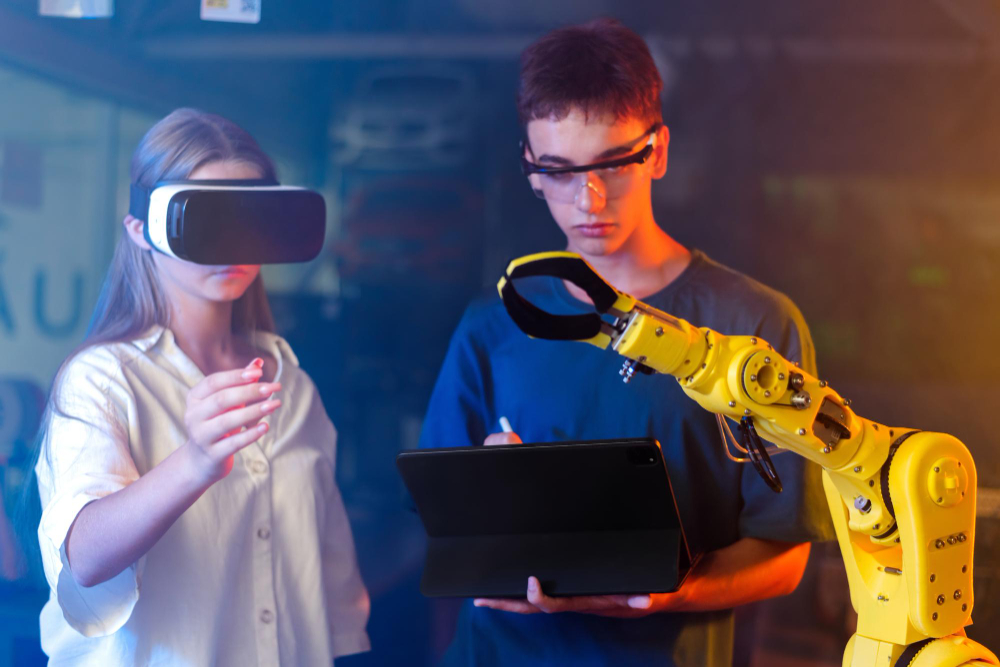
A software developer is sitting quietly and gazing at his screen late on a weekday afternoon in a small San Francisco coworking space. No frenzied typing or a stream of code scrolling down the screen is present. Rather, he drafts a brief paragraph outlining the app he intends to create, including how it should function, what the buttons should do, and how the design might appear. Then he leans back in his chair and presses enter.
The remainder of the afternoon would have been devoted to coding a year ago. He waits now.
After a few minutes, the AI starts writing thousands of lines of code, putting the application together one component at a time. It launches the software, tests its own features, modifies the layout, fixes bugs, and then launches the program once more. The app is practically complete by the time the developer returns. There is an odd atmosphere in the room as this is happening, a mix of mild disbelief and fascination.
| Category | Details |
|---|---|
| Topic | Next-generation artificial intelligence systems |
| Key Technologies | Generative AI, Agentic AI, Autonomous systems |
| Influential Companies | OpenAI, Google DeepMind, Anthropic |
| Notable Figure | Matt Shumer – CEO of OthersideAI |
| Core Development | AI systems capable of autonomous decision-making |
| Emerging Trend | AI agents performing multi-step tasks independently |
| Potential Impact | Automation of knowledge work and complex decision processes |
| Reference Website | https://fortune.com |
The speed at which artificial intelligence has advanced is difficult to ignore. AI acted like a helpful assistant for the majority of the last ten years. It might suggest the next word in a sentence, filter spam emails, or make movie recommendations. Even the initial wave of generative AI, which gained widespread attention a few years ago and included chatbots that could write essays or create images, was still largely dependent on human cues. Ask a question and receive a response. Give an order, get an answer.
The younger generation is beginning to act differently. Some systems are starting to perform tasks on their own, rather than just reacting to commands. Researchers frequently refer to this as “agentic AI,” a technical term that basically refers to machines that are able to pursue objectives independently. These systems can plan actions, test results, adjust their tactics, and continue until the goal is reached once they are given a broad objective.
The change is already apparent in the technology sector. Engineers at a number of startups are experimenting with AI agents that can conduct market research, generate reports, create products, and even operate software without constant oversight. The system orchestrates entire workflows rather than just one task, making hundreds or even thousands of little decisions along the way.


This moment is unique in that a lot of it is taking place in silence. The majority of people still come into contact with AI through user-friendly interfaces like voice assistants, chat windows, and recommendation engines. However, much more intricate systems are constantly operating behind those interfaces. Real-time portfolio adjustments are made by financial algorithms. Shipments are rerouted by logistics software according to demand and weather. Attacks are detected and stopped by cybersecurity programs before human analysts are even aware of them.
Because it integrates into infrastructure, the next generation of AI is less noticeable. AI-powered monitoring systems in big hospitals monitor streams of patient data and identify possible issues before medical professionals do. Trading algorithms in financial markets execute orders in milliseconds after scanning economic signals. Autonomous software in global supply chains adapts inventory levels and routes to changing conditions.
Taken separately, none of this seems dramatic. When combined, however, they suggest a more profound change.
AI seems to be progressively shifting from the periphery of systems to their core. A growing number of technology companies are integrating decision-making logic directly into their platforms. Software no longer waits for commands; instead, it anticipates needs and suggests or executes actions. If the cost of a subscription has gone up, a digital assistant may suggest terminating it. Before a user even logs in, an investment platform may rebalance their portfolio.
The ease of use is clear. The ramifications are less obvious. By managing the repetitive cognitive tasks that comprise many modern jobs, such as data analysis, report generation, and customer communication, some researchers think these systems could significantly increase productivity. Others are concerned that automation may become more prevalent in professional domains more quickly than anticipated.
It’s evident from observing the industry discussions that even insiders are a little uncertain about the direction this trajectory will take.
When discussing tools that can create software, evaluate legal documents, or carry out intricate research projects, executives at AI startups frequently speak with cautious excitement. The same executives, however, occasionally acknowledge in private that technology is developing more quickly than they can foresee its effects.
It’s a familiar tension. There are many instances in the history of technology where new tools subtly reached a tipping point. Before completely changing entire industries, the internet appeared to be a curiosity in the early 1990s. Prior to becoming the main entry point to everyday life, smartphones were considered luxury devices.
AI might be on the verge of a similar moment. The distinction is that technology is developing at an unusually rapid rate. Even seasoned researchers are surprised by how quickly advancements in computing power, data availability, and machine learning techniques have accelerated progress.
According to some, this path may eventually result in artificial general intelligence—systems that are able to carry out a wide variety of cognitive tasks at a level comparable to that of humans. Others contend that real understanding and reasoning are still absent from today’s models.
Which side is correct is still up for debate. The new generation of AI is already subtly functioning throughout the digital infrastructure that drives contemporary life, which is more certain. Not as a technology of the far future. Not as a test of conjecture.
However, as a collection of background-operating systems that make choices, modify results, and absorb knowledge from them. The time when the rest of the world takes notice may come sooner than anticipated if the rate of development over the last few years is any indication.


