

 5:19 pm - March 5, 2026
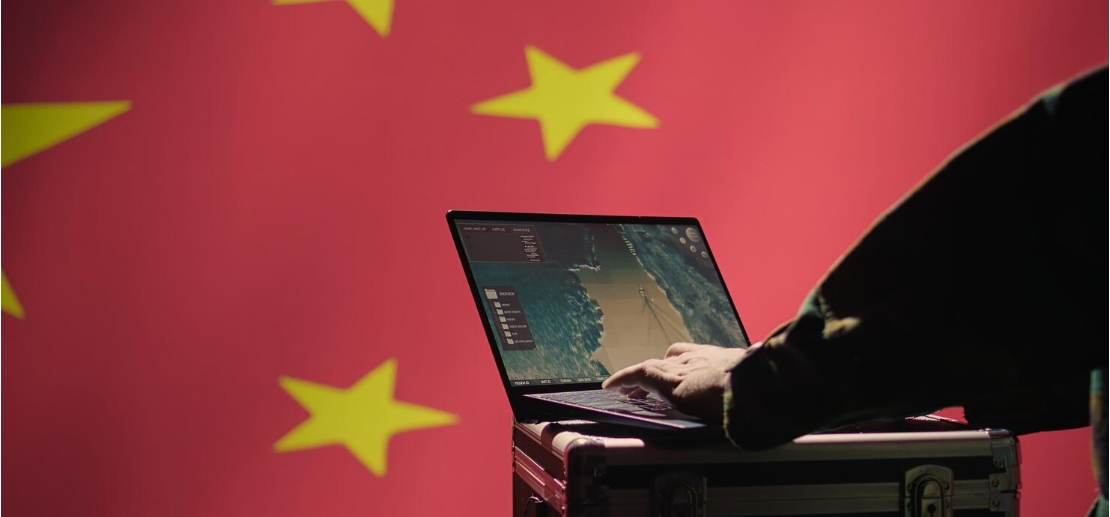
Recently, the trade relationship between the United States and China has been strangely calm. Tariffs are now less harsh. Export restrictions are gradually loosened and then tightened again. However, there is a more intense activity taking place beneath that diplomatic silence. The global power structure is subtly changing as the AI race between the United States and China picks up speed.
In today’s Silicon Valley, engineers discuss models with trillions of parameters with the same casualness as baristas discuss espresso beans. Data centers are booming day and night across farmland and deserts, drawing power from grids never intended for this kind of computation. Investors seem certain that the economy will be shaped for decades by whoever is at the forefront of artificial intelligence. However, the exact meaning of “winning” is still unclear.
| Category | Details |
|---|---|
| Main Competitors | United States and China |
| Core Technologies | Artificial Intelligence, Semiconductor Chips, Data Centers |
| Leading U.S. Companies | OpenAI, Google DeepMind, Nvidia, Microsoft |
| Leading Chinese Companies | Alibaba, Baidu, Huawei, Tencent |
| Strategic Focus (U.S.) | Frontier AI models, AGI research, chip design |
| Strategic Focus (China) | AI applications, industrial automation, AI diffusion |
| Major Global Suppliers | TSMC (Taiwan), ASML (Netherlands), Japanese semiconductor firms |
| Estimated Chinese AI Investment | ~$70 billion annually (projected) |
| U.S. Advantage | Advanced chips, venture capital, global tech alliances |
| China’s Advantage | Manufacturing scale, rare earth minerals, industrial integration |
| Reference | https://www.nvidia.com |
Artificial General Intelligence, a system that can accomplish nearly any intellectual task that a human can, is the end goal for many American tech leaders. Businesses like Google DeepMind and OpenAI are investing enormous sums of money to pursue that potential. In venture capital circles, there is a common belief that achieving AGI first would unleash tremendous economic power. Standing outside of Shenzhen in a Chinese robotics factory, however, conveys a somewhat different message.
Electronics are put together by rows of robotic arms moving with silent accuracy at a speed that no human worker could match. Unlike the enormous language models that make headlines in the West, many of those machines are now controlled by tiny, specialized AI systems. One gets the impression from seeing them in action that China might be aiming for a completely different vision of the AI future.
American businesses appear to be captivated by intelligence itself—larger models, more sophisticated algorithms, and more potent chips. Where that intelligence is applied seems to be of greater interest to China. Traffic systems and factories. networks for surveillance. Logistics. The same technology is being developed simultaneously in two different ways.
In a number of crucial areas, the United States continues to have distinct advantages. The world’s most sophisticated AI chips are created by its semiconductor designers, especially Nvidia. Additionally, there are no comparable capital markets funding AI development. Almost instantly, billions of dollars flow through tech giants and venture firms, financing infrastructure projects, startups, and new models.


The most cutting-edge chips, however, are restricted in China. Washington has consistently imposed export restrictions in an effort to curb Beijing’s AI aspirations. Nevertheless, limitations have an odd impact on creativity.
In response, Chinese businesses have concentrated on practical deployment and efficiency. At an astounding rate, AI tools are being integrated into manufacturing machinery, transportation networks, and factories. The scope is astounding. Hundreds of thousands of industrial robots are now installed annually in China, far more than in the US. The disparity between these two nations’ definitions of technological advancement is difficult to ignore.
Success in San Francisco frequently resembles the release of a new model. It might appear to be a more intelligent production line in Shanghai or Hangzhou. Both strategies are obviously incorrect. However, they result in various forms of power.
Energy is turning into yet another unanticipated battlefield. Large computing clusters are needed to train sophisticated AI systems, which in turn require massive electricity supplies. American tech companies are finding that local opposition, zoning regulations, and environmental reviews can slow down the construction of data centers.
Those challenges are less severe in China. In addition to building enormous new data centers throughout inland provinces, it is quickly increasing power generation from coal, nuclear, and renewable sources. China may soon have hundreds of gigawatts of extra electricity available for AI infrastructure, according to some analysts. Washington policymakers are beginning to worry about that possibility.
However, the rivalry is more complex than two nations racing to the same destination. A global supply chain that is intricately linked is essential to the development of AI. The most cutting-edge chips created in the US are produced in Taiwan using Dutch lithography equipment that is stocked with Japanese and German parts.
Even the rare earth metals, gallium, and germanium needed to make those chips are frequently sourced from Chinese processing facilities. The system is worldwide. Decoupling it entirely might not be feasible.
As this develops, there is a growing perception that the AI race is actually a series of overlapping competitions rather than a single one. A competition for superior models. a competition for more robust supply chains. a competition to integrate intelligence throughout whole economies. And maybe a competition to determine the true purpose of artificial intelligence.
American businesses are striving for something akin to digital superintelligence, envisioning software that could create whole new industries or unravel scientific mysteries. China seems to be more interested in enhancing current systems, such as speeding up factories, improving the intelligence of cities, and improving the effectiveness of logistics networks. It’s unclear which strategy will be more important in the long run. While history provides some hints, it does not provide many answers.
Rarely do technological revolutions turn out as early forecasts indicate. Some of today’s dominant companies will disappear in ten years. Unexpected places may give rise to completely new players, including nations.
The Gulf states, South Korea, Israel, and India are already making significant investments in AI infrastructure. Talent travels across borders more quickly than laws can keep up with it. Even more quickly, ideas spread.
The future will probably be more complicated than a two-player game, even though the AI race between the United States and China may make headlines. But for the time being, the tension is clear.
Data centers are growing. Chips are getting stronger. Governments are keeping a close eye on it. And the next big thing is being quietly trained somewhere in the world, in labs, factories, and server farms.


