

 2:14 pm - March 4, 2026
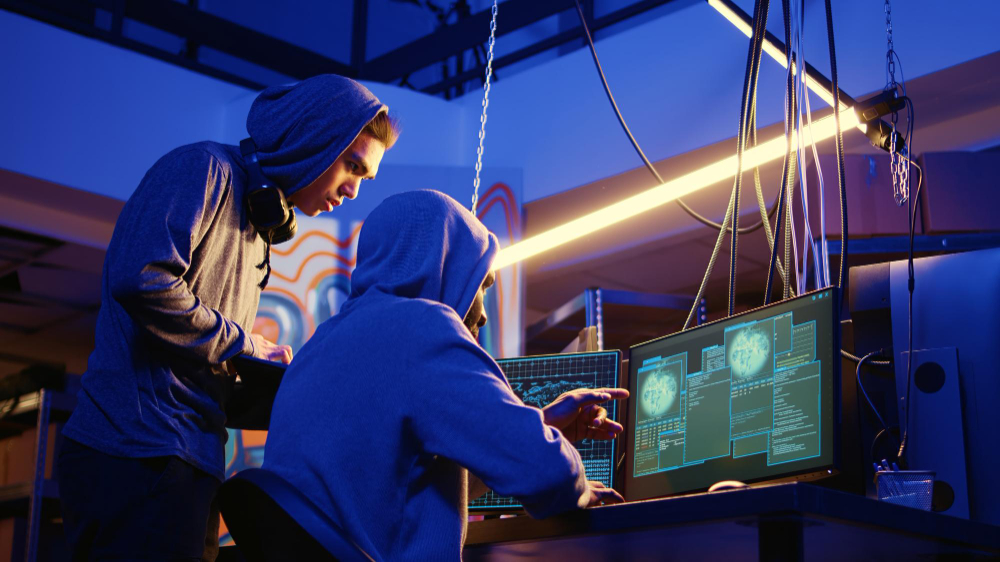
The lights in a small apartment office are still on late on a Sunday night in the Dogpatch neighborhood of San Francisco. A kitchen counter is laden with pizza boxes. Leaning against the wall is a whiteboard covered in disorganized diagrams. Hunched over laptops, three engineers hardly pay attention to the time.
Silicon Valley mythology has always included scenes like these. The extended evenings. Caffeine. The silent conviction that the world could be changed by the next piece of code. However, the atmosphere seems a little different lately.
| Key Information | Details |
|---|---|
| Industry | Global Technology Sector |
| Major Trend | Artificial Intelligence Expansion |
| Key Risk Factors | Automation, cyber threats, job disruption, speculative investment |
| Notable Companies Mentioned in Debate | Google, Microsoft, Meta, Nvidia |
| Cybersecurity Insights | Cloudflare Threat Report |
| Reference Website | https://blog.cloudflare.com |
Artificial intelligence continues to arouse interest due to its vast potential. Tech stocks are rising, venture capital is flooding back into startups, and there seems to be a new story about an AI breakthrough every week. A sense of tension that many insiders characterize as unfamiliar, however, lies beneath the optimism.
An uncommon phrase has been used by some analysts and investors. They claim that the tech sector might be about to enter its most perilous stage. Speed contributes to some of the risk.
Technological revolutions typically take decades to complete. The 1980s and 1990s were the years of the personal computer era. Gradually, the internet boom took shape. Over the course of more than ten years, smartphones transformed daily life. Artificial intelligence is advancing more quickly.
Almost every week, new models, tools, and capabilities are released. In an effort to stay ahead, engineers are updating their knowledge, trying out new systems, and competing with rivals to release products first. A startup may appear out of date if they miss even one development.


It’s difficult to ignore how little time there is for introspection as you watch this pace develop. In the past, Silicon Valley’s greatest advantage was speed. It might be its greatest risk now.
The pressure is evident in tech companies. Startup workers sometimes sleep in offices or apartments that have been turned into workspaces, and some report working twelve or even sixteen hours a day. AI appears to have heightened the old startup hustle culture, but it never really vanished.
Many engineers believe that if they slow down, someone else will be the one to create the future.
Meanwhile, the industry is plagued by yet another unsettling question. Will the people creating artificial intelligence eventually be replaced by it?
Big business executives have been remarkably open about this possibility. Numerous executives have publicly expressed their belief that AI could automate some white-collar jobs, such as marketing analysis, customer service, and programming. Entry-level positions seem especially at risk.
This change is already suggested by job data. Jobs requiring advanced experience or specialized knowledge have become more prevalent in recent years, while listings for junior developer positions have significantly decreased.
The path suddenly appears less clear for recent graduates who want to work in the tech industry.
A decade ago, a skilled programmer could typically anticipate a steady career path. Acquire knowledge of a programming language. Acquire expertise. Take on leadership responsibilities gradually. The rules seem less clear now.
The popularity of programming languages fluctuates rapidly. Within a few years, entire software frameworks emerge and vanish. It’s a common joke among engineers that the ability to learn the next tool before everyone else is their most valuable skill.
The industry is exciting because of this volatility. It is also brittle as a result.
Meanwhile, there are financial risks associated with the AI boom itself. Large sums of money are being invested in the infrastructure of artificial intelligence, including data centers, specialized chips, and training models that demand a high level of processing power. Businesses are spending billions in the hopes that AI will transform almost every sector. Investors appear to believe that there is a huge opportunity.
In private, however, some economists question whether some aspects of the boom are similar to past tech bubbles. There is an unsettling historical parallel to the late 1990s dot-com era. Speculation and innovation developed simultaneously back then as well.
During that time, a number of innovative businesses were founded. Numerous others disappeared. Another level of complexity is added by security concerns. AI is reportedly significantly reducing the barrier for sophisticated cyberattacks, according to recent cybersecurity reports. These days, hackers can use machine learning to create deepfake identities that can infiltrate organizations, automate vulnerability discovery, and create convincing phishing messages.
Some security analysts believe that the most technically skilled attackers are not always the most dangerous. They are the ones who create effective attack systems by fusing cloud infrastructure, automation, and intelligence tools.
That completely alters the character of digital conflict. Governments are taking notice. Before artificial intelligence becomes more prevalent in the fields of healthcare, finance, education, and defense, regulators in the US, Europe, and Asia are rushing to draft regulations. However, in contrast to innovation, policy frequently moves slowly.
One gets the impression from observing the tech sector today that the conventional balance between innovation and regulation has been upset. Long before society fully comprehends the implications of new tools, they are introduced.
Ironically, this might also be one of the most innovative eras in technological history. Engineers talk about what AI systems can already do with sincere enthusiasm. Software creates software. Proteins are designed by algorithms. Art and language translation are produced by machines.
Opportunities increase practically every day. However, it’s difficult to ignore the odd mix of optimism and anxiety surrounding the sector as this develops. The same technologies that promise tremendous advancement are also posing concerns about employment, safety, and financial stability.
Risk has always been the lifeblood of Silicon Valley. The contemporary digital world was created by this openness to trying new things.
Now, scale makes a difference. Technology now influences more than just software and device markets. It affects national security, financial systems, labor markets, and politics. Decisions made in a startup office have the potential to affect entire societies.
The stakes are altered by that reality. It also helps to explain why some investors, engineers, and economists are beginning to talk more cautiously about the future.
It’s possible that the tech sector is still advancing quickly. However, the underlying ground is growing much more complex.