

 2:16 pm - March 4, 2026
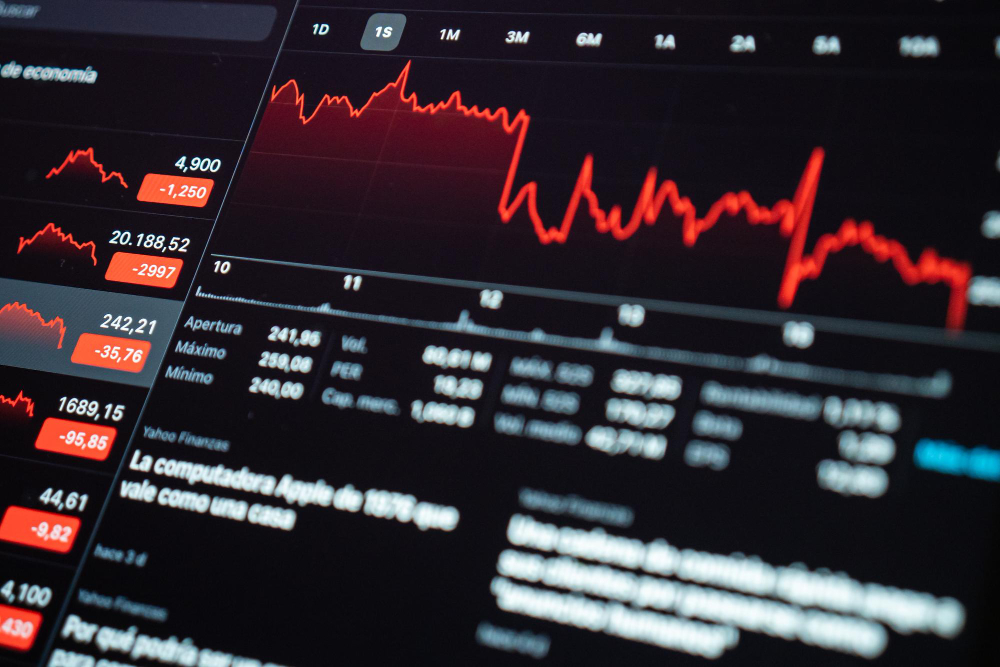
Natural gas markets are rarely peaceful in London and Amsterdam’s trading rooms. Charts that move in fast, anxious bursts glow on screens. Prices fluctuate. The phones ring. As new cargo shipments show up on maritime tracking maps, traders lean in toward their monitors to refresh data feeds.
LNG futures typically follow well-known patterns, responding to shipping schedules, weather predictions, and seasonal demand. The market does, however, occasionally jolt awake.
| Key Information | Details |
|---|---|
| Commodity | Liquefied Natural Gas (LNG) |
| Key Futures Benchmark | Henry Hub Natural Gas Futures |
| Major Exchanges | NYMEX (CME Group), ICE |
| Contract Size | 10,000 MMBtu |
| Major Global Benchmarks | TTF (Europe), JKM (Asia) |
| Major LNG Export Hub | Ras Laffan Industrial City, Qatar |
| Reference Website | https://www.cmegroup.com/markets/energy/natural-gas.html |
That occurred recently when news broke that drone strikes had forced the suspension of production at Qatar’s Ras Laffan industrial complex. European gas futures jumped almost immediately. Dutch TTF contracts experienced a sharp increase. Asian LNG standards were adopted. Even the natural gas futures in the United States, which are typically more stable than those in Europe, began to rise.
There was a feeling that the market had recalled something significant as those figures leaped across trading terminals.
Systems of energy are delicate.
In essence, LNG futures are wagers on the price of liquefied natural gas in the months or even years to come. Commodity traders, industrial firms, utilities, and hedge funds all take part. Supply lock-in is what some people want. Others are engaging in speculation in an effort to profit from changes in price.


Theoretically, by enabling businesses to manage risk, futures markets promote stability. In reality, they frequently highlight the true ambiguity of the energy landscape.
One of the world’s most sensitive commodities in terms of geopolitics is liquefied natural gas. In contrast to pipeline gas, LNG moves between continents based on price signals while traveling across oceans in specialized tankers.
In the middle of its journey, one cargo can change course.
If prices spike in South Korea, a ship that was originally headed there might abruptly turn toward Europe. Traders keep a close eye on these movements. Every cargo matters in the global LNG system, which has started to resemble a chessboard.
Since 2022, when Europe significantly decreased its dependency on Russian pipeline gas, this dynamic has become more intense. Instead, the continent resorted to importing LNG by sea from nations like Australia, the United States, and Qatar.
The changeover was successful, but it also created new weaknesses. All of a sudden, shipping lanes were essential infrastructure components. The Strait of Hormuz, a narrow waterway that links the Persian Gulf to international markets, is one of the most significant. It handles about 5% of all LNG shipments worldwide.
Traders are quick to notice when geopolitical tensions pose a threat to that corridor.
In just a few minutes, rumors of tanker disruptions can spread throughout futures markets. The cost of vessel insurance is increasing. Shipping companies are hesitant. All of a sudden, risks that may not even materialize are priced in by the market.
LNG futures start to reflect uncertainty like a mirror.
Europe is still especially vulnerable to these shocks. Although storage facilities throughout the continent can mitigate supply disruptions, they cannot take the place of long-term supply in the event that a major exporter ceases production. Furthermore, Qatar is not a typical exporter.
The largest LNG export hub in the world is the Ras Laffan complex, which is situated on the northeastern coast of Qatar. Before being loaded onto tankers headed for Europe and Asia, natural gas is converted into a super-cooled liquid by its liquefaction trains. It is where about one-fifth of the world’s LNG supply comes from.
The market responds to any pause in production, no matter how short.
LNG markets are frequently characterized by energy analysts as “tight,” indicating that supply and demand are closely balanced. There isn’t much idle spare capacity. When a large facility ceases production, buyers rush to get new cargo.
Futures prices rise as a result of this scramble. Europe faces direct competition from Asian importers such as China, South Korea, and Japan for available LNG shipments. Asian utilities are forced to choose between matching Europe’s high bids for cargoes and switching to alternative fuels.
Sometimes coal plants restart. Oil-fired power plants start up again. Though energy systems seldom permit ideal choices, none of these options are ideal.
The natural gas markets in the United States, meanwhile, react more subtly. The primary pricing point for U.S. gas futures, the Henry Hub benchmark, typically moves more slowly than European prices.
The level of domestic production is still high. Every day, enormous amounts of gas are pumped from American shale fields. However, the equation is made more difficult by the expanding LNG export sector along the Gulf Coast. Exporters have a strong incentive to ship more gas abroad when global prices rise dramatically.
Facilities like Freeport and Sabine Pass serve as entry points between domestic gas supply and global demand. More gas moves toward export terminals as the foreign market grows stronger.
U.S. futures may gradually rise as a result of that tightening. However, physical supply disruptions are not the only factor influencing LNG futures markets. Psychology also has an impact.
Energy traders have strong memories of the European energy crisis of 2022, when factories all over the continent reduced production and gas prices skyrocketed to previously unheard-of levels. Market behavior is still influenced by that incident.
Some traders are quick to react when headlines suggest another supply shock because they don’t want to make the same mistakes they did in that volatile year.
Others, however, are still dubious.
Commodity markets have a long history of overreacting to transient disruptions. When shipments resume or demand changes, the system stabilizes after prices spike and traders become alarmed.
Which scenario is currently being priced by the LNG futures market is still unknown. According to some analysts, the current spike is a reflection of transient geopolitical tension that will subside once shipping routes stabilize and production resumes. Others contend that the system’s reliance on a small number of export hubs and constrained maritime routes has made it more structurally vulnerable.
It’s hard to avoid feeling that both viewpoints have some validity when observing the market from the outside.
Oil markets may garner more attention than LNG futures. Most of the time, they operate in silence, concealed within industrial hedging plans and energy trading desks.
However, those futures contracts start to flash warning signs that something more profound might be changing when the global energy system falters, even for a short time. And it’s been hard to ignore those signals lately.


