

 10:21 pm - February 27, 2026
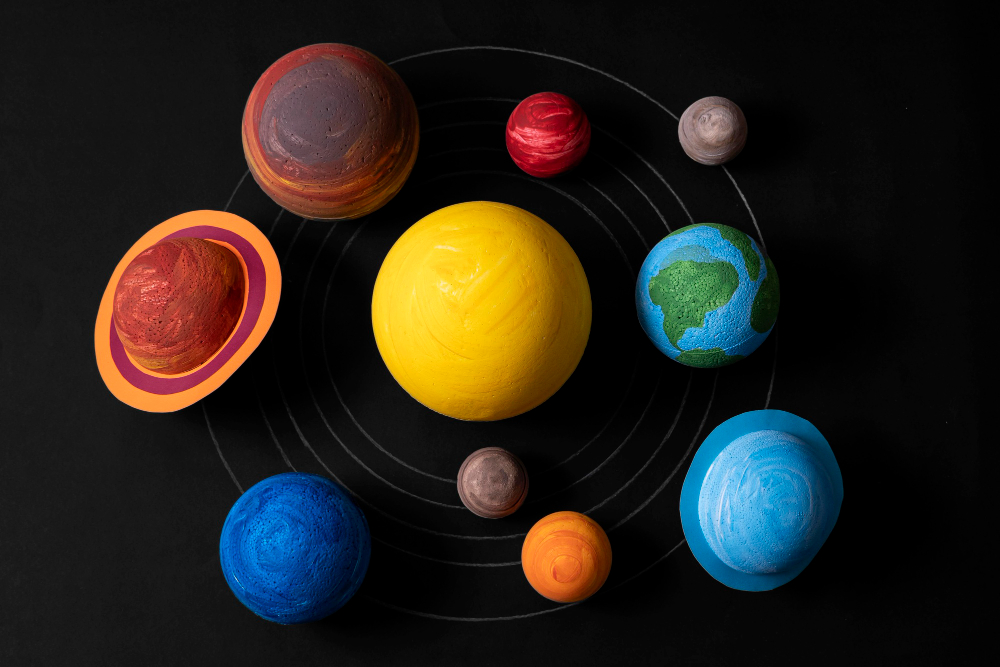
Six planets will appear to align across the western sky on the evening of February 28, 2026, creating what astronomers jokingly refer to as a “planet parade.” It’s the sort of statement that sounds over the top, as if it were intended for social media, but this time, the sky might truly live up to the hype.
Mercury, Venus, Jupiter, Saturn, Uranus, and Neptune will all be visible in the same area of the sky just after sunset, according to NASA. Mercury, Venus, Jupiter, and Saturn are the four that ought to be visible to the unaided eye. Neptune and Uranus, which linger dimly against the darkening blue, will need binoculars or a small telescope.
| Event Name | February 28, 2026 Planetary Alignment (“Planet Parade”) |
|---|---|
| Date | February 28, 2026 (peak viewing; varies by location) |
| Planets Involved | Mercury, Venus, Jupiter, Saturn, Uranus, Neptune |
| Visibility | Worldwide (best 30–60 minutes after sunset) |
| Naked-Eye Planets | Mercury, Venus, Jupiter, Saturn |
| Optical Aid Needed | Uranus, Neptune |
| Scientific Reference | NASA Watch the Skies |
| Official Source | https://www.nasa.gov/watch-the-skies/ |
In space, the alignment is not a perfect straight line. Astronomers gently correct that first misconception. As a result of the solar system’s formation by a spinning disk of gas and dust, the planets orbit the Sun in a roughly identical flat plane. From Earth’s vantage point, that common plane transforms into the ecliptic, a curved arc across the sky. The planets merely coincidentally form a cluster on one side of the Sun on February 28, giving the appearance of coordination.
About 30 to 60 minutes after sunset, Mercury and Venus will be low over the western horizon, flickering a little in the haze of the atmosphere. The scene will be anchored by Jupiter, which is higher and distinctly brighter. Saturn will be more subtly but steadily positioned near the horizon. Dim and far away, Uranus and Neptune will reward patient observers using optics to scan.
Observing several planets simultaneously has a subtly humbling effect. Every point of light represents a world, including rocky neighbors orbiting nearer to the Sun, ice giants encased in methane haze, and gas giants with storms bigger than Earth. When they are grouped together, distance is compressed in a way that seems almost unjust to physics.
For many viewers, Mercury may be obscured by city lights. Due to its proximity to the horizon, it is susceptible to both suburban glow and smog. Tension is increased by that fragility. It seems like timing is crucial: if you go outside too early, the sky will be too bright, and if you wait too long, Mercury might fall beneath buildings.


Despite dramatic headlines, planetary alignments like this are not once-in-a-lifetime occurrences. Every few years, there are variations. A seven-planet alignment took place at the beginning of 2025. However, six luminous planets grouped together in a convenient evening window? It is less frequent. When another similarly practical configuration will be available is still unknown.
A small group of people gathered in a public park on a recent clear evening to test their apps and adjust telescope tripods in preparation for the upcoming alignment. As his daughter struggled to hold her phone steady long enough to record Jupiter’s glow, a father explained to her why Venus shines so brightly: its dense clouds reflect sunlight. One gets the impression from witnessing that exchange that these gatherings are about connection just as much as astronomy.
Experts frequently stress the importance of preparation. Let your eyes get used to it. Steer clear of white phone screens. Keep warm. Although that advice seems straightforward, it alters the experience. As you wait in the dark and allow your vision to gradually improve, the sky starts to fill in with tiny points that weren’t there just a few seconds ago. The change seems well-deserved.
The wider cultural layer is another. The 2026 planet alignment aligns with a renewed public interest in the night sky during a year full of eclipses, meteor showers, and high-profile space missions. Every week, rockets are launched by private space companies. More and more telescopes are looking into the cosmos. However, sometimes the most captivating sight is just looking up without any tools.
Astrology will, of course, also have its time. Romance, metamorphosis, and cosmic changes are already being alluded to in social media posts. Gently amused, astronomers will remind everyone that there is no real gravitational pull on Earth from planetary alignments. The geometry is exquisite. The physics is standard.
On February 28, the arc of planets will form a soft curve across the sky from southwest to west as the evening grows darker. Jupiter will probably be in charge, gleaming obstinately through light pollution. In the twilight, Saturn and Venus might seem almost friendly. Without optics, Neptune will be almost invisible, serving as a reminder that not everything in the universe is readily apparent.
It’s difficult to ignore how things like this cause people to lag momentarily. At picturesque overlooks, cars stop. To go outside, neighbors text one another. On the internet, amateur astronomers share triumphant but grainy photos. The focus shifts upward for a few nights.
Mercury will disappear from view and move closer to the Sun by the beginning of March. There will be less of a parade. The sky will settle back into its normal configuration. Six planets sharing a single slice of dusk, however, will stick in the minds of those who witness it, even if only momentarily. It serves as a reminder that the solar system is constantly moving, subtly choreographed above our daily activities.