

 10:17 pm - February 27, 2026
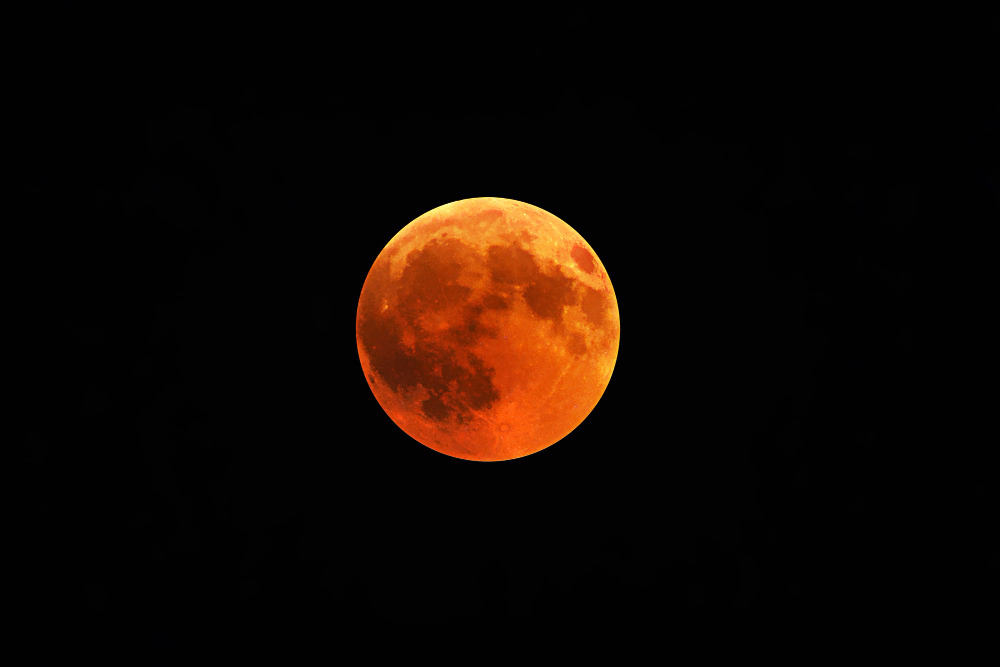
On March 3, just before sunrise, the moon will start to move into Earth’s shadow and, with luck, turn a rich coppery red. The science behind the term “blood moon” is simple, despite its dramatic, almost medieval sound. Earth’s atmosphere filters sunlight as it passes directly between the sun and the full moon, giving the lunar surface a reddish glow.
NASA reports that a significant portion of North America, the Pacific, eastern Asia, and Australia will be able to see totality during the eclipse that occurs from March 2–3, 2026. The event takes place in the silent hours leading up to sunrise in some places, while it rises partially eclipsed in others. Unfairly, a large portion of Africa and Europe will be left behind.
| Event Name | March 2–3, 2026 Total Lunar Eclipse (“Blood Moon”) |
|---|---|
| Date | March 2–3, 2026 |
| Type | Total Lunar Eclipse |
| Peak Totality | March 3, 2026 (varies by time zone) |
| Visibility | North America, Pacific, Eastern Asia, Australia (partial in some regions) |
| Safe to View? | Yes, naked-eye safe |
| Scientific Body Reference | NASA |
| Official Reference | https://science.nasa.gov/solar-system/moon/march-2026-lunar-eclipse |
The abrupt shock of a solar eclipse does not accompany a lunar eclipse. The darkness doesn’t abruptly change. Rather, the shift occurs gradually. The Earth’s umbra gradually forms a dark curve across the moon’s face as the partial eclipse starts in the United States at 4:50 a.m. Eastern Time. It’s strangely personal to watch that shadow move forward, like watching a clock tick in slow motion.
The time of totality is 6:04 a.m. ET. Even when completely immersed in Earth’s shadow, the moon remains visible. It changes. Red and orange light bend toward the lunar surface, giving it an unsettling glow, while blue wavelengths scatter in the atmosphere. The hue can occasionally lean toward brick-red. At times, it resembles burnt orange more. Dust or other pollutants in the Earth’s atmosphere might intensify the color, making this blood moon more dramatic than anticipated.
When a familiar object behaves in a strange way, it can be unsettling. The dependable, pale moon appears bruised all of a sudden. Blood moons were considered omens by ancient cultures, and even now, in the chilly early morning air, it’s difficult to avoid a glimmer of wonder that verges on superstition. The mechanism is explained by science. It doesn’t make the emotion go away.
Observers in locations such as Cincinnati will witness the moon fading into the brightening dawn as it sets, still partially eclipsed. Viewers on the West Coast will probably be able to witness the entire event, from the initial shadow to the last emergence. The show takes place in the evening sky over serene coastlines and city skylines in some parts of Asia and Australia.


The accessibility of the blood moon on March 3rd is what makes it so alluring. No special eyewear. No fancy equipment. Just a willingness to go outside and clear skies. Naturally, binoculars and telescopes enhance the view and highlight minute variations in the lunar surface. In an attempt to catch that momentary red disc before it disappears, photographers will experiment with exposure settings and balance smartphones on balcony railings.
This eclipse is also part of a larger cultural event. Millions of people will gaze up at the same object at about the same time in an era of streaming services and entertainment that is driven by algorithms. Directly, not through screens. As this is happening, it seems like shared sky events continue to have a subtle influence that serves as a reminder that the planet itself is a part of a greater cosmic rhythm.
The brightness of this blood moon in various locations is still unknown. Naturally, the weather continues to be the most important gatekeeper. The effect can be muted by a thin veil of clouds, or it can be made unforgettable by a perfectly clear sky. As if getting ready for a concert, meteorologists have already started to issue regional forecasts based on their analysis of cloud cover patterns.
And maybe that’s the appropriate analogy. A total lunar eclipse resembles a slow symphony rather than a scientific lecture, building gradually, reaching a deep red intensity peak, and then fading. It doesn’t require immediate attention. It encourages endurance.
Around 7:02 a.m. ET, the moon will start to emerge from totality, and the red glow will give way to more recognizable silvery hues. The show will conclude almost silently. The sky will get brighter. People will go to work. Coffee makers will start to hiss. The universe will return to normal after putting on a show.
Even so, it’s difficult to ignore how these incidents stick in your memory. Although the blood moon on March 3 will only be in totality for a little more than an hour, people who get up early or stay up late to watch it might feel as though they are in a time warp. Maybe a reminder that the sky can still surprise us in a world full of artificial light.


