

 8:51 pm - February 23, 2026
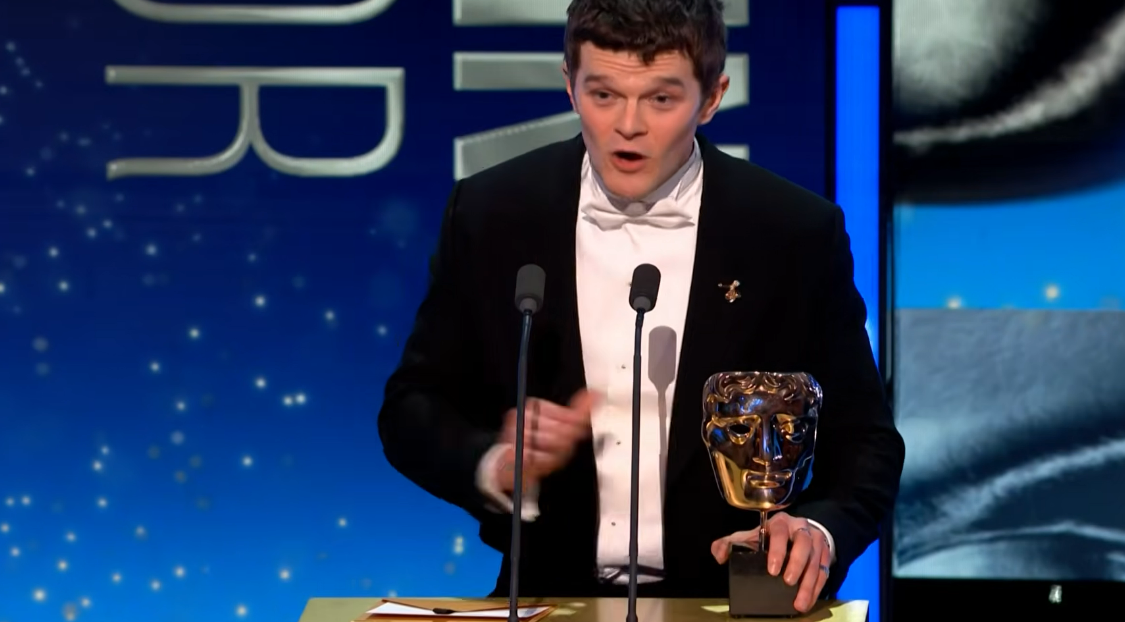
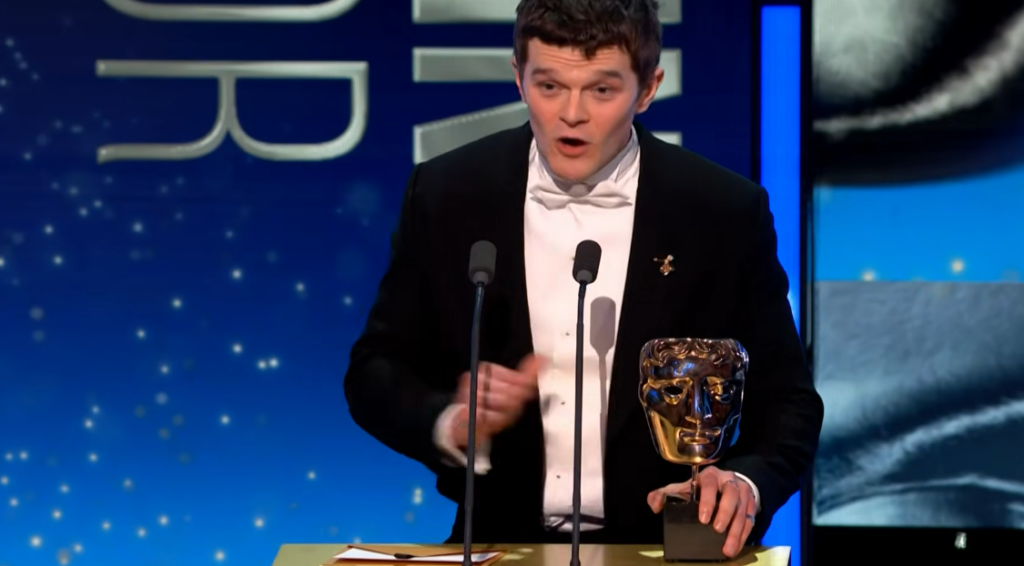
Robert Aramayo appeared more like someone who had accidentally wandered into the wrong room than a man accepting an award when he first took the stage at London’s Royal Festival Hall. His voice trailed off in midsentence as his hands made clumsy movements. The shock might have been more than just a performance. He had just defeated Timothée Chalamet and Leonardo DiCaprio, two actors whose careers have shaped the prestige of contemporary Hollywood.
There was a sense that something irrevocable had just started as they watched him stand there blinking in harsh white lights. Actors are not always changed by awards. However, they do occasionally.
The atmosphere surrounding Aramayo backstage was very different from the customary cordial congratulations that permeate these events. People leaned closer. Discussions went on longer. Veterans of the industry, who have witnessed innumerable careers come and go, seemed interested in him and closely observed him. It seems like Hollywood wasn’t merely honoring him. It was assessing him.
One word now dominates that assessment: Oscar.
| Field | Details |
|---|---|
| Full Name | Robert Aramayo |
| Date of Birth | November 6, 1992 |
| Birthplace | Kingston upon Hull, England |
| Profession | Actor |
| Breakthrough Role | Young Ned Stark in Game of Thrones |
| Major TV Role | Elrond in The Lord of the Rings: The Rings of Power |
| Breakthrough Film | I Swear (2025) |
| Major Award | BAFTA Best Actor Winner (2026) |
| Training | Juilliard School, New York |
| Reference | BAFTA Official Website |
| Additional Reference | Robert Aramayo Profile – IMDb |
Ironically, because of the timing of its release, his performance in I Swear isn’t even considered for an Academy Award. However, speculation has continued despite that technicality. If anything, it has heightened it, enabling a gradual, almost perilous build-up of anticipation. Whether momentum generated this early can withstand the harsh, capricious machinery of Oscar campaigns is still up in the air.
The emotional impact of his performance alone is the kind that Oscar voters are likely to recall.
Aramayo steers clear of the theatrical exaggeration that occasionally characterizes biographical roles in his portrayal of John Davidson, a man with severe Tourette syndrome. Rather, his portrayal intentionally creates an uncomfortable feeling. He displays vulnerability without seeking pity through sudden, occasionally painful physical movements. It’s difficult to ignore how silent the room gets when he performs his most challenging scenes. Silence like that counts.


Aramayo was largely on the outskirts of international fame prior to this movie. After making a brief appearance in Game of Thrones as a young Ned Stark, he entered the massive world of The Lord of the Rings: The Rings of Power. These positions increased visibility but did not confer ownership. He wasn’t in the center, but he was there.
It feels different now.
Actors have a long history of abruptly rising from relative obscurity to the running for awards. It was Adrien Brody. It was Eddie Redmayne. These changes can occasionally occur so swiftly that even the actors find it difficult to comprehend them. As I watch Aramayo now, giving interviews and picking his words wisely, I get the impression that he understands how delicate this moment may be.
Hollywood can be hospitable. It can be harsh as well.
His career is already being subtly altered by the Oscar discussion. He is now being observed by directors who may not have previously noticed him. Scripts are coming in. In offices with glass walls and well-placed furniture in Los Angeles, meetings are taking place in silence, behind closed doors. It seems as though choices regarding his future are being made long before viewers are aware of it. However, Oscar hype can be deceptive.
Many actors are completely forgotten about for every actor who turns early praise into Academy Awards success. Time is of the essence. Studio strategy is important. Public opinion counts. The most important factor is luck, even though it is rarely recognized. Yet, there is something more elusive about Aramayo’s path. Perhaps authenticity. or timing.
Or just the appropriate performance at the ideal cultural time, when viewers appear to be more drawn to emotional sincerity than showmanship. His ascent comes as the industry subtly examines itself in an effort to find fresh faces that seem authentic rather than contrived. One gets the impression that Aramayo’s story isn’t really about awards as you watch this play out. Not just yet.