

 8:56 pm - February 23, 2026
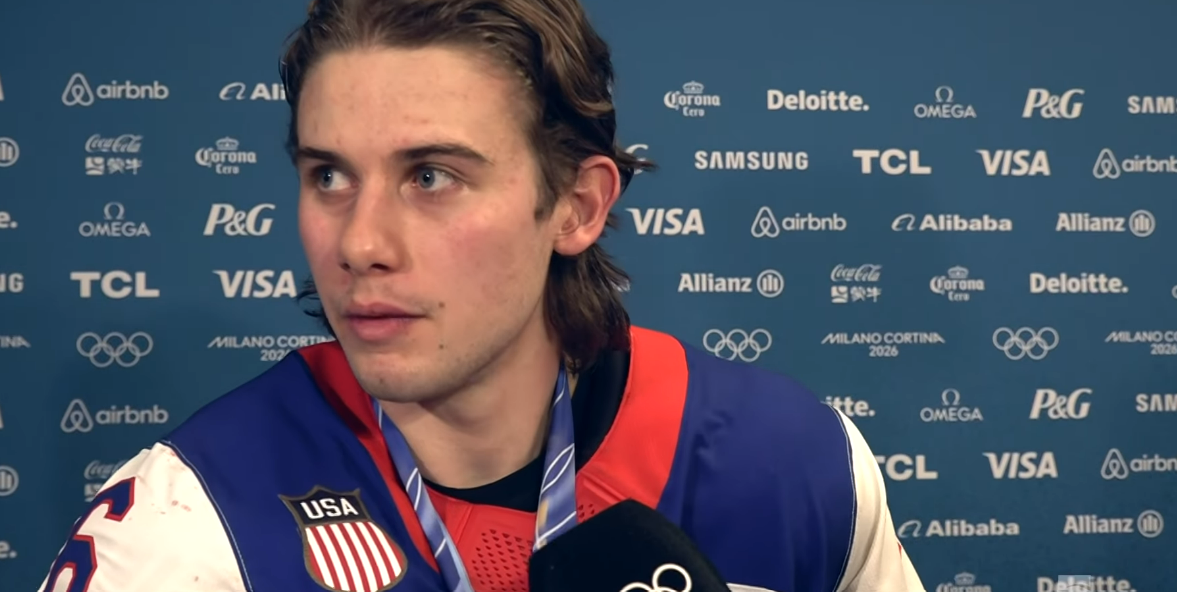
For a second, everything slowed down because there was blood on the ice. Jack Hughes stooped with his hands on his knees and spat bits of himself onto the icy ground. Two teeth. Lost. As the Milan arena’s crowd mumbled in nervous confusion, trainers hurried toward him, crouching and speaking urgently. Some fans might have questioned whether his night—and possibly his Olympic dream—had ended at that very moment.
It didn’t.
Hughes was back on the ice less than an hour later, skating in tight circles while looking around for something that only he seemed to see. He didn’t hesitate when the puck eventually came to rest on his stick. Just one movement. Hurry. Accurate. The American men’s national ice hockey team won gold at the Winter Olympics after the puck slipped past the goalie and into history.
Looking at the replay now, his calm appearance almost seems uncanny.
| Field | Details |
|---|---|
| Full Name | Jack Rowden Hughes |
| Date of Birth | May 14, 2001 |
| Age | 24 |
| Birthplace | Orlando, Florida, United States |
| Nationality | American |
| Current Team | New Jersey Devils |
| Position | Center / Forward |
| NHL Draft | 1st Overall Pick, 2019 |
| Olympic Achievement | Scored Gold Medal Winning Goal, 2026 Winter Olympics |
| Contract | 8-year, $64 million contract |
| Reference | Wikipedia – Jack Hughes Profile |
| Additional Reference | NHL Official Player Page |
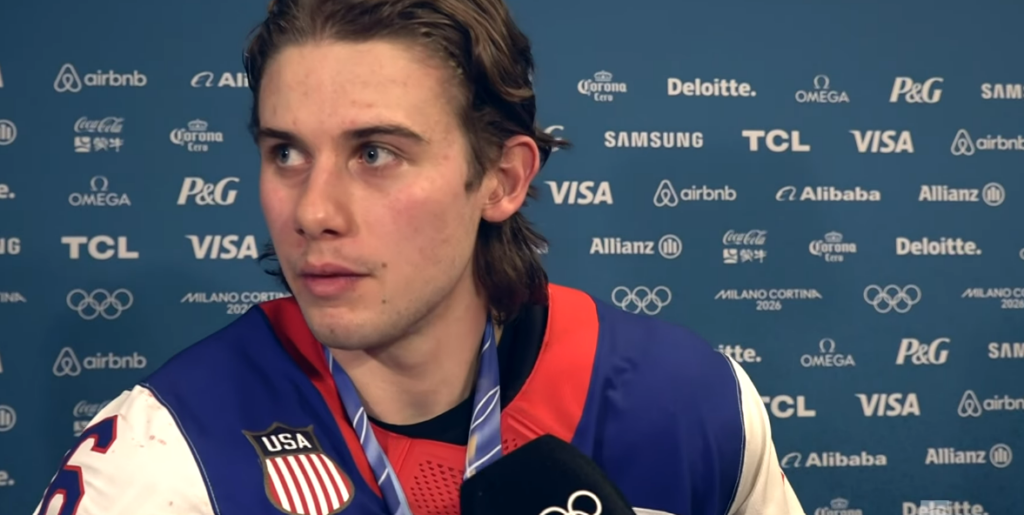
Even though Hughes was only 24, he exuded an air of maturity in that moment, as if he was accustomed to and at ease under pressure. Immediately, teammates rushed to his aid, bodies colliding and gloves flying. His smile was crooked, and his mouth was still bleeding. Nevertheless, he raised his arms in laughter, taking in the commotion.
Moments like this don’t seem to happen by accident. They congregate.


Following his father’s coaching career, Hughes spent his childhood skating with his brothers late into the night in rinks that had a subtle scent of rubber mats and cold air. Silent, monotonous, and unnoticed, those early mornings created something intangible. Perhaps confidence. or obstinacy.
His ascent hasn’t always been easy, though.
As the first overall draft pick, he was immediately met with harsh and demanding expectations when he joined the NHL. Some questioned whether he was too small, too young, or too brittle. It was difficult to ignore the periods of uncertainty interspersed with bursts of genius when observing him in those days. He appeared to be a public learner.
It appears that the uncertainty has vanished.
It felt different when he performed at the Olympics. Sharper. More positive. Losing those teeth might have become symbolic, eliminating any remaining hesitancy. Although hockey has long praised tenacity, it hardly ever depicts such a clear picture of sacrifice.
As if he might vanish if they let go, teammates lifted him onto their shoulders and carried him through the streets after the game. He made no effort to resist. He simply grinned, showing off his missing teeth, and waved clumsily at strangers who had started chanting his name out of the blue. Whether Hughes truly comprehends what he has become is still unknown. Heroes are frequently produced more quickly than they can adjust to being perceived in that manner.
Hughes had already been creating something remarkable while he was back with the New Jersey Devils. His fluid, nearly weightless skating had started to set him apart from his peers. Coaches talked about how he had vision and could see plays before they were formed. Olympic success, however, is a different matter. It alters how others perceive you. His career seems to be divided into two parts these days. Prior to Milan. and after.
In an effort to relive moments that are primarily preserved in hazy video and dwindling memory, American hockey has spent decades searching for echoes of past glory. Hughes’ goal was more than just a game-winning goal. It provided a new benchmark for the sport that contemporary supporters could claim as their own.
However, observing him in subsequent interviews, he still appeared a little overwhelmed.
He made a dental joke. He chuckled uneasily. He dismissed the compliment. It’s possible that his humility will shield him from the pressure of expectations that are currently mounting around him.
Because it’s risky to have high expectations.
It can transform happiness into duty.


