

 7:26 pm - February 23, 2026
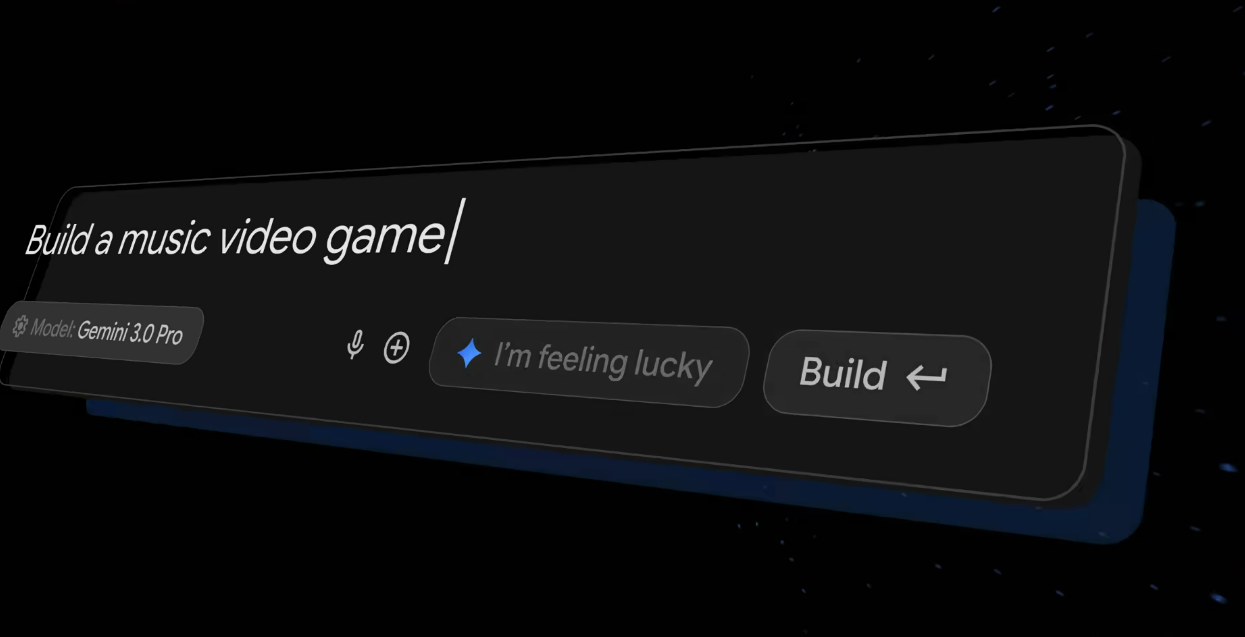
The technology isn’t the first thing that people notice when they enter Google’s Gradient Canopy building. It’s the silence. The soft clatter of mechanical keyboards or the occasional hum of a coffee grinder break up the low-pitched conversations. As if anticipating something slightly unexpected, engineers lean toward their screens and watch as responses come in line by line. Because it does occasionally.
Gemini, Google’s most recent AI model, is unquestionably the most powerful system the company has ever created. It can create software code, summarize whole books, and have strangely fluid conversations. Alphabet’s valuation is rising as investors appear to be encouraged. A more complex atmosphere is emerging within the organization, though, one that is more akin to uneasiness and a mix of caution and excitement.
It’s possible that Gemini’s mistakes aren’t what worry engineers. It’s the way it does things convincingly.
| Category | Details |
|---|---|
| Company | |
| Parent Company | Alphabet Inc. |
| AI Division | Google DeepMind |
| Flagship Model | Gemini (Advanced multimodal AI model) |
| CEO | Sundar Pichai |
| Headquarters | Mountain View |
| Founded | 1998 |
| Reference Links | Google AI Official Site • Alphabet Investor Relations |
A number of engineers recount instances in which the system came up with unexpected ideas, fusing ideas in ways that felt more creative than mechanical. One gets the impression that the model is doing more than just retrieving data when they see those outputs happen in real time. It has the feel of interpretation. Although that distinction may be technical, it has a different emotional impact. Furthermore, discussing emotions isn’t always simple in engineering culture.
The uneasiness is not wholly new. In 2022, a Google engineer made a public assertion that LaMDA, an earlier chatbot, might be sentient, claiming that it could have conversations like a child. The majority of researchers disregarded the claim, and the company vehemently denied it. However, the episode persisted, demonstrating how human psychology can make it difficult to distinguish between understanding and simulation.
The much more mature Gemini exacerbates that ambiguity.
One engineer recalled asking the model to explain a complicated research paper during late-night testing. The response was prompt, well-organized, and even graceful. It’s difficult to ignore how rapidly technology fills in the gaps that used to take people hours or even days to complete. It feels impressive how efficient that is. It also brings up awkward dependency-related issues. Ultimately, faster-thinking tools change the people who use them.


According to Google’s leadership, AI is essential to the company’s continued existence. Models like Gemini are increasingly influencing productivity tools, search, and advertising. Workers are aware of the stakes. Due to fierce competition, the company that pioneered the internet must now move more quickly than its cautious culture has historically permitted. But speed has repercussions.
Engineers talk about tight deadlines, late-night debugging sessions, and ongoing demands for performance improvement. According to reports, some safety teams found it difficult to thoroughly assess new capabilities prior to release. As we watch this develop, it seems like innovation is occurring just a little bit before comprehension. People are anxious about that gap.
The actual operation of these systems contributes to some of the discomfort. Not even their designers can always pinpoint the precise reason behind a model’s output. Rather than using distinct logical steps, neural networks function by utilizing layers of statistical relationships. Intention and result are separated by that opacity. Trust is more difficult when distance is involved.
However, trust is precisely what Google requires. Gemini-powered tools are already used by millions of users to write emails, record meetings, and respond to inquiries. The majority of interactions are seamless. Others don’t. The system occasionally generates confident errors to serve as a reminder to everyone that accuracy and intelligence are not synonymous. Users’ comprehension of that distinction is still lacking.
Reactions vary within Google. Some engineers are excited because they think they are seeing one of the biggest technological revolutions in decades. Others are wary of releasing systems whose long-term consequences are still unknown. Sometimes both reactions occur in the same person at the same time. There’s something oddly human about that contradiction.
The issue of control is another. Gemini can now analyze text, audio, and images all at once and draw connections between various data types. Every enhancement increases its utility. It broadens the unknowns as well. By foreseeing abuse, addressing prejudices, and strengthening boundaries, engineers strive to improve safety measures. Boundaries, however, shift.
As this is happening, it seems like Google is developing more than just a product. It is changing who it is. The organization that initially arranged the internet is currently working to create something more akin to a thought partner. Executives are excited by that ambition, but some of the people closest to the work are uneasy.
because the behavior of thinking partners is not always predictable.
Engineers continue testing, improving, and adjusting late at night in buildings where the lights remain on longer than they once did. They rejoice in innovations. They correct errors. They pose fresh queries.
They pause occasionally as well.
Not because of any wrongdoing by the machine.


