

 10:31 pm - February 21, 2026
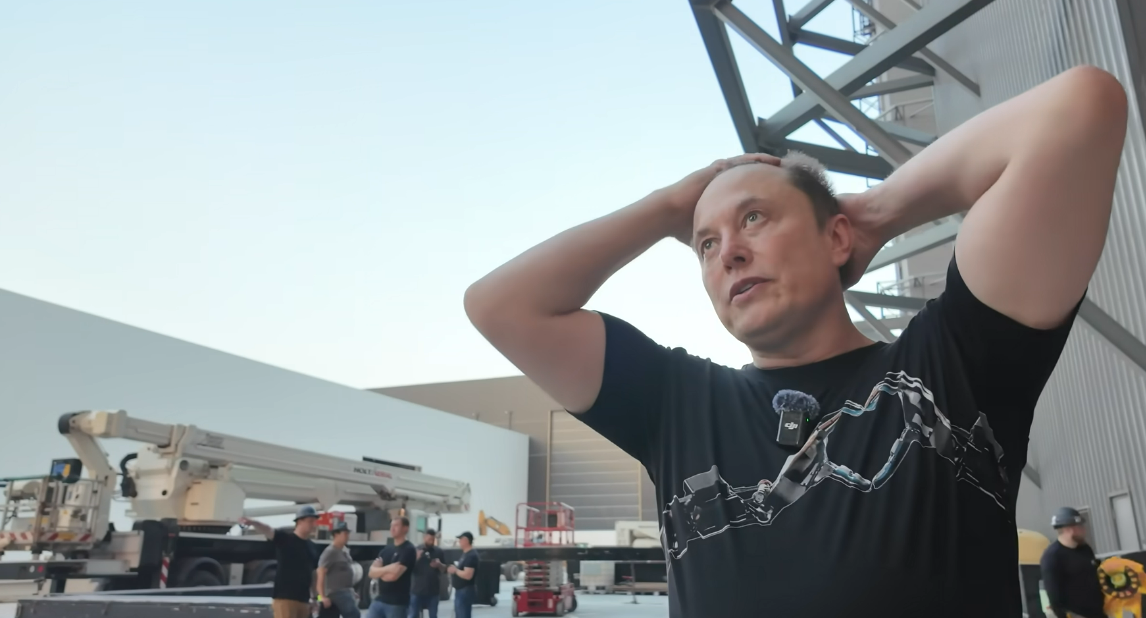
The Davos room was as silent as a wealthy person’s room can be. Investors listened to Elon Musk’s speech in his typical cool, almost aloof tone while leaning back in their chairs, arms crossed, faces neutral. No voices were raised. Don’t be theatrical. Nevertheless, the tension was obvious.
He predicted that within a year, artificial intelligence might surpass human intelligence in intelligence.
No one in that room might have taken the timeline literally. Timelines, however, weren’t the main focus. In any case, the deeper message appeared to sink in, becoming ingrained in people’s thoughts as they checked their phones later and saw the once-confidently rising AI stocks start to falter once more.
Even though they don’t entirely trust Musk’s conclusions, investors appear to have faith in his ability to see around corners. For years, his relationship with Wall Street has been characterized by that contradiction. He has made mistakes in the past. However, he has also been early, which can occasionally be more unnerving. The anxiety strikes at a vulnerable time.
| Category | Details |
|---|---|
| Full Name | Elon Reeve Musk |
| Born | June 28, 1971, Pretoria, South Africa |
| Current Role | CEO of Tesla, CEO of SpaceX, Founder of xAI |
| Known For | Tesla electric vehicles, SpaceX rockets, AI ventures |
| Latest AI Concern | Predicts AI could surpass human intelligence soon |
| Key Industry Influence | Major investor and developer in AI and robotics |
| Estimated Net Worth | Over $200 billion |
| Reference | Tesla Official Website |
| Reference | World Economic Forum Profile |
Large data centers that are humming in remote deserts and using electricity at levels previously associated with small cities are examples of the AI infrastructure that technology companies are already investing enormous sums of money in. With quiet conviction, some executives discuss these investments. Others acknowledge uncertainty in private discussions. Even though people aren’t totally sure where the finish line is, there’s a feeling that nobody wants to fall behind.
Musk’s caution did not cast doubt on AI’s potential. It wondered what would happen.
He painted a picture of a world where humanoid robots and intelligent machines outperform humans at tasks. Early iterations of these robots are already cautiously navigating polished floors inside Tesla’s expansive factories, under the close supervision of engineers seated behind laptops. The machines continue to stutter, hesitate, adapt, and learn. However, they are in motion. One gets the impression that something irrevocable has already started when witnessing those protests.


That creates an odd paradox for investors. AI has a higher potential for profit the faster it develops. However, its economic impact becomes less predictable as it advances more quickly. Before business models have a chance to adapt, entire industries may undergo a transformation. Pricing that uncertainty is challenging.
Excitation overshadowed reality during the dot-com era, as some investors recall. A new economic order was promised by companies back then. A lot of them delivered. Numerous people vanished. The survivors grew into giants. The others turned into cautions. It’s still unclear if AI will take a similar course or if comparisons are pointless given its size. Musk’s remarks regarding energy created even more anxiety.
He proposed that the limiting factor might be electricity rather than processing power. As a result of that observation, investors began to pay more attention to infrastructure, which included things like power grids, utilities, and raw energy supplies. All of a sudden, the AI boom appeared to be more of an industrial story than a software one. Transitions in the industrial sector are often chaotic.
Meanwhile, there has been a subtle shift in the dialogue within venture capital offices and trading firms. There is no panic in the tone. Not just yet. However, there is more hesitancy. More inquiries. Investors who once hurried to finance anything with the name “AI” are now taking their time and paying closer attention to balance sheets.
It’s difficult to ignore that change.
Musk may be partially to blame for the unease. He’s not merely cautioning about AI. He is constructing it. His business, xAI, benefits from investor zeal and operates within the same ecosystem. His dual function as a critic and builder makes it more difficult to understand what he is saying.
He seems to be warning about the perils of the future he is helping to shape while simultaneously describing it.
In the past, Musk’s cautions have frequently initially sounded extreme. Many people disregarded his early predictions that electric vehicles would revolutionize transportation. They appear to be clear now. Investors are aware of that. They don’t want to reject him once more. They don’t want to overreact, though.
They wait as a result.
Markets don’t like to wait.
Timing may be more of the cause of the general anxiety than robots or intelligence. If AI develops slowly, businesses can adjust. Complete business models may become outdated before anyone is prepared if it accelerates abruptly.
It’s a possibility that lurks in the background.