

 10:34 pm - February 21, 2026
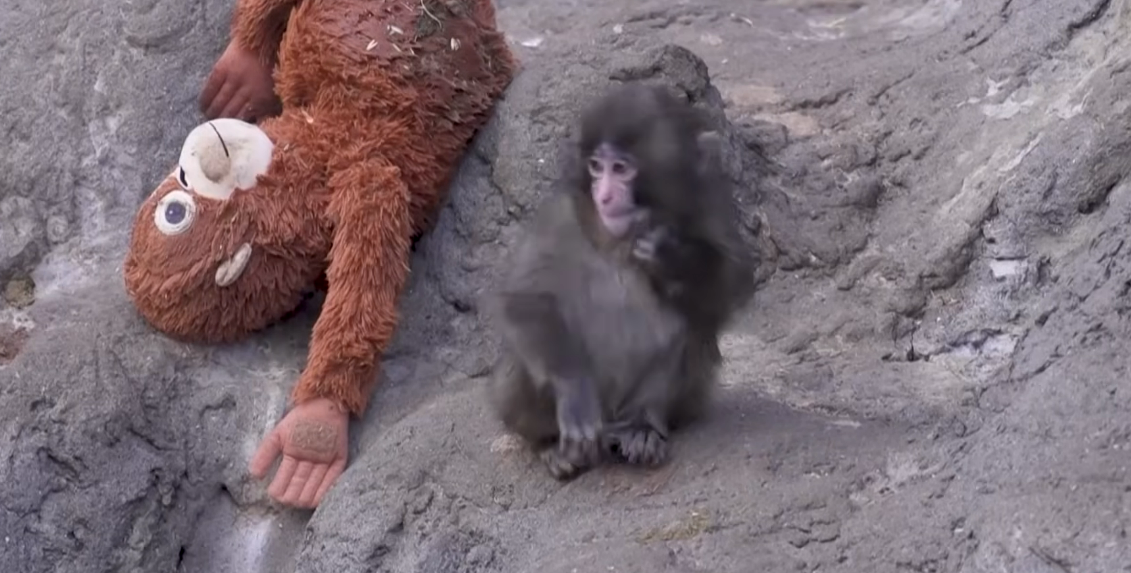
There was a moment in the corner of a concrete enclosure at Ichikawa City Zoo that didn’t seem to be intended for millions of strangers. Hunched forward, a baby macaque, barely big enough to fit in a backpack, held a faded stuffed orangutan toy in both hands. Punch was his name, and he held the toy in the same way that kids do when they hold onto something they hope won’t disappear.
It initially appeared to be a typical enrichment item—zoos frequently use them to provide stimulation, diversion, and activities. Punch, however, wasn’t teasing it. As though waiting for a response, he was holding on to it, pulling it behind him, and pressing his head against its stitched face.
It’s difficult to ignore how silent those early videos seemed.
Punch had experienced his mother’s rejection soon after birth, which is a common occurrence among macaques but never seems normal up close. As highly gregarious creatures, Japanese macaques spend hours grooming one another, strengthening the unseen ties that bind their communities together. Young monkeys frequently appear disoriented and aimlessly wander around in space when that contact is absent. That was Punch’s movement.
| Category | Details |
|---|---|
| Name | Punch |
| Species | Japanese macaque (Macaca fuscata) |
| Birth Year | 2025 (approximate) |
| Location | Ichikawa City Zoo, Japan |
| Known For | Viral videos showing him hugging a stuffed toy after maternal rejection |
| Social Status | Initially rejected, later gradually integrating with troop |
| Emotional Behavior | Showed attachment to toy as surrogate comfort |
| Reference | BBC News Coverage |
| Reference | World Animal Protection Report |
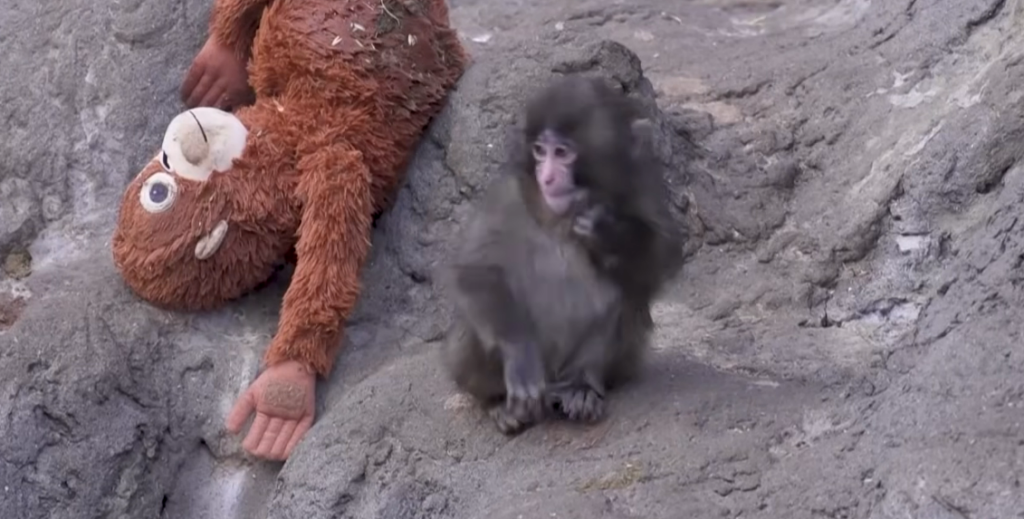
During those first weeks, zoo keepers walked carefully around him, wearing rubber boots and talking quietly. They provided soft blankets and milk bottles. The stuffed animal was given to him. They might have known instinctively that he needed presence more than food.
Naturally, the internet took notice almost immediately.
Punch’s picture went viral on social media in a matter of days after random users shared it, projecting their own loneliness onto him. Below the videos were comments that expressed pity, rage, and occasionally guilt. It seems like people weren’t merely responding to a monkey. They were responding to a familiar but uncomfortable thing.


The appearance of rejection is similar in all species.
Punch initially found it difficult to fit in with his troop’s other macaques. He moved forward, paused, uncertain, then stepped back cautiously. The other monkeys walked away or ignored him. The fundamental language of macaque friendship, grooming, was still unattainable. There was an awkwardness that seemed very human as you watched those moments play out.
Primates that aren’t exposed to their mothers frequently struggle with development. They have social instincts, but they lack confidence. Punch appeared to be in between worlds; he was neither entirely a member of the troop nor entirely distinct from it. However, a change started to occur.
A few weeks later, video captured Punch being approached by another macaque. Hesitancy was present. A pause. Grooming comes next. tiny, purposeful motions. Fur-parting, searching, comforting fingers. Punch accepted the contact and stayed motionless. Whether that moment signaled a permanent change is still up in the air. However, it was significant. The stuffed animal started to show up less often.
He was observed by zoo staff to be spending more time with other monkeys, following and mimicking their movements. Slowly, awkwardly, and imperfectly, social learning was taking place. However, it was taking place. It seems that even in animals, healing rarely occurs all at once.
Additionally, Punch’s story has raised troubling issues regarding captivity in general. Zoos must balance the morally challenging task of preserving species with the confinement of individuals. They provide stability, safety, and healthcare. However, they are unable to completely replicate family. There are traces of that absence.
Online, some commentators voiced their indignation and questioned if Punch and his mother should have been split up. The zoo was defended by others who pointed out that maternal rejection occurs in the wild as well. There is truth in both viewpoints. Neither provides total comfort.
Punch, meanwhile, keeps expanding.
His face has changed. He has longer limbs. He now moves more confidently, chasing people, climbing branches, and taking part. Sometimes remnants of the previous hesitancy show up—a pause, observing others before joining.
He might carry those early experiences with him.
There was even a surprising turn of events. In public, a wealthy influencer made a sizable offer to purchase Punch, saying he wished to “rescue” him. The offer caused a stir, bringing up issues of ethics, ownership, and whether animals can be turned into commodities just by being viewed. Needless to say, Punch stayed put. He ignored the arguments going on around him and carried on with his life.
Punch occasionally sits close to the edge of the enclosure and observes the deserted walkways in the late afternoon as the zoo starts to quiet down and guests start to move toward the exits. He no longer carries the same tension in his posture. However, it’s still hard to forget that little monkey holding a toy.


