

 10:33 pm - February 21, 2026
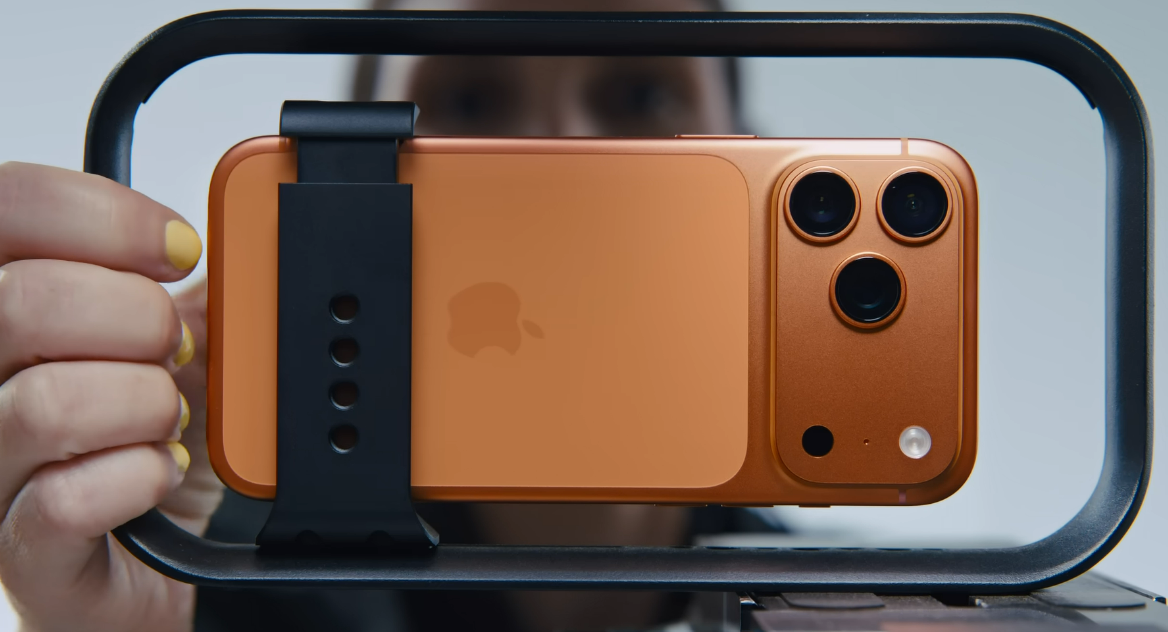
The next iPhone’s appearance isn’t the first thing that jumps out. It’s the thing that’s subtly evolving. More fundamental than camera modules or screen edges, engineers have been rearranging something inside Apple Park in Cupertino, where the curved glass still reflects the California sun as it did when it first opened. It seems as though the iPhone is no longer regarded as a product. They consider it to be infrastructure.
If you just look at sales charts, it’s easy to miss the hints. Store lines weren’t particularly sparked by Apple’s thinner iPhone Air, for instance. Individuals typically gravitated back toward the thicker Pro models after entering Apple Stores, picking it up, and turning it over in their hands. Being thin wasn’t enough to sell them. However, it was evident from staff explanations of the Air’s internal redesign—the moved chips, the changed battery arrangement—that the experiment wasn’t primarily about weight. Learning how to reshape the device’s interior for a different purpose was the goal.
| Item | Details |
|---|---|
| Company | Apple Inc. |
| Headquarters | Cupertino, California, United States |
| Key upcoming shift | Foldable iPhone, thinner Air models, deeper AI integration, and expanded ecosystem role |
| Strategic direction | Turning the iPhone into a central hub controlling wearables, AI services, home devices, and future products |
| Hardware evolution | Foldable displays, thinner designs, custom chips, and new biometric systems |
| Reference links | Apple Newsroom – Official iPhone announcements and strategy • CNN Business – Apple’s redesign strategy and iPhone Air context |
More and more, that “something else” appears to be a foldable future. Because Apple has been almost obstinately opposed to foldable phones for a longer period of time than its competitors, the change feels intentional. When a device can fold up into a near-tablet, it becomes more than just a phone; it can also function as a lightweight computer, media center, or portable workspace. According to investors, Apple isn’t trying to catch up by entering the foldable market. They think it’s coming in to start over with new expectations.
And there’s the chip. Unbeknownst to most users, Apple’s silicon roadmap has subtly transformed the iPhone into one of the most potent consumer computers ever packed in a pocket. When I recently rode a commuter train, almost every person was glued to a screen, editing pictures, answering messages, or going over presentations. The functions of several devices have already been incorporated into the phone. Perhaps Apple is getting ready for it to take in even more.
Because the iPhone is beginning to function more like a controller and less like an endpoint, this change feels more significant. Opening doors. Automobile starting. synchronizing timepieces. supplying energy for glasses that are still in the early stages of development. Apple seems to want the phone to be the unseen hub of everything else, processing, coordinating, and authenticating in the background. The identity it conveys may eventually become more significant than the actual device.
This tactic isn’t wholly original. The Apple Watch was considered an accessory years ago. It now monitors health information that people look up before leaving their beds. Previously, AirPods were optional. There are now subways, offices, and sidewalks crowded with people conversing with no one in sight. Seeing that trend develop makes one wonder if the next iPhone will serve as an anchor for an expanding network of personal devices rather than focusing primarily on selling phones.


Additionally, there is a cultural change taking place in relation to the iPhone. Physically, people used to be fixated on it—its thickness, colors, and scratches. People now give more thought to its connections. Services. memberships. information. The phone has evolved into a gateway rather than a device. Upgrades feel different after that minor adjustment. Upgrades are no longer solely for hardware. They are updating in order to remain part of the system.
Even the rumored anniversary iPhone, with its concealed sensors and seamless glass, appears to be symbolic. When visible parts are removed, the device feels more like an interface than a machine. A surface. Something that doesn’t stand out but instead vanishes into your hand. It’s possible that Apple wants the experience to be the only thing that remains visible, with the hardware completely disappearing.
Outside Apple stores, the change is more subdued but still discernible. Without thinking, people pay by tapping their phones. They open buildings. Tickets are displayed. They traverse new urban areas. The phone has evolved into a universal credential that is less of a communication tool and more of an identity token. When you lose it, it feels more like you’re losing access to yourself than a tool.
Naturally, there is a risk. Foldable screens are prone to breaking. Novel designs may fail. Apple has previously made poor market predictions. Whether consumers genuinely want their phones to grow bigger and more sophisticated is still up in the air. There was always something appealing about simplicity. That clarity could be diluted by adding layers.
It seems as though Apple is no longer selling hardware, though, as you watch people upgrading devices that are still in perfect working order inside a packed Apple Store. Selling continuity is what it is. The guarantee that, if you remain within the ecosystem, everything will continue to function together, smoothly, and undetectable.