

 5:17 am - April 11, 2026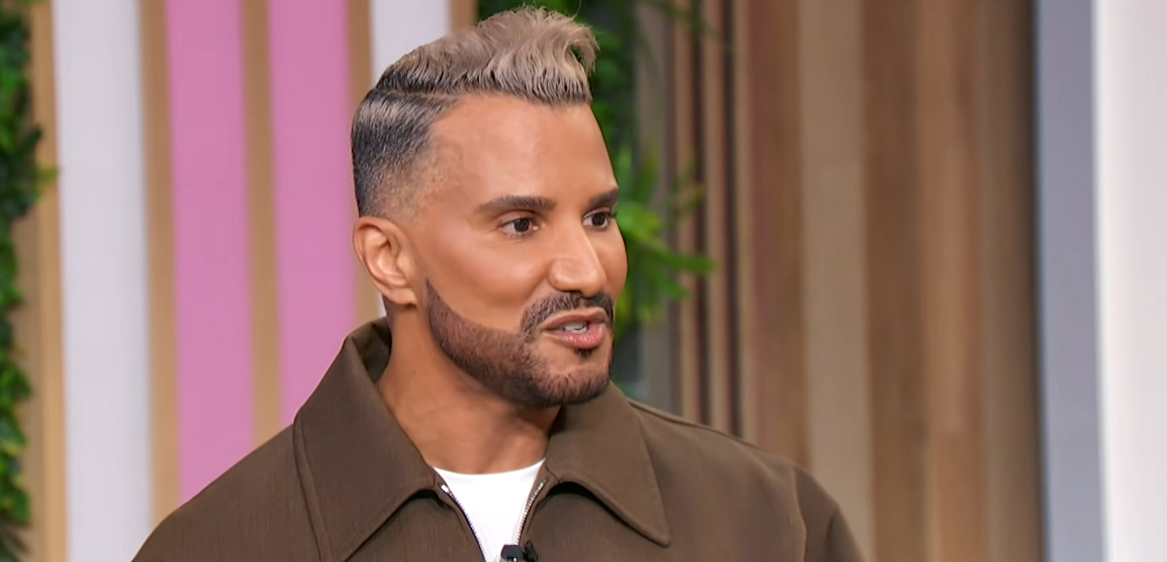
Jay Manuel was not talking loudly when he first attracted the attention of many people. He hardly ever had to. Wearing a fitted black outfit and keeping a close eye on a nervous contestant under the glaring studio lights on America’s Next Top Model, he exuded a calmer quality—control. It’s possible that Jay Manuel’s net worth, which is currently estimated at $4 million, was built more on his calm authority than any contract.
In Manuel’s case, money never appeared in a spectacular burst. It built up gradually, almost inconspicuously, like his on-screen persona. He was born in Illinois and raised mostly in Toronto. He got his start in the fashion industry by helping photographers, doing small editorial shoots, and learning how the colors of foundation changed in artificial lighting. Although those early days probably paid little, they created trust, which is more difficult to quantify.
| Category | Details |
|---|---|
| Full Name | Jay Manuel |
| Birth Date | August 14, 1972 |
| Birthplace | Springfield, Illinois, USA |
| Nationality | Canadian-American |
| Profession | Makeup Artist, Creative Director, TV Personality, Author |
| Known For | Creative Director on America’s Next Top Model |
| Estimated Net Worth | $4 million (approximate) |
| Beauty Venture | Founder of Jay Manuel Beauty |
| Book | The Wig, The Bitch & The Meltdown |
| Reference | Celebrity Net Worth |
| Reference | Wikipedia Profile |
The Toronto studios of the 1990s, where Manuel started to establish his reputation, are still remembered by fashion insiders. They frequently smelled faintly of hairspray and overheated electrical equipment. It seems as though he recognized early on how influence was a result of visual storytelling, and influence in turn led to financial gain. However, at that point, no one could have foreseen that reality television would be the catalyst for his financial transformation.
The television industry was evolving when America’s Next Top Model made its debut in 2003. Many creatives were cautious about reality TV because it wasn’t yet completely respected. In any case, Manuel stepped in and created photo shoots that, if only momentarily, transformed untrained competitors into believable magazine characters. It’s difficult to ignore how much weight was placed on his shoulders when viewing those episodes now.
Although his entire show salary was never made public, it is highly likely that his appearances in 18 cycles generated steady income for almost ten years. It’s still unclear, though, if the monetary benefits outweighed the cultural influence he contributed to. For some, like Manuel, reality TV created empires, but for others, it brought stability rather than luxury.
The complex reality of being close to more affluent people is another. Manuel was on a different financial level, standing next to Tyra Banks, whose wealth grew rapidly through ownership, hosting, and business endeavors. Executives and investors appear to value ownership much more highly than innovative contributions. Seeing that relationship develop over time made it clear that, despite their influence, creative directors frequently make less money than the people they support.


Manuel’s career went into a more subdued phase after he left the show in 2011. Less noticeable, but not unsuccessful. After serving as a television host and fashion consultant, he went on to start his own cosmetics company. Although it can be very profitable, the beauty industry is extremely competitive. Celebrity-endorsed cosmetics abound on shelves, each offering a slightly different promise.
Although it never became the billion-dollar phenomenon that some celebrity lines did, his brand did carve out a niche. That could help to explain why his current net worth feels respectable but not particularly high. His trajectory, however, is steady, eschewing the boom-and-bust cycles that derail many TV personalities.
Another layer was added in his 2020 novel. Writing gave him something else: ownership of the story. Publishing rarely brings in large sums of money unless it is combined with a blockbuster hit. It enabled him to rethink a sector that he helped define. It seems clear from observing his transition to authorship that he was more interested in pursuing creative autonomy than financial gain.
Manuel’s financial story illustrates a larger reality about television and fashion. Although fame brings about visibility, extreme wealth is not always the result of visibility. Many viewers believe that getting on TV on a regular basis will bring in millions and millions of dollars. Few people actually make it to that level.
Manuel maintains the same composed demeanor when he walks through fashion events today. He navigates the backstage chaos with composure despite the stylists hurrying, photographers adjusting lenses, and assistants checking lighting. His most valuable quality might be that consistency.
It’s difficult to ignore the fact that his wealth speaks more subtly than his influence. He influenced the way a whole generation viewed transformation, beauty, and modeling. But in terms of money, he was still more of a craftsman than a tycoon.
Additionally, his exit from America’s Next Top Model still casts a shadow. Career momentum can be changed by industry exits in ways that are not entirely apparent to outsiders. Although losing a platform can lessen visibility, which in turn creates opportunity, losing a platform does not eliminate talent. His subsequent maintenance of a multi-million dollar net worth points more toward resiliency than power.
Manuel is in an intriguing place right now—not chasing news, but also not going away. On social media, he can be seen traveling, reflecting, and occasionally teasing new creative endeavors. The portfolio may appear modest to investors. The perception of fashion insiders is probably completely different.

