

 6:45 pm - April 10, 2026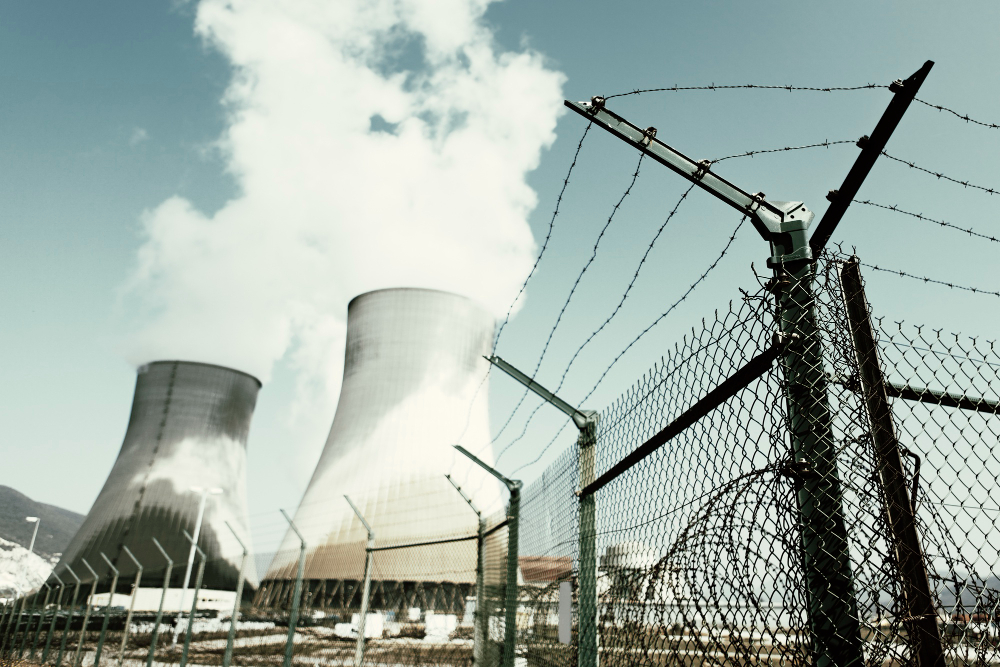
Apartment radiators occasionally hum with a nervous sort of uncertainty on chilly winter mornings in eastern Germany. Despite the heat, people continue to check prices and watch numbers rise on their energy apps. It’s a minor custom that is carried out all over Europe and reveals more than just growing expenses. It represents a continent that, after decades of ignorance, has suddenly realized how vulnerable it is to energy.
The energy crisis in Europe didn’t come as a surprise. It brought with it gas pipeline disruptions, war, and governments rushing to secure supplies. The European Union paid foreign fossil fuel suppliers about €416 billion in 2023 alone. That number seems more like a warning than an economic statistic. That figure might have altered political perceptions more quickly than years of climate discussions ever could.
| Field | Information |
|---|---|
| Region | European Union |
| Trigger Event | Energy crisis following Russia-Ukraine war |
| Key Energy Issue | Heavy reliance on imported fossil fuels |
| Nuclear Momentum | 14 EU countries committed to nuclear expansion |
| Major Projects | Olkiluoto 3 (Finland), Flamanville 3 (France), Hinkley Point C (UK) |
| Nuclear Share | France 69%, Finland 76% electricity from nuclear |
| New Technologies | Small Modular Reactors (SMRs), Advanced Reactors |
| Policy Change | Nuclear included in EU Green Taxonomy |
| Energy Import Cost | €416 billion spent on fossil fuel imports in 2023 |
| Reference | https://www.bearingpoint.com |
Nuclear power is now making a comeback in discussions that previously disregarded it.
Massive cooling towers continue to rise above rural farmland in France, where nuclear plants already dominate the landscape, releasing steady columns of white steam. In contrast to the tumultuous energy markets surrounding them, they appear strangely serene. France, which uses nuclear energy to produce roughly 69% of its electricity, recently revealed plans to construct 14 additional reactors. In a way, the nation views nuclear as insurance as well as infrastructure.
Other nations are keeping a close eye on it.
Finland recently added a substantial amount of new capacity by connecting its Olkiluoto 3 reactor to the grid. Engineers who are standing close to the location characterize it as more of a pragmatic choice than a political one. The reactor is not reliant on gas imports. It doesn’t respond to tensions in geopolitics. It just runs.


That dependability has gained new value.
Imports were the foundation of Europe’s energy system. Over the last 20 years, domestic gas production has drastically decreased. Only a small portion of the fossil fuels used by the EU today are produced. The entire system felt vulnerable when supply chains failed. Whether renewable energy sources alone can swiftly stabilize the system is still up in the air, particularly during the gloomy, windless winter weeks.
Because of this uncertainty, nuclear energy has gained new significance.
A subtle but significant change was made when the European Union decided to include nuclear power in its Green Taxonomy. Brussels successfully communicated that nuclear technology has a role in Europe’s future by designating it as sustainable for investment purposes. Investors took notice. Funding started flowing once more.
It seems like nuclear never really went away. It just waited.
The enormous Hinkley Point C project in the United Kingdom is surrounded by construction cranes. As they move between steel frameworks, workers wearing reflective jackets put together something that should last for at least 60 years. Nuclear projects proceed slowly, which is frequently annoying. However, their schedules align with the scope of Europe’s aspirations.
Critics are still dubious.
The cost of nuclear power plants is high. They can take years or even decades to finish. Some European nations, such as Germany, have completely abandoned nuclear due to public opposition and recollections of tragedies like Fukushima. That resistance is still there. It continues to influence public discussions, resulting in a patchwork of policies throughout the continent.
However, the conversation is evolving due to new technology.
SMRs, or small modular reactors, promise cheaper and quicker construction. They are simpler to deploy due to their small size. In the hopes that they provide a more adaptable form of nuclear power, governments from Sweden to Poland are investigating them.
Investors appear cautiously hopeful, seeing potential in the energy anxiety in Europe.
Beyond economics, a psychological phenomenon is at play. Energy security is now a personal concern. Daily schedules, household finances, and political stability are all impacted. Seeing Europe reevaluate nuclear power gives the impression that the continent is changing its beliefs regarding its independence.
The use of renewable energy is still growing quickly. Rooftops in southern Europe are now covered in solar panels. The northern seas are covered with wind farms. However, renewable energy sources rely on uncontrollable weather patterns. Nuclear provides a unique experience.
Regularity.
The constant hum of machinery gives the impression of permanence when one is standing close to a reactor site. It is not affected by wind or sunlight. In uncertain times, that predictability carries emotional weight.
A nuclear renaissance in Europe is not assured. Projects may experience delays. Opposition to politics may reappear. Costs could rise. But momentum is building.
What began as an energy crisis is quietly reshaping Europe’s future.
And this time, nuclear power is no longer standing on the sidelines.

