

 7:36 am - April 4, 2026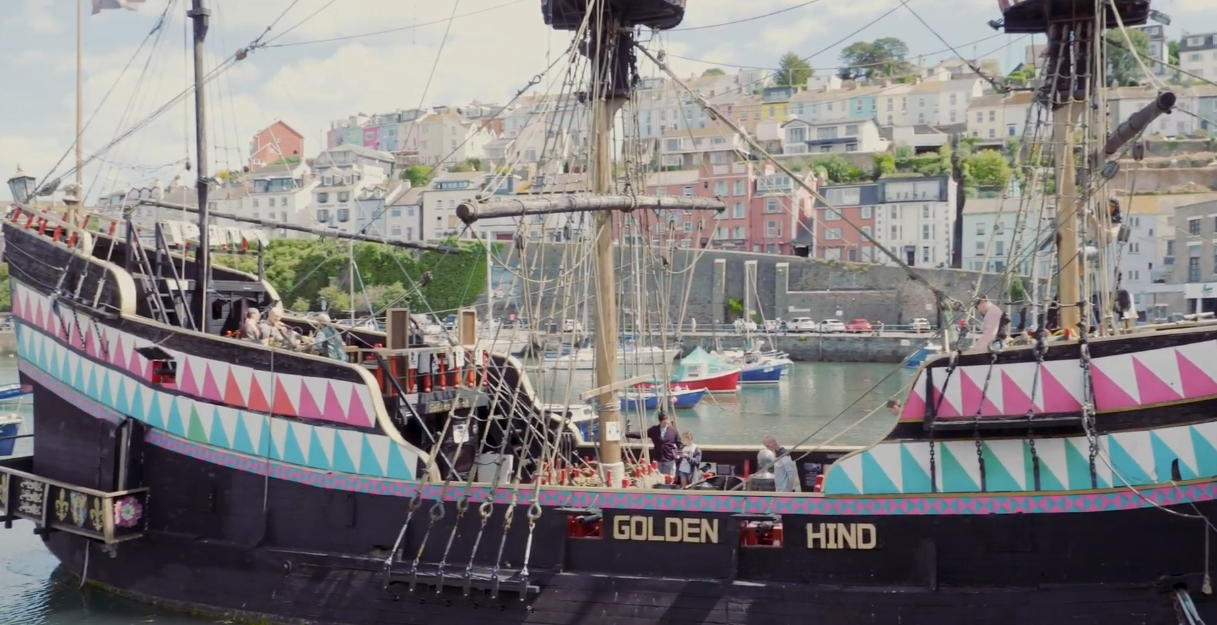
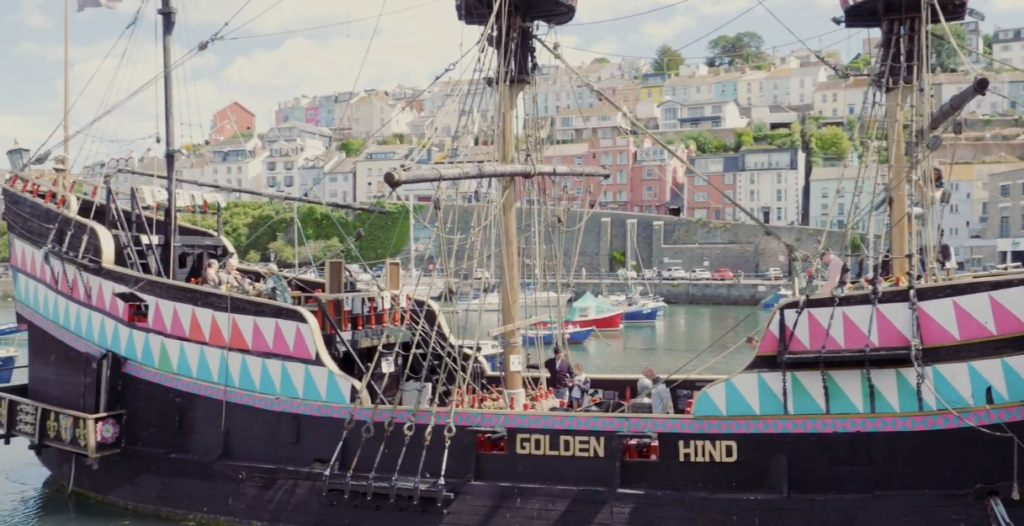
The Golden Hind has long been more than just wood and rope, providing a presence that was astonishingly successful in bridging the gap between contemporary tourists and centuries-old maritime aspirations by standing quietly at the edge of Brixham Harbour. Its towering masts, which rose boldly above the quay, served as a visual anchor that naturally led both visitors and residents to the water.
The ship served as a dependable landmark for many years, helping to define the town’s character and preserve tales that could have otherwise only been found in old textbooks. With cautious enthusiasm, children climbed steep steps toward its gangway, their eagerness making the ship seem much larger than it actually was.
The Golden Hind conveyed history in a way that was remarkably clear and intimate by emulating the ship that Francis Drake commanded. Instead of just reading about discovery, visitors felt it firsthand as they crossed groaning decks and imagined storms, navigation, and expeditions that once reshaped England’s aspirations.
The ship’s function in Brixham has significantly improved over the last fifty years, evolving from a static museum to a vibrant cultural hub. Its decks were packed with families and costumed actors during summer festivals, fostering moments that were especially helpful for fostering a sense of community and conserving tradition.
| Key Fact | Details |
|---|---|
| Location | Brixham Harbour, Devon, England |
| Attraction Type | Full-size replica museum ship |
| Historical Inspiration | Sir Francis Drake’s Golden Hind (1577–1580 voyage) |
| Years in Brixham | Nearly 60 years |
| Recent Status | Closed with immediate effect in February 2026 |
| Cultural Role | Museum, tourist attraction, Pirate Festival centerpiece |
| Ownership | Purchased by Sean and Mary Twomey in 2018 |
Particularly during the yearly Pirate Festival, the ship’s extraordinary versatility was on display as it served both joyful and instructive functions. It simplified curiosity and released imagination by transforming information into experience through the hosting of historical demonstrations, performances, and storytelling.
As if steering toward futures defined by courage rather than certainty, one former guide recalled seeing children hold the ship’s wheel with tremendous intensity on their faces.


When Sean and Mary Twomey bought the ship in 2018, they brought in fresh, especially creative ideas that made sure the ship was still relevant to audiences today. Their choice to turn inner storage areas into sleeping quarters worked incredibly well, enabling visitors to sleep inside the ship while taking in the sound of the harbor’s gentle movements below.
By eliminating distractions and enabling guests to experience history firsthand rather of just watching it from a distance, sleeping on board the Golden Hind provided an experience that was remarkably akin to entering a another century. This strategy, which combined creation and preservation, showed how cultural legacy might endure while being carefully modified.
I recall how many stayed by the ship even after it was shut off for the night, as if its very existence was comforting.
The Golden Hind, which attracted tourists who backed eateries, retail establishments, and neighboring attractions, was not just symbolic but also monetarily vital to the local economy. Its capacity to draw steady interest proved to be very effective in maintaining tourism and enhancing Brixham’s standing as a nautical destination.
The ship inspired education and sparked interest among guests of all ages by utilizing her historical relevance to provide possibilities that went beyond entertainment. In ways that schools alone could never fully do, teachers invited kids aboard and used the physical environment to teach exploration, navigation, and resilience.
Uncertainty was brought about by its abrupt closure in February 2026, but it also demonstrated how closely the ship was still tied to the town’s character. Residents’ responses demonstrated attachment that was very resilient in the face of shifting conditions, expressing both hope and fear at the same time.
Many saw the ship as a symbol of continuity, staying steadfast as everything else around it changed gradually.
The Golden Hind strengthened ties between generations and preserved shared memories by working with local customs to preserve local culture. By introducing their grandkids to the ship, grandparents forged emotional bonds that went well beyond travel by sharing tales that combined historical accuracy with personal experience.
The ship nevertheless represents promise even in motion, reminding onlookers that preservation calls for constant attention to detail and creativity. Its structure has withstood decades of coastal exposure with remarkable durability and attention-grabbing visual strength.

