

 6:44 pm - April 9, 2026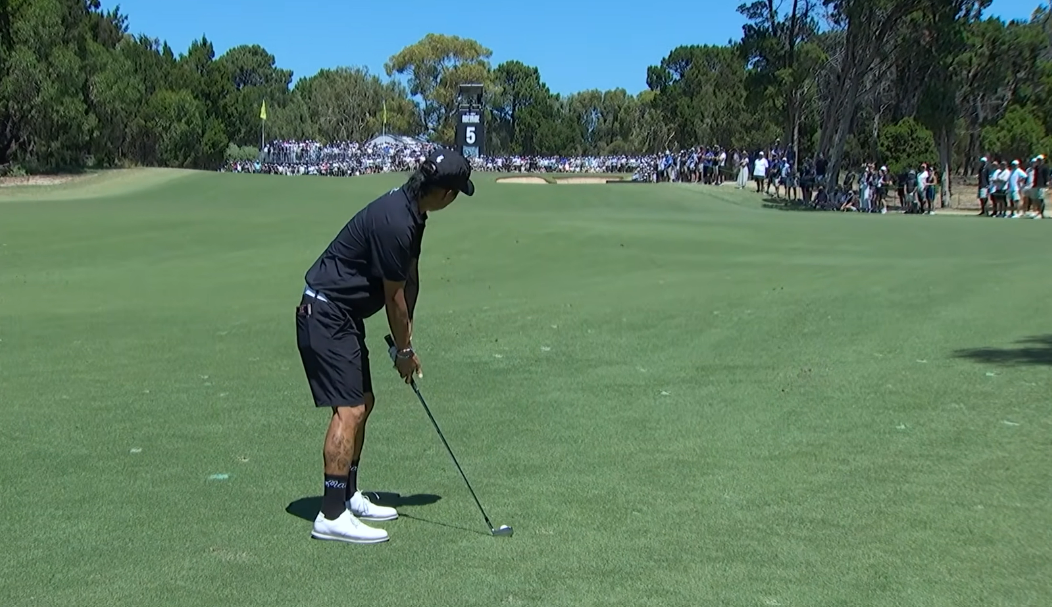
The Grange Golf Club’s fairways exuded an oddly contemplative serenity, the kind that arises when viewers realize they are witnessing something beyond than rivalry. Anthony Kim’s posture seemed noticeably better as he took a step forward; it was grounded and solid, indicating years of experience that had subtly changed him.
For some who recalled his early ascent, the scene was eerily reminiscent of seeing an old snapshot come back to life, bringing back nuances that had been lost to time. Fans who had previously thought his career was over due to his absence spanning over ten years benefited greatly from his appearance alone.
His reappearance proved that perseverance is still a very dependable force in rewriting personal narratives, even though golf itself had changed considerably more quickly over the previous 10 years, bringing with it new players, rivalries, and expectations. Once driven by teenage eagerness, his swing now seems remarkably purposeful, driven by patience rather than whims.
He started the last round behind leaders like Jon Rahm, whose supremacy had been incredibly successful all season long. The leaderboard reinforced presumptions about age and competitive decline, giving the impression that the conclusion was inevitable to many viewers.
| Category | Details |
|---|---|
| Name | Anthony Kim |
| Date of Birth | June 19, 1985 |
| Nationality | American |
| Profession | Professional Golfer |
| Major Career Highlights | Three PGA Tour wins; 2008 Ryder Cup standout; LIV Golf Adelaide winner 2026 |
| Years Away From Golf | Approximately 12 years (2012–2024) |
| LIV Golf Team | 4Aces GC |
| Reference | https://www.livgolf.com/player/anthony-kim |
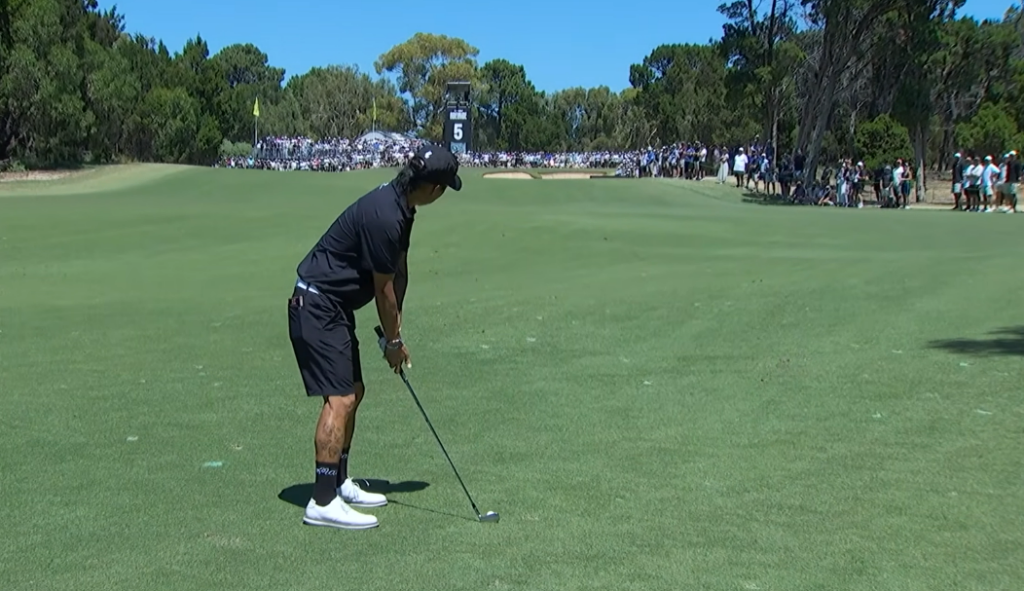
However, momentum started to turn expectation into possibility, growing steadily and almost imperceptibly.
Kim gradually reduced the distance by making every putt with extreme efficiency and accuracy, and his confidence increased noticeably with each successful putt. Birdies came one after the other, forming a rhythm that felt so flexible, adjusting to pressure instead of running away from it.


The crowd reacted automatically, their spirits rising in waves as if they were seeing a restoration rather than just a competition. As an athlete regaining confidence in his own abilities, his performance became noticeably faster in both pace and intention.
Professional athletes must possess a resilience that is incredibly lasting, formed through doubt and introspection, in order to return after such a long hiatus. His triumph, which saw him finish at 23-under par, signified both emotional fulfillment and monetary accomplishment.
No figure could adequately convey the significance of the moment when his daughter ran toward him, crossing the green with absolute conviction.
I recall that his smile seemed more subdued than anticipated, molded more by relief than by victory.
He had lived a life away from the spotlight for years, focusing on his family and his recuperation while creating stability that was very creative in reinventing his mission. By emphasizing self-healing, he established emotionally accessible underpinnings that demanded humility rather than fame.
His absence over those years served as a continual reminder of how brittle sports careers can become when one’s identity is solely based on performance. His eventual return, which was the result of careful planning, demonstrated how crucial patience is to regaining confidence.
Success is more significant for those who earn it through perseverance because golf demands accountability with every stroke and provides no place to hide uncertainty. His triumph in Adelaide, which marked both closure and rebirth, was his first professional victory in almost sixteen years.
He showed how reinvention can become amazingly effective when driven by purpose rather than pressure by seizing the chance without hurrying. After that, his score significantly improved, reflecting recognition that had before seemed unattainable.
Observers saw this change, reacting to both emotional genuineness and athletic prowess, and appreciating the work that goes into success. His restrained celebration demonstrated maturity molded by life experiences other than competition.
His return emphasizes flexibility as a highly dependable attribute, with teachings for younger players that go well beyond golf itself. Resilience frequently becomes the distinguishing characteristic that separates those who persevere from those who vanish, and careers rarely follow predictable routes.
By facing his past head-on, he built a future that had previously appeared unattainable, proving that failures may serve as stepping stones to success. His tale, which develops slowly and without spectacle, illustrates the silent fortitude needed to start over.