

 9:52 pm - February 16, 2026
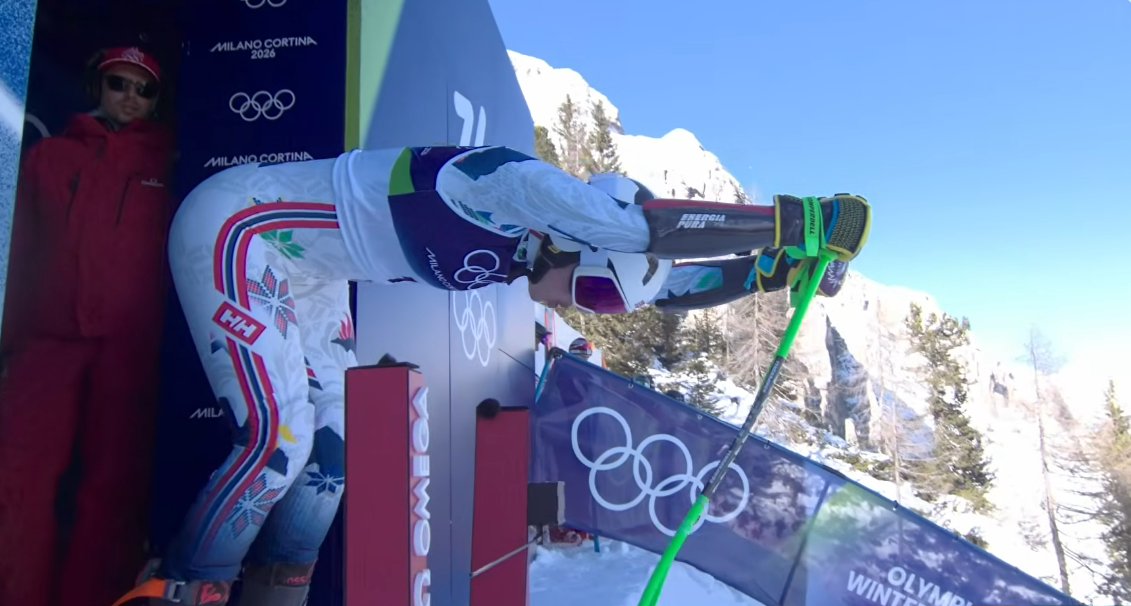
Every date and hour of the 2026 Winter Olympics alpine skiing schedule is arranged with the quiet accuracy of a well tuned instrument, guaranteeing that athletes and mountains will line up at the most advantageous time. Organizers create conditions that are especially favorable for fairness by scheduling races mainly in the morning, since cooler snow provides a very dependable and long-lasting surface for racing skis.
| Event | Date | Key Time (Italy CET) | Key Detail | Location |
|---|---|---|---|---|
| Alpine Skiing Competition Window | Feb 7–18, 2026 | Morning–Afternoon | Full alpine program across disciplines | Cortina d’Ampezzo, Italy |
| Women’s Giant Slalom | Feb 16, 2026 | 10:00 & 13:00 | Two-run technical event | Cortina d’Ampezzo |
| Men’s Slalom | Feb 17, 2026 | 10:00 & 13:00 | Fastest, most technical discipline | Cortina d’Ampezzo |
| Women’s Slalom | Feb 18, 2026 | 10:00 & 13:00 | Tight turns, rapid rhythm | Cortina d’Ampezzo |
| Mixed Team Parallel | Feb 19, 2026 | 12:00 | Head-to-head national teams | Cortina d’Ampezzo |
| Women’s Alpine Combined | Feb 20, 2026 | 10:00 & 13:00 | Downhill and slalom combined | Cortina d’Ampezzo |
| Men’s Giant Slalom | Feb 21, 2026 | 10:00 & 13:00 | Strength and precision event | Cortina d’Ampezzo |
| Men’s Alpine Combined | Feb 22, 2026 | 10:00 & 13:00 | Final alpine medals awarded | Cortina d’Ampezzo |
Athletes’ training, recuperation, and performance in the Olympics are all influenced by time, which is not just administrative but also profoundly physical. As the calendar gradually moves athletes from speed-focused races toward highly technical events over the course of two weeks in February, the Games’ story is able to develop gradually and significantly better every day.
When the women’s giant slalom starts on February 16, the mountain has already undergone hours of unseen preparation, with crews carefully drilling gates and examining the terrain in the dark before dawn. Seeing them traverse the slope, hauling gear and assessing angles, is remarkably reminiscent of seeing a theatrical team set up a stage with the knowledge that the show will soon be completely owned by someone else.
In contrast to other disciplines, the men’s slalom, which takes place on February 17, brings a sense of innovation because it requires rhythm in addition to boldness. Skiers drop quickly and deliberately during that race, reacting to time that cannot be controlled or delayed as their body continually adjust and read the terrain.
The early awakenings that result from these morning races, which frequently start before sunrise, create a silent but shared tradition among fans in North America. The Olympic schedule becomes extremely effective at engaging remote audiences by airing live on NBC and Peacock, bringing moments of triumph while most cities are still groggy from sleep.
This progression is continued on February 18 in the women’s slalom, which gives racers another opportunity to showcase accuracy honed over years of focused practice. Athletes can have a moment to think, psychologically re-calibrate, and return significantly better—or occasionally surprisingly shaken—because technical races require two runs.


When I saw a slalom run replayed in almost complete quiet, I realized that less than two minutes of controlled motion might determine the outcome of an entire Olympic cycle.
The mixed team parallel competition on February 19 creates a change in mood, making skiing a group activity instead of an individual one. The concept is made extremely flexible by matching competitors head-to-head, which enables national teams to blend various abilities and promotes a competition that feels refreshingly straightforward.
Because many people find the side-by-side race easier to comprehend, Olympic organizers have used this team concept to create a section of the schedule that is extraordinarily effective in drawing in new viewers. This invention is an example of how the Olympic program is still carefully changing to maintain tradition while still being relevant to contemporary viewers.
The alpine combined events on February 20 and 22 are arguably the most taxing parts of the calendar since skiers must transition between technical and speed disciplines in a matter of hours. Skiers today have to adjust fast, manage exhaustion while maintaining mental clarity, and exhibit balance that is both honed physically and psychologically.
This hybrid style might gain even more importance in the years to come since it encourages flexibility, which is a trait that high-performance sports are increasingly valuing. The Olympic ideal of total athletic greatness is reinforced by the timetable, which pushes competitors to perform in a variety of styles and promotes both broadly applicable and highly specialized training.
However, the weather is still a collaborator that can change plans at any time, making it an unpredictable partner in any Olympic timetable. In order to maintain safety and make sure it is always the top priority, authorities must modify start timings during Alpine competition due to changing wind and lighting conditions that might impact vision and snow texture.
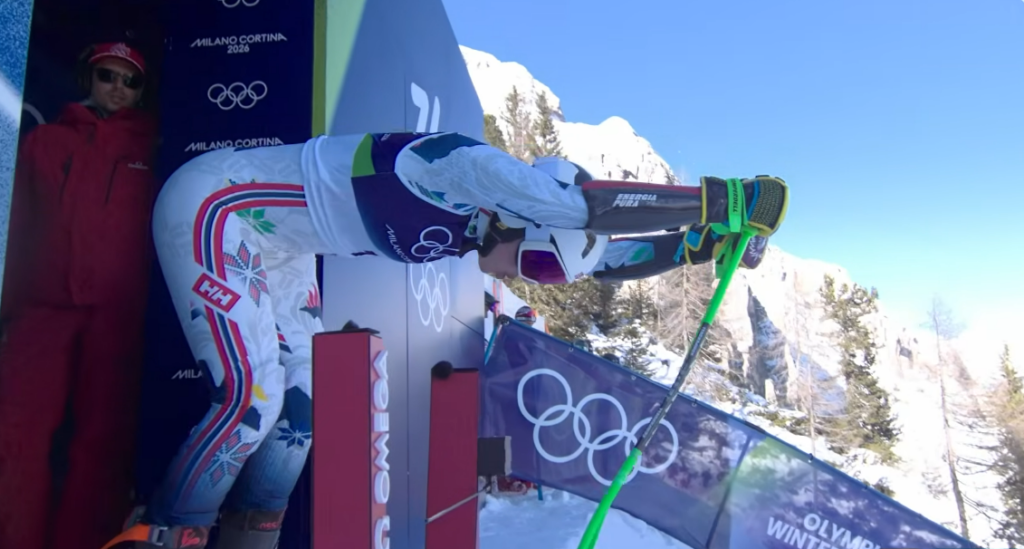
For athletes, these delays are not disruptions but rather an integral part of the experience, necessitating patience that spectators frequently fail to recognize. At the start gate, with their muscles primed and skis locked in place, they must maintain composure and conserve energy while they wait for the precise moment their race will start.
Because Olympic careers are measured in moments rather than seasons, the significance of each scheduled race extends well beyond its calendar position. When a single run is done well, it has the power to change a person’s life and create chances that were before unattainable and unclear.
With a sense of completion, the men’s giant slalom on February 21 comes close to the end of the alpine program. By then, there are obvious indications of rivalry on the mountain, with numerous descents etched over its surface, each adding to a complex record of endeavor and aspiration.
Skiers’ last chance to earn Olympic recognition in Cortina is the final alpine combined event on February 22, which quietly closes out the competition. The alpine program concludes with a discipline that rewards adaptability thanks to meticulous planning, giving viewers a particularly poignant reminder of the sport’s intricacy.
An exceptionally successful example of contemporary sports organization is the 2026 Winter Olympics alpine skiing program, which combines careful scheduling, dependable broadcasting, and athlete-centered preparation. It shows how opportunity, planning, and timing come together to produce moments that are both ephemeral and eternally significant.