

 10:54 am - April 1, 2026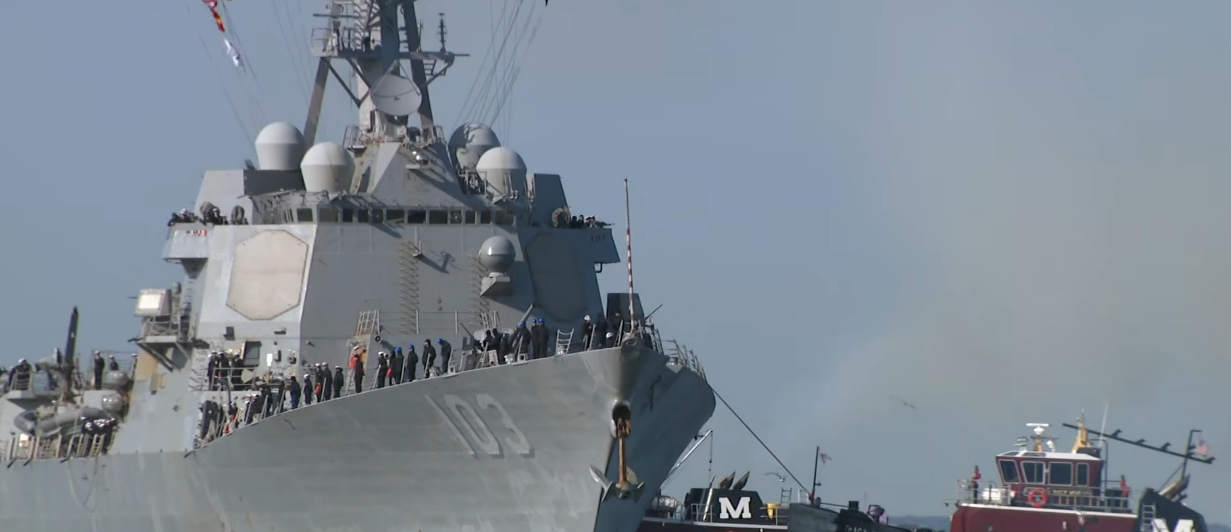
One of the most technically complex operations the Navy performs in peacetime is replenishment-at-sea. Hoses and lines of goods stretch between two enormous ships, both in motion, both loaded with people, fuel, and ordnance, and both gliding dangerously close. Timing, accuracy, and a quiet communication style that isn’t often evident in training simulations are necessary.
That choreography got lost on February 12.
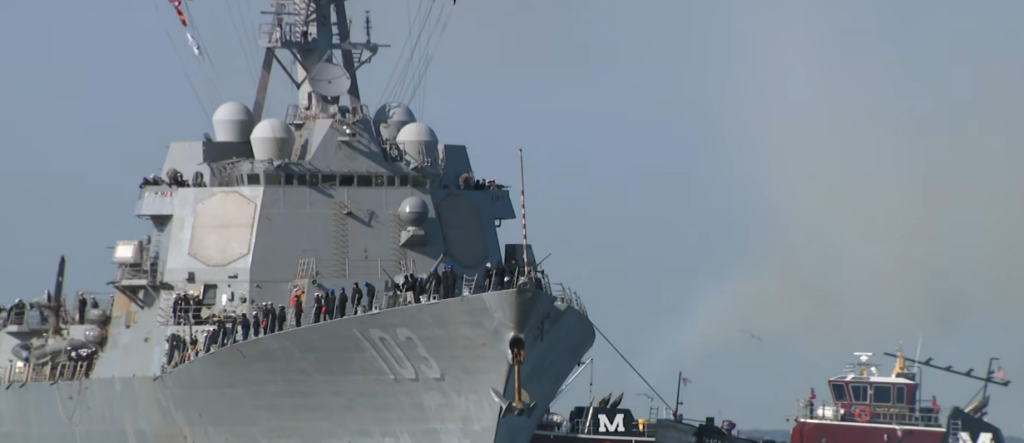
The USNS Supply, a quick combat support ship, and the USS Truxtun, a guided-missile destroyer, collided during a synchronized resupply in the Caribbean. Both ships sustained structural damage, and two sailors suffered minor injuries in the event. Although the collision sent shockwaves through operational leadership, they proceeded with their tasks.
It is noteworthy that this was not your typical day at sea.
President Trump’s 2025 mandate to regain US naval dominance in the Caribbean coincided with increased military activity throughout the region, giving rise to this event. Reducing international crime, limiting the flow of Venezuelan oil, and establishing a presence close to adversarial governments are all part of the plan. Joining a multi-ship task force that also included the carrier USS Gerald R. Ford, the Truxtun was part of that effort, having just arrived from Norfolk.
| Detail | Information |
|---|---|
| Date of Incident | February 12, 2026 |
| Location | Caribbean Sea, near South America |
| Vessels Involved | USS Truxtun (DDG-103) and USNS Supply (T-AOE-6) |
| Type of Operation | Replenishment-at-Sea (fuel/supply transfer while underway) |
| Casualties | 2 personnel with minor injuries |
| Operational Context | Part of U.S. military buildup in the Caribbean ordered in Aug 2025 |
| Investigation Status | Ongoing — Navy has not released preliminary findings |
| Credible Source | CBS News coverage |
Also in the vicinity of the maneuver was the Gettysburg. This raises the difficulty of each ship’s location considerably and implies a larger formation or group action. Real-time operations are layered on top of high mission demand, which rapidly reduces the margin for mistake.


The inaccuracy in this instance raised important issues but did not result in a mission being capsized.
Investigations will center on how two US Navy ships, manned by some of the best-trained people on the planet, could crash in calm conditions. The USNS Supply, which is run by the Military Sealift Command,’s civilian sailors and the destroyer’s crew may have coordination issues, according to some authorities. Frequently, these vessels combine contractual civilian and military activities. There may be situations when that hybrid structure results in inconsistent execution.
Warship effectiveness is typically increased by replenishment-at-sea, which enables longer stays on station through strategic coordination. However, this incident served as a reminder to all onlookers that the method is only as effective as the physical, interpersonal, and environmental connections that support it.
A similar action off the coast of Spain was something I witnessed years ago. The writing on each hull could be read because the ships were so near. An incorrect helm instruction and a wind gust might cause the entire exercise to fail. There were rumors of this collision in the Caribbean, and that recollection came back, remarkably clear.
Nonetheless, the Navy’s tenacity is heartening. Both ships were still in the water and in service. That demonstrates the strength of the infrastructure and its remarkable durability. According to the Navy, no larger mission had been canceled and operations will go on. Such consistency demonstrates how much better logistical support has evolved over the last ten years.
This crash also serves as a reminder to leadership that tempo is dangerous. There has been an increase in missions since the start of the surge in Caribbean deployments. The number of drug trafficking arrests has increased. Information exchange with allies in the region has increased. Joint drills now cover a variety of zones. In addition to moving more, the ships are accomplishing more tasks with overlapping goals and stricter deadlines.
US naval units are now far more adept at evaluating threats thanks to the use of satellite and sensor fusion technologies. The same agility, however, can put stress on personnel that must perform at or close to their best every day.
For naval leaders in their early stages, this will probably be a case study. It’s for healing, not failure. A mid-sea collision under operational stress and mission continuance is an example of how complexity can be handled with care and not lead to disaster.
Investigating further could reveal misread radar, delayed orders, or just the bad timing of two steel titans doing a synchronized activity at a high speed. No matter what is discovered, responsibility will ensue. This is how the Navy sharpens its advantage.
This occurrence also echoes past ones. Multiple sailors were killed in two different crashes in the Pacific in 2017. This prompted the Navy to restructure its readiness assessments, bridge watch protocols, and training. The memory of such deaths lingers, but there is currently no indication that latest incident in the Caribbean is similar. Leaders are also compelled to remain alert.
Crews aboard the Truxtun and the Supply will probably be subject to fatigue tests, system recalibrations, and inspections in the upcoming weeks. Command personnel in Norfolk and Washington will examine communications transcripts, logs, maps, and weather information in the interim. Although that procedure might not garner much attention, it is essential to preserving a combat force that is extremely effective.
These are ships of policy, deterrent, and diplomacy, not just steel. A message is sent when two of them collide, even if it is only slightly. Not of frailty but of resistance. And if friction is not addressed, it intensifies.
Fortunately, in this case, the result was manageable.
Rememberable does not equate to containable.
The incident’s invitation to operational humility despite strategic certainty is actually what gives it its unique significance. The position of the Navy is still firm. However, strength and caring must coexist. If not, the margins quickly get smaller.

