

 5:31 pm - March 30, 2026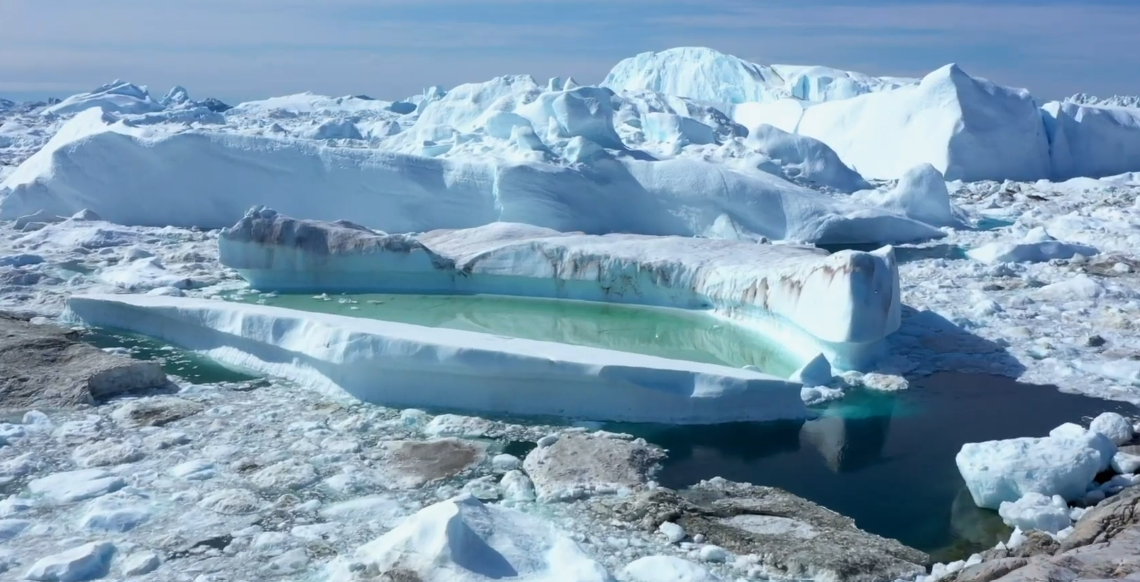
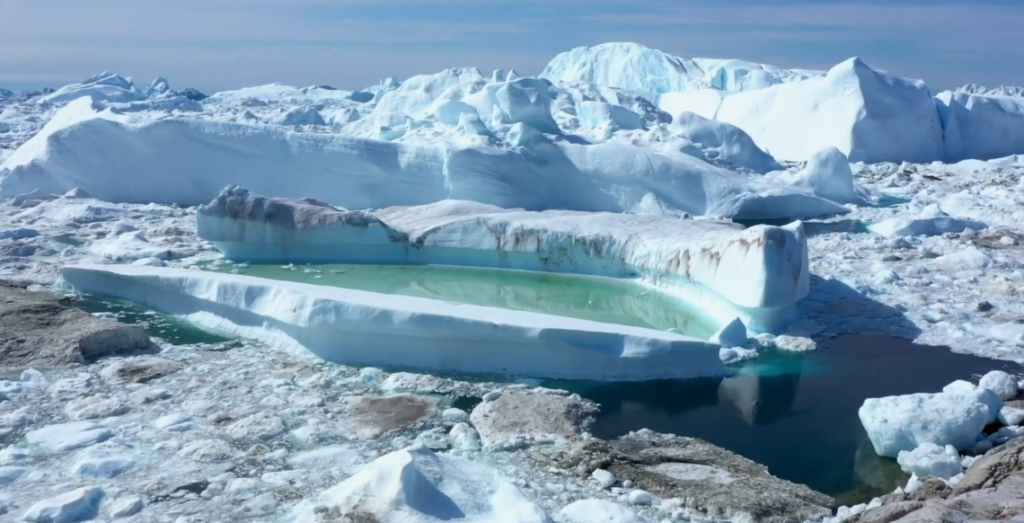
Something extraordinary has awakened in the wind-beaten silence of Greenland’s ice sheet. The melt has produced a microscopic discovery that is almost poetic in its contradiction. Scientists have discovered enormous, ancient viruses that are not just trapped in the ice but also actively affect its melting. And maybe how quickly it doesn’t.
The researchers, led by Laura Perini of Aarhus University, discovered viruses that defy the accepted definition of what viruses are. They have genetic material that is comparable to or even greater than that of many bacteria, and they are remarkably enormous, growing up to 2.5 micrometers in length. Their activity challenges our preconceptions of the biological quiet of the Arctic, since they are observed clinging to crimson snow and dark ice.
These relics aren’t frozen. The metabolic activity of the viruses was validated by DNA and RNA sequencing. Existing. operating. interacting with the springtime blooming algae on the ice surface. The snow is darkened by these algae blooms, which increases its absorption of sunlight and speeds up melting. However, the viruses infect the algae, preventing their growth, delaying the darkening, and maintaining the albedo, or reflecting ability, of the ice.
I find that feedback loop really intriguing. More algae bloom when the temperature rises. In response, the viruses infect them, which stops their growth. The ice has an inbuilt self-balancing system that acts as an imperceptible barrier to prevent environmental acceleration.
| Key Detail | Information |
|---|---|
| Location of Discovery | Greenland Ice Sheet |
| Lead Research Team | Aarhus University, Denmark – Laura Perini |
| Type of Viruses | Giant viruses (up to 2.5 micrometers, 2.5 million base pairs) |
| Where Found | Dark ice, red snow, cryoconite holes |
| Primary Hosts | Arctic algae (particularly algal blooms on glacial surfaces) |
| Function | Infect and regulate algal growth, influencing ice melt rate |
| Ecological Impact | May preserve ice reflectivity (albedo), slow melt in some regions |
| Scientific Implication | Reveals active ecosystems in ancient ice, may influence climate models |
| Reference | International Journal of Circumpolar Health (2026) |
Given how coral reefs self-regulate through predator-prey dynamics, it is conceivable that ancient viruses could moderate contemporary climatic processes. The battleground is frozen here, and the fighters are minuscule. However, their impact can be quantified.
I remember passing an algae-covered pond every morning during the pandemic lockdowns and seeing dragonflies patrol above the green glimmer. That memory—how basic layers of life can transform into active systems with quiet strength given time and space—was evoked when reading about Greenland’s red snow.
The Greenland team found that strategy was more important than size or survival. Algae are not randomly killed off by these viruses. It seems that they control bloom behavior. This subtlety has wider ramifications. They also affect microbial diversity, carbon sequestration, and possibly even the release of greenhouse gasses trapped in the melting glacier by managing algae populations.


This could be especially helpful in the context of global warming. We’re discovering that Arctic ecosystems are reacting to the warming, not just melting. Adapting. And perhaps adjusting. These results of microbial activity are not coincidental. It is a component of a long-standing, developed resilience.
Researchers were able to differentiate between dormant remnants and active viral activities by utilizing sophisticated sampling techniques. They discovered a living archive rather than a dead library—signals of the present rather than remnants of the past.
An internal biological system that might help regulate melt patterns during times of rapid change is a highly effective discovery for climate scientists. It adds a hitherto undiscovered component to climate models, but it won’t stop global warming.
The group is currently investigating if additional arctic locations exhibit same regulatory dynamic. If it does, our understanding of the role of microbiological life in maintaining climatic balance may need to be adjusted. It could be time to view these frozen viruses as agents of delicate, clever design rather than as threats or novelty.
The boundary between amazement and discomfort is thin. Although people are not now at risk from these viruses, their discharge as the ice thaws serves as a reminder of the larger reservoir that is trapped in glaciers. Similar research have found thousands of previously unidentified viruses and bacteria, many of which date back tens of thousands of years, from Tibet to Siberia. We still don’t sure if they present unanticipated dangers or evolutionary insights.
The Greenland study is still incredibly successful at changing our perspective, though. We now know that the Arctic is a dynamic archive rather than just a story of loss—a disappearing sheet. More is stored in it than in frozen water. It contains ecological patterns, relationships, and living things that are not only ancient but also dynamic.
The scientific community has responded with cautious optimism. These viruses may have hints to natural feedback systems that could decrease glacial melt because of their unique ability to modulate environmental effect. However, they also stress how important our actions over the next ten years are. The power of natural regulators is limited. They are not remedies; they are buffers.
Funding for microbial polar research has increased after the report was published in the International Journal of Circumpolar Health. This is heartening. The Arctic’s microbial fabric has received less attention in recent years than its mineral extraction and geopolitical significance. While humans are struggling to minimize emissions, viruses are subtly influencing melt patterns.
Future missions intend to monitor these viruses throughout melt zones through strategic collaborations, examining how their presence changes as the climate speeds up. The idea that we may have only begun to explore is especially intriguing. Every meter of glacial ice may conceal another revelation, a quiet regulator, or a signal from the past influencing the present and future.

