

 3:49 pm - March 30, 2026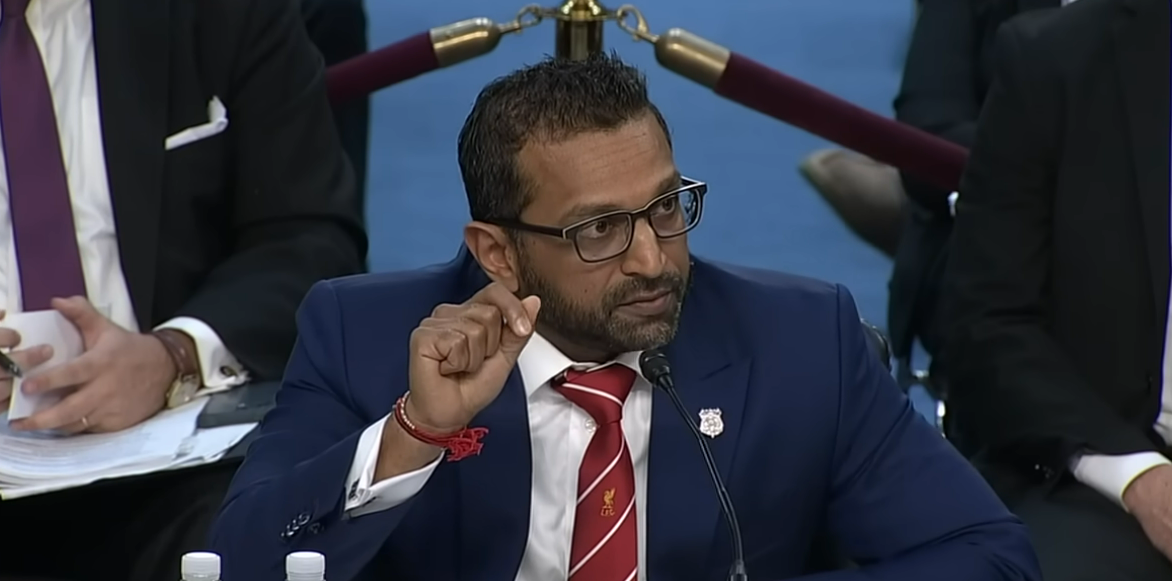
Two lawmakers, Ro Khanna and Thomas Massie, were given what many thought had already been made public in a windowless, quiet DOJ office. However, as they turned page after page, the story’s loudest element became the lack of names. They were able to track down six people whose identities had been unjustly redacted in two hours. It was a nerve-wracking swift discovery.
The Department of Justice uploaded about 3.5 million pages of records related to the late financier Jeffrey Epstein by February 2026. Emails, flight records, surveillance stills, and judicial correspondence were all part of this enormous archive. These were purportedly unfiltered. As it turned out, they had been severely filtered, maybe too much so that transparency lost its meaning.
Les Wexner, a wealthy and Epstein’s already well-known associate, was one of the identities that had been redacted. Among them were the late Jean-Luc Brunel, a modeling agent who was previously the subject of a French probe, and Lesley Groff, Epstein’s former executive assistant. The most notable arrivals, however, were not from the well-known roster. An influential Emirati executive, Sultan Ahmed bin Sulayem, made over 4,700 appearances in the documents. Even experienced analysts found it hard to disregard the questions highlighted by that frequency, particularly when compared to other people.
One email in particular from 2009 attracted notice: “I loved the torture video,” Epstein wrote to bin Sulayem. Legislators and activists for survivors both criticized the wording, which was scary and casual, but the context is still unclear. Prior to being made public by Khanna’s team, the email had been redacted. The DOJ reminded the public that name inclusion does not imply criminality, despite the somber tone. Nevertheless, the impact was not lessened by that message.
| Item | Detail |
|---|---|
| Files Released | Over 3.5 million pages by the DOJ |
| Date of Major Dump | January 30, 2026 |
| Prominent Names Mentioned | Donald Trump, Bill Clinton, Elon Musk, Bill Gates, Prince Andrew |
| Named Co-Conspirators | Les Wexner, Lesley Groff, Jean-Luc Brunel |
| Newly Identified by Congress | Sultan bin Sulayem, Nicola Caputo, Salvatore Nuara, others |
| Context | Files include flight logs, emails, photos, videos, public submissions |
| DOJ Clarification | Inclusion ≠ wrongdoing; some material may be unverified |
| Law Enabling Release | Epstein Files Transparency Act (passed November 2025) |
| Key Congressional Reviewers | Reps. Ro Khanna (D) and Thomas Massie (R) |
| Controversy | Redactions of both victims and elite figures; DOJ under scrutiny |
| Credible Source Link | DOJ Epstein Files Repository |
Although the Epstein Files Transparency Act, which facilitated the release, forbids redactions due to reputational concerns, several entries seemed to do precisely that. Redaction is only allowed by law in certain, well-defined situations, such as preserving victim identities, preserving national security, or preventing the public release of photos of child abuse. Anything outside of those parameters is against the intent of the statute, particularly modifications made to protect prominent people.
Surprisingly, not all of the victims’ information was as rigorously protected. Faces were clearly visible in photos that ought to have been blurred. Email addresses could still be read. Under crossed-out lines, several names that were theoretically hidden were still readable. Many of her clients were “devastated” by the releases, according to attorney Gloria Allred, who represents many Epstein survivors. Their years-long protection of anonymity was taken away in a matter of minutes.


The DOJ insists it is operating in good faith in spite of those obvious mistakes. Given the difficulty of scanning millions of files, Deputy Attorney General Todd Blanche referred to the redactions as “technical or human error.” He promised the public that records would be reprocessed in 36 hours and that the protocols were currently being reexamined. It remains to be seen if the suppressed identities of elite figures will be restored as part of that reprocessing.
The materials depict a nuanced image of closeness rather than necessarily criminal activity. For example, Elon Musk is shown humorously inquiring when the “wildest party” will be in an email to Epstein regarding possible visits to his private island. It was an unsettlingly informal tone. Later on, Musk made it clear that he never went and that any conversation should not be taken as approval. However, the language, which is informal and lively, has impact, particularly when it comes to public scrutiny.
In emails addressed to “HRH Duke of York KG,” Prince Andrew is also mentioned, organizing private dinners at Buckingham Palace. He is shown on his hands and knees over a young woman in one picture. His ex-wife, Sarah Ferguson, refers to Epstein as a “legend” in emails, implying that she treated him like a brother. These were friendly correspondents rather than distant acquaintances.
I stopped once to read a 2009 message from Sarah expressing gratitude to Epstein for being “the brother I’ve always wished for.” Given the situation, the kindness of her tone seemed especially startling.
A pattern of social entrenchment is revealed by these details, which are dispersed across years and continents. Epstein was more than just a banker. Politically, socially, and financially, he was ingrained. Some of the more incriminating conversations seem to have taken place long after Epstein was first found guilty in 2008, such as those with Lord Mandelson or Miroslav Lajčák of Slovakia. They imply that his Rolodex continued to function even after he was declared legally radioactive.
When Epstein passed away in prison in 2019, that momentum continued. Even though his death was determined to be a suicide, speculation persisted. Rather, it gave those who suspected deeper levels of complicity more confidence. The notion that so many influential people kept in touch—some openly, others through private emails—has only strengthened calls for complete responsibility.
The information that has been made public thus far is disconcerting and lacking. There are still almost two million unpublished pages. Although DOJ officials maintain that a large portion of the remaining content is either irrelevant or could violate redaction requirements, Congress is pushing for full disclosure. There is currently a lot of discussion about whether that is politically advantageous or legally sound.
However, the tone of this story has changed. Epstein as a person is given less attention than what his records show about privilege, power, and selective exposure. Justice is no longer the only battle for victims and advocates. It has to do with visibility and whether or not it is possible to impose transparency when the costs are not criminal but rather reputational.
The data, which are still leaking out, provide more than just information; they also serve as a test of how far institutions will go to safeguard the many when a small number of people have disproportionate power.