

 3:47 pm - March 30, 2026
$4.05 billion has been reverberating through Capitol offices in recent days like an unanswered call. Investigative journalists now claim that the Trump family has amassed that much via business endeavors started or grown during his second administration. Not only is the number startling, but it is also architecturally concerning.
Trump-affiliated businesses have expanded their operations incredibly quickly by utilizing digital financing and strategic worldwide alignments. A large portion of this wealth has been focused on cryptocurrency initiatives, such as World Liberty Financial, which four days before Trump returned to office was able to obtain a $500 million investment from UAE monarchy. Although the coincidence is legally lawful, it has come under intense ethical criticism.
The company quickly gained traction through strategic alliances and the allure of political proximity. The introduction of a stablecoin—USD1—backed by Middle Eastern assets and dispersed via Binance was one really creative element of the business plan. Right before Trump’s government authorized the shipment of critical chips to the United Arab Emirates, that coin rose to prominence as the focal point of international financial movements.
Many observers found the timing to be remarkably comparable to influence transactions observed in other corruption situations. Even if there is no concrete proof that policy is being sold, the public’s trust in institutional independence has been severely eroded by the alignment of agreements, names, and government rulings.
| Detail | Description |
|---|---|
| Alleged Profit Amount | $4.05 billion (from crypto, real estate licensing, foreign investments) |
| Primary Source of Wealth Gains | Cryptocurrency (World Liberty Financial, American Bitcoin), foreign deals |
| UAE Investment Highlight | $500M investment by Emirati royal in Trump-linked crypto firm |
| Core Legal Concern | Potential violations of Emoluments Clause and conflict-of-interest laws |
| Investigating Body | House Judiciary Committee (Democratic members), ethics watchdogs |
| Trump Family Involvement | Sons Eric and Donald Jr. manage businesses; President claims no role |
| Credible Reference Link | The New Yorker – David D. Kirkpatrick |
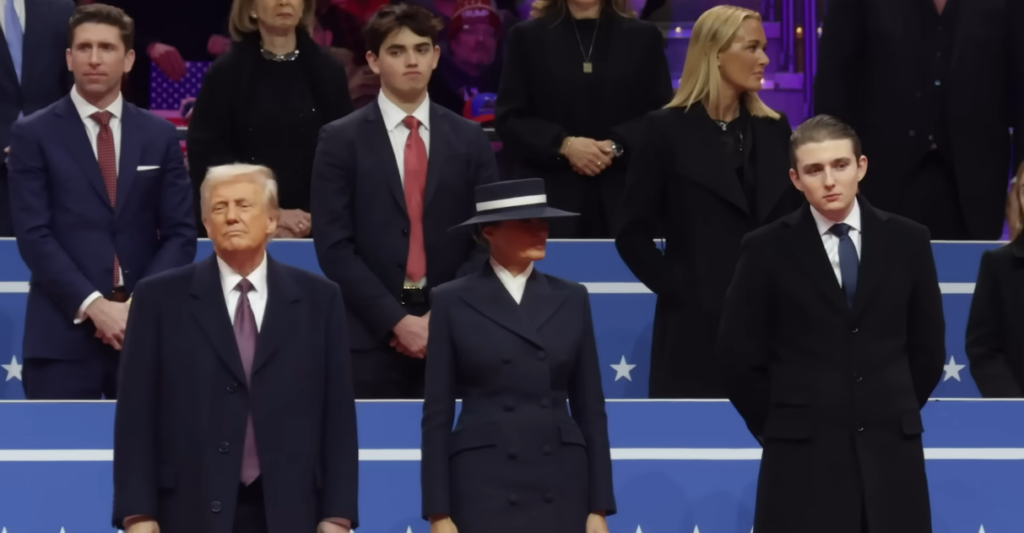
Donald Jr. and Eric Trump, Trump’s sons, are listed as co-founders of several businesses. Despite his childhood, Barron Trump is listed as an equity holder on filings. The president himself holds the ambiguous title of “co-founder emeritus,” which, while symbolically reinforcing brand presence, technically separates him from operations.
The setup, according to a former ethics advisor I spoke with, is like a relay race in which the baton is secretly passed between family hands, always forward, always protected, and never dropped.


In just a few months, the value of penny stocks surged to the hundreds of millions when American Bitcoin, another flagship commodity, was introduced through a reverse merger. The sole input? Trump’s name. Despite having no recorded involvement in technology or mining logistics, Eric Trump’s stake alone is now close to $200 million.
Trump-affiliated companies were busy obtaining offshore permits and tokenizing real estate rights during the pandemic, when families were facing tighter budgets and inflation was on the rise. Some of the developments now serve more as investment vehicles than as travel destinations, especially in Eastern Europe and the Maldives.
These businesses were able to accomplish extremely effective financial transfers by combining blockchain technology with sovereign wealth relationships. But it’s precisely its efficacy that causes moral and legal discomfort. The optics drastically change when the president receives conclusions about foreign investment approvals or AI chip exports.
The risk-reward profile of Trump-branded companies seems abnormally skewed to early-stage investors. Overnight, a biotech company switched to cryptocurrency, gave Trump’s kids stock, and saw its worth soar. It’s manufactured magnetism, not business genius.
Trump-affiliated wallets have received over $130 million in interest income, primarily from Binance-based staking incentives, according to noticeably better revenue reporting. These flows are real. They are auditable, timestamped, and ledger validated.
Nevertheless, regulatory inertia persists in spite of the paper trail. Though formal subpoenas are unlikely without bipartisan support, House Democrats have started constructing a case around possible Emoluments Clause infractions. Like weather forecasters observing a storm build over open ocean, ethics watchdogs record every new filing in the interim.
When it comes to contemporary political funding, Trump’s endeavors are incredibly successful at creating riches with little investment. The tactic is both unsettlingly straightforward and legally intricate: lend your name, leave your day-to-day responsibilities, and let foreign funds handle the rest.
When I think about Trump personally, I can’t help but think of that silent moment in his first term when he declared, “I could make a fortune off this office if I wanted to—but I won’t.” He altered his mind, according to the current math.
Proponents claim that the assaults are partisan and that all presidents sign agreements, write books, and construct libraries. Here, however, the scale is different. The red flags are procedural, not political, when hundreds of millions of dollars come in from foreign entities right before national policy changes to their advantage.
At least five new financial vehicles have surfaced since the start of Trump’s second term, and each one lists family members in executive or advisory positions. These businesses deal with everything from online pharmacy to nuclear energy, from artificial intelligence to aerospace. The reach is now institutional rather than speculative.
Trump properties have seen a stream of gains, frequently via opaque holding entities, according to exceptionally transparent financial reports. Once a political virtue, transparency is now perceived as a barrier that must be overcome.
Through their partnership with sovereign funds and their positioning as “strategic influencers,” the Trump family has created a particularly lucrative soft governance model. They are making money off of incumbency in addition to winning elections.
The details are unclear to certain Americans. However, this is a constitutional stress test that is hidden in plain sight for legal scholars. Its fundamental issue is one of limits rather than legality.