

 8:12 am - April 1, 2026
Fitness applications used to be primarily colorful timers. When you lost motivation, they stopped talking and instead encouraged you to stretch and count repetitions with a robotic cheer. This relationship is changing, subtly but significantly. Artificial intelligence is changing our perspective on effort, recovery, and consistency—it’s not just joining the exercise.
The journey of Ella Plevin embodies that development. Like many of us, she began with the hopes of making progress. Rather than spending money on a trainer, she learned how to make one herself using free tools. Hevy tracked her lifting data, Cronometer recorded her consumption, and ChatGPT offered justification. Intentional service layering rather than a single subscription. It was extraordinarily successful in its own right.
Modern AI coaches are becoming more and more adept at assessing readiness, tone, and movement by combining computer vision and natural language processing. Some give straightforward, surprisingly nonjudgmental instructions while you move, such as “keep your knees behind your toes” or “lower your hips.” Others change their plans in response to your wearable’s whisper rather than your vocal grievance, depending on your level of stress or sleep.
| Feature | Description |
|---|---|
| Technology | Machine learning, computer vision, NLP, emotional analytics |
| Capabilities | Personalized workouts, form correction, real-time feedback, motivation cues |
| Devices | Wearables, smartphones, smart mirrors, fitness equipment with sensors |
| Key Benefits | 24/7 accessibility, cost savings, adaptive plans, data-driven insights |
| Notable Challenges | Privacy concerns, lack of empathy, motion detection errors, data bias |
| Projected Evolution by 2028 | Full integration with nutrition, recovery, mental health, and daily life |
| Credible Source | Business Insider |
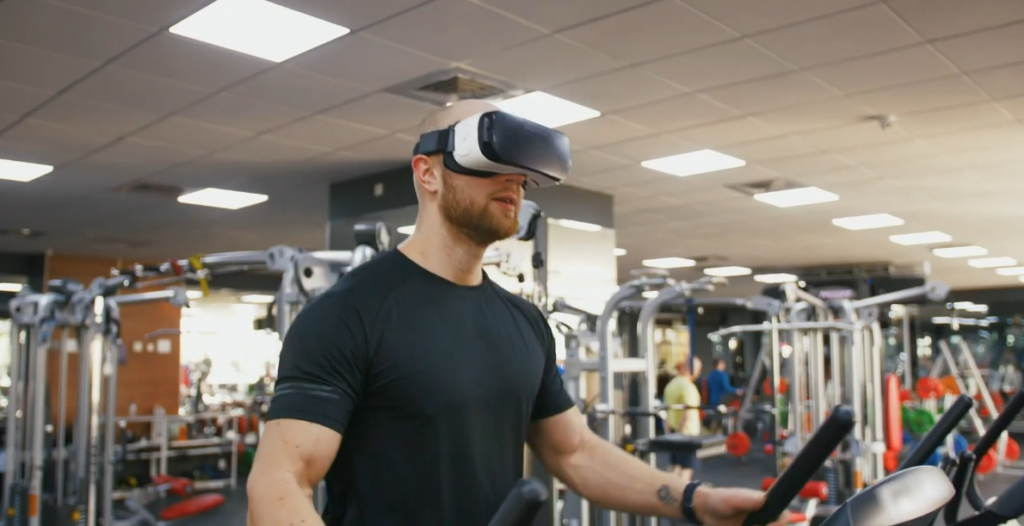
I once stood in the corner of a small gym and watched a man in his fifties go through a series of mobility drills. No trainer lingered. There was no mirror to guide. Every few minutes he would nod as though someone had just offered a correction, and he wore earbuds. His AI coach, I understood, was subtly influencing every movement with unseen intelligence.
Something about the way these systems combine data is especially novel. They interpret, not merely track. If your heart rate increases too rapidly, they may reduce the intensity. They modify the plan rather than pressuring you to do lunges if you’re missing them frequently. Design, not emotion, is what motivates this. And despite its subtlety, that differentiation makes these platforms extremely effective.
The lack of human connection is frequently cited by critics. Indeed, AI will not give you a fist bump following a PR deadlift or see the gleam in your eyes when you finally master the crow posture. However, it doesn’t forget your plan, reschedule, or ghost you. It is a surprisingly reasonable trade-off for many.


Plevin made a cognitive transformation in addition to a technical one. Her confidence in her own reasoning increased when she saw that her AI tools were intended to help, not to command. She asked questions, changed exercises, and even started instructing others. Although personal trainers talk about it, they hardly ever maintain that quiet, earned, and behaviorally sticky empowerment for their clients.
Emerging algorithms are sensitive to emotions. Depending on your performance, some people change the tone they use. Are you having trouble? It gives you encouragement. Are you coasting? They subtly test you. Users have a sense of being noticed, led, and strangely supported despite the emotional nuance being imagined. That is also progress.
These platforms’ exponential learning curves and strategic alliances are causing them to grow rapidly. By 2028, fitness AI might develop into a complete ecosystem that can track micronutrients, identify fatigue, recommend recovery procedures, and encourage mental resets. Your coach will blend in with your lifestyle in a subtle way rather than just existing on your computer.
At one point during lockdown, my smartwatch suggested a two-minute breathing workout with a soft buzz. I didn’t pay attention to it. It buzzed again during a heated meeting. I said yes. My concentration was totally changed in those two minutes. The prompt, like a buddy who knows when to say something and when to keep quiet, was hauntingly appropriate. That’s when I realized that this technology isn’t far away. It’s perceptive.
It has flaws. Motion tracking remains bewildered by lighting. Certain platforms have a misunderstanding of specific body types. Furthermore, despite the sophistication of the algorithms, there is a thin line separating algorithmic condescension from encouragement. However, efforts are underway to improve the majority of these restrictions.
AI trainers are significantly increasing access for rural regions, low-income households, and busy parents—groups that have long been overlooked by the wellness business. You don’t need a sophisticated studio or $200 sessions. A device, a signal, and a tiny bit of intention are all you need.
For some people, human contact is always preferable. With good reason. However, many are already discovering that when knowledge, accountability, and consistency are combined into a digital thread, they may become incredibly inspiring. Particularly since that thread never forgets, never sleeps, and never costs a cancellation fee.
Fitness is fundamentally a matter of habit. AI is more aware of that than most people are. It avoids being overly critical or praising. It just prods, adjusts, and keeps going. Surprisingly persistent, quietly effective.
Maybe that’s the future we’re warming toward. One in which your coach listens without offering you a glance. One where your progress, not someone else’s body, is used to gauge your effort. The one where you have to launch an app to show up instead of battling traffic.
Through the utilization of behavioral psychology, biometric data, and predictive analytics, these tools are not only revolutionizing training but also influencing our perception of our bodies’ capabilities. And they’re doing it while we stretch, fall, wake up, and repeat.
Not a cheer. No motivational talk. Just a gentle reminder: “You’re capable of more.”
And you do remarkably often.