

 8:13 am - April 1, 2026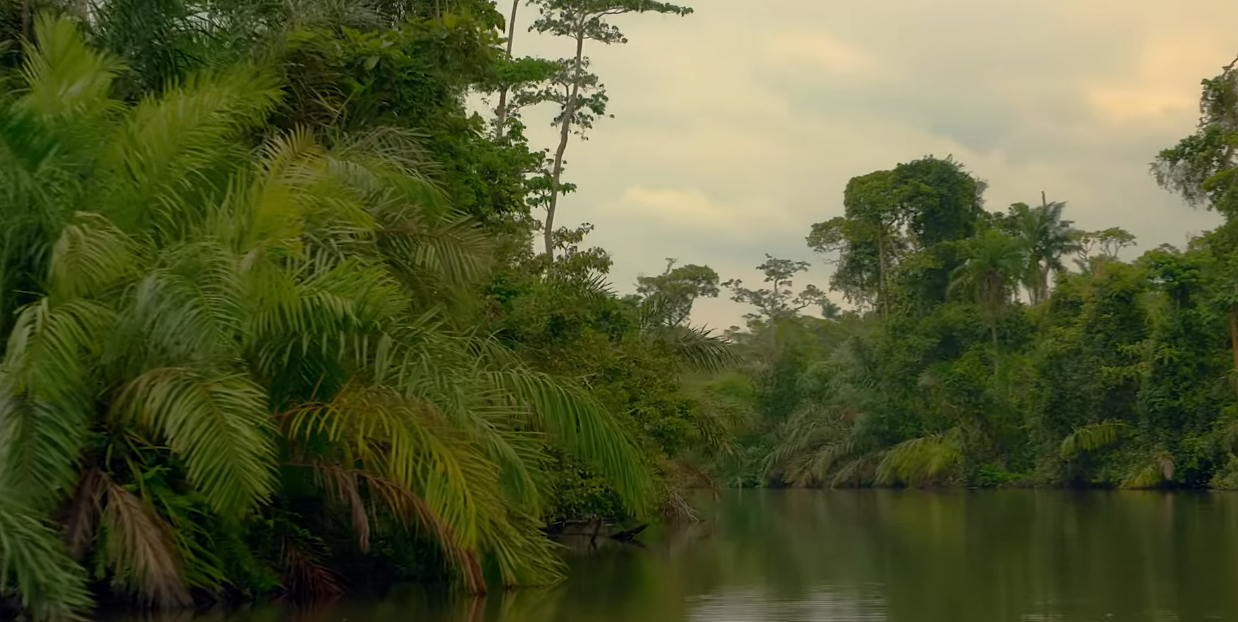
The Lesula monkey does not roar or flamboyantly jump between branches. Rather, it observes. Its wide-eyed, guarded gaze is eerily reminiscent of a toddler peering inquisitively through a curtain. The biology community was silent when its image initially surfaced in scientific circles. It served as a sobering reminder to many that there are still sentient eyes in trees that science has not yet identified.
742 new species were discovered by researchers during a ten-year journey through the thick terrain of the Congo Basin. Every new finding, from dragonflies and electric fish to amphibians and orchids, was like a chapter from a long-lost book. The procedure was painstaking. Indigenous names’ phonetic spellings were recorded in field journals. Sterile tools were used to collect DNA samples in the mud. Wet journals weighed down the leaves of plants, pressing them flat. What they discovered, however, was remarkably alive.
Sclerophrys channingi, the mimic toad, may be the most inventive of them all. Instead of running away, it flattens its body and curls in place with a dramatic flare, imitating the dangerous Gaboon viper. This conduct is a form of strategic deception that has been ingrained over millennia and goes beyond simple survival. It’s a bluff that predators find too dangerous to challenge. It’s a biological feat that deserves a footnote in evolutionary textbooks, according to academics.
The Central African slender-snouted crocodile was also discovered by scientists in the dark riverbanks of the basin. It was wrongly grouped with its West African cousin for many years. Scientists discovered the species diverged millions of years ago, separated by eons of silent adaption and volcanic ridges, only by DNA analysis. It’s a patient species that reminds us that slow queries frequently lead to lengthy answers.
| Detail | Information |
|---|---|
| Region | Congo Basin (6 countries incl. DRC, Gabon) |
| Timeframe | 2013–2023 (10-year study) |
| Total Species Discovered | 742 (430 plants, 140 invertebrates, 96 fish, 22 amphibians, 42 reptiles, 12 birds/mammals) |
| Key Discoveries | Lesula monkey, slender-snouted crocodile, Umma gumma dragonfly |
| Highlight Plants | New coffee species (Coffea rizetiana), orchids (Angraecum biteaui) |
| Major Locations | Gabon (262 species), DRC (259 species) |
| Ecological Role | Largest tropical peatland & carbon sink, surpassing Amazon |
| Conservation Concerns | Threats from logging, mining, poaching |
| Indigenous Role | Crucial in discovery & conservation knowledge |
| Source | WWF Report – New Life in the Congo Basin |
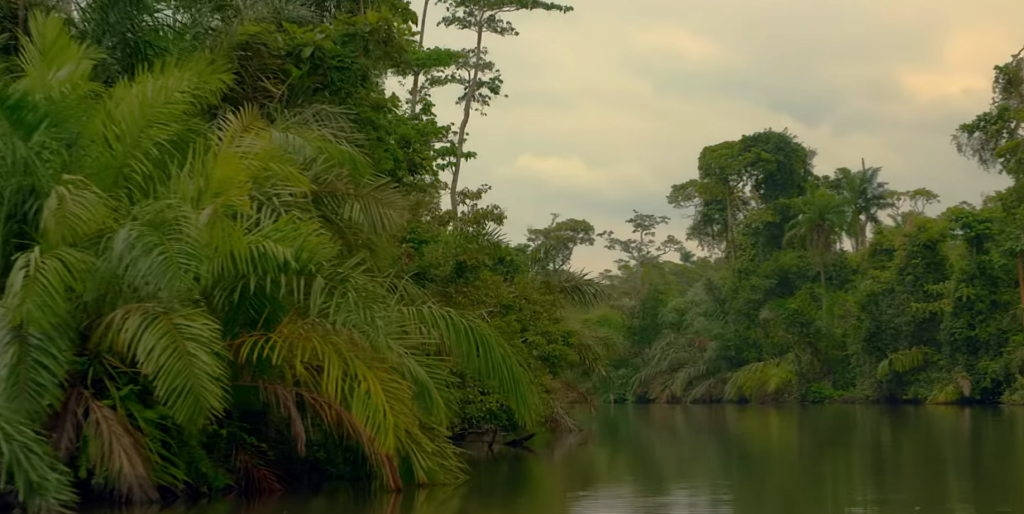
Researchers found a terrain that is extremely rich in biodiversity by concentrating their efforts across six countries, including Gabon and the Democratic Republic of the Congo. 262 new species were cataloged in Gabon alone. This was a peaceful partnership between communities that already knew the forest like family and scientists, not a competition for names. Only because local trackers noticed minute variations—a frog’s voice, a petal’s shape, or the way one snake moved more like water than a branch—did some discoveries come to light.
According to one biologist, a grandmother in a small forest village used a new orchid to treat fever, which led to its discovery. Pharmacology is still unaware of the medicinal secrets contained in its lovely white blossoms, which are now known as Angraecum biteaui. And here’s where humility and science meet. A large portion of what was “discovered” was already known, but not by the textbook authors.


The Congo Basin’s ecological importance and size are what make it so effective as a refuge for species. It is literally stabilizing our climate with its huge tropical peatlands, which absorb carbon more efficiently than any other place. Nevertheless, logging roads have infiltrated like veins, dividing habitats and opening up once protected areas to exploitation in spite of this crucial role. Communities have been uprooted and landscapes changed by mining operations, some of which are legal and many of which are not. A handful of success tales do, however, cut through the clutter.
Mammal populations in Forest Stewardship Council-certified forests in Gabon and the Republic of Congo have significantly increased. Ecosystems start to relax when sustainability and governance are in harmony. For communities whose futures depend on that balance as well as for biodiversity, these certified places show how ethical practice can be extremely effective. In a study full of cautionary tales, it is a promising addendum.
Reading about the flowering plant Sirdavidia solannona, which bears Sir David Attenborough’s name, moved me surprisingly. The bloom itself is modest, little larger than a quarter, and it is pink and yellow. However, despite decades of botanical research, its discovery in a secluded area of the forest subtly illustrates how much we still don’t know.
The WWF and its allies relied significantly on Indigenous knowledge through strategic partnerships, giving local guides and elders credit for spotting distinctive growth, sound, and behavior patterns. This collaboration was necessary, not only symbolic. For a long time, the communities that lived inside the forest and around its boundaries had used their memories rather than tools to map it. Acknowledging this body of knowledge has greatly improved conservation tactics and may change our perspective on large-scale forest protection.
The largest obstacle to early-stage conservation initiatives is still visibility, both of the species and the difficulties they encounter. The Congo Basin is not a popular destination for tourists. It’s not a sensation in the media. However, it possesses more biological wealth and natural wisdom than many areas put together. Its protection is now a highly strategic act of climate resilience rather than merely an environmental decision.
Discussions over funding have slightly changed since the WWF published its results. Decision-makers are starting to realize that maintaining biodiversity involves more than just protecting species; it also entails maintaining the complex systems that support human life.
The area has a genuine chance to prosper by combining contemporary ecological methods with community-led governance. These 742 species are ambassadors of a biosphere still teeming with undiscovered life, not only biological entries.