

 8:59 am - March 23, 2026
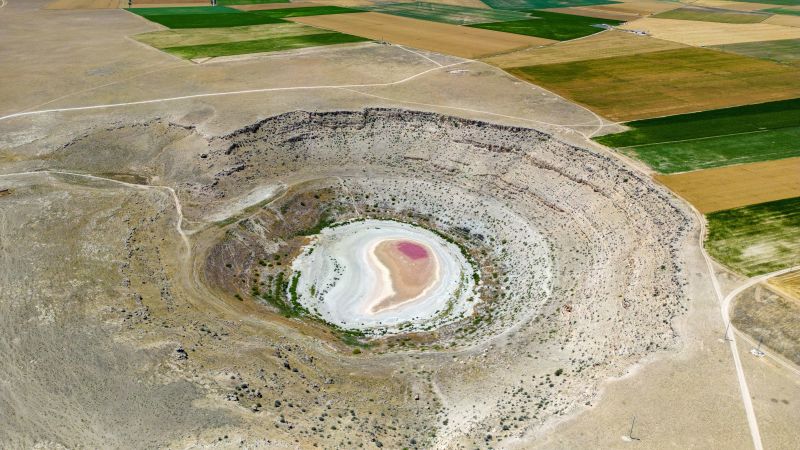
The world has entered an era of global water bankruptcy with irreversible consequences, according to a new United Nations report published Tuesday. The report, authored by the United Nations University and based on research in the journal Water Resources, warns that traditional terms like “water crisis” no longer adequately describe the severity of the planet’s water problems.
Regions across the globe face acute water challenges that highlight this deteriorating situation. Kabul may become the first modern city to run out of water, while Mexico City is sinking approximately 20 inches annually as underground aquifers are depleted. In the US Southwest, states continue to dispute how to share the dwindling resources of the drought-stricken Colorado River.
Understanding Global Water Bankruptcy
According to Kaveh Madani, director of the UN University’s Institute for Water, Environment and Health and the report’s author, the concept of water bankruptcy differs fundamentally from a temporary crisis. “If you keep calling this situation a crisis, you’re implying that it’s temporary,” Madani said. Instead, water bankruptcy requires adaptation to new, more restrictive conditions rather than simply mitigating a short-term shock.
The water bankruptcy framework operates on a simple principle: nature provides income through rain and snow, but humanity is spending more than it receives. Water is being extracted from rivers, lakes, wetlands and underground aquifers at rates far exceeding natural replenishment. Additionally, climate change-fueled heat and drought are reducing available water supplies even further.
Alarming Statistics Reveal Water Scarcity Scale
The report presents stark evidence of water system collapse worldwide. More than 50% of the planet’s large lakes have lost water since 1990, while 70% of major aquifers are experiencing long-term decline. An area of wetlands nearly the size of the European Union has disappeared over the past five decades, and glaciers have shrunk 30% since 1970.
The consequences include shrinking rivers and lakes, dried-up wetlands, declining aquifers, land subsidence and sinkholes, advancing desertification, diminishing snowpack and melting glaciers. Even where water systems face less strain, pollution is reducing the amount of water suitable for drinking.


However, the human toll is perhaps most concerning. Nearly 4 billion people face water scarcity for at least one month every year, the report indicates. Meanwhile, instead of adjusting consumption patterns, water continues to be taken for granted and “credit lines keep increasing,” according to Madani.
Regional Hotspots Face Severe Water Stress
Certain regions are experiencing particularly severe impacts from water bankruptcy. The Middle East and North Africa face high water stress combined with extreme climate vulnerability. Parts of South Asia are witnessing chronic water declines due to groundwater-dependent agriculture and rapidly expanding urban populations.
The US Southwest represents another critical hotspot, the report notes. Madani pointed to the Colorado River, where water sharing agreements are based on environmental conditions that no longer exist. The river’s drought-driven shrinkage represents not a temporary crisis but “a permanent new condition,” he told CNN.
In some cities, development continues despite limited water supplies. Madani referenced Los Angeles, Las Vegas and Tehran as examples where urban expansion has been encouraged without adequate water resources. “Everything looks right until it’s not,” he cautioned, “and then it’s too late.”
From Emergency Response to Long-Term Strategy
Recognizing water bankruptcy can help nations transition from short-term emergency thinking to long-term strategic planning, Madani said. The report calls for transforming agriculture—the largest global water consumer—through crop shifts and efficient irrigation. Other recommendations include enhanced water monitoring using artificial intelligence and remote sensing, pollution reduction, and increased protection for wetlands and groundwater.
Richard Allan, a climate science professor at the University of Reading not involved in the research, praised the report’s focus on “long-term recovery as opposed to firefighting water crises.” He emphasized that limiting climate change will be vital to ensuring sufficient water for people and ecosystems.
In contrast, Jonathan Paul, associate professor in geoscience at Royal Holloway University, said the report “lays bare, in unambiguous terms, humankind’s mistreatment of water.” Nevertheless, he suggested the global water bankruptcy concept may be “overstated,” even while acknowledging many areas face acute water stress.
The report’s authors suggest water could serve as a unifying issue capable of transcending political divisions in an increasingly fragmented world. The extent to which governments implement the recommended long-term strategies and adjust water consumption patterns remains uncertain, though Madani expressed hope that more countries are recognizing water’s critical value.