

 3:23 am - March 23, 2026
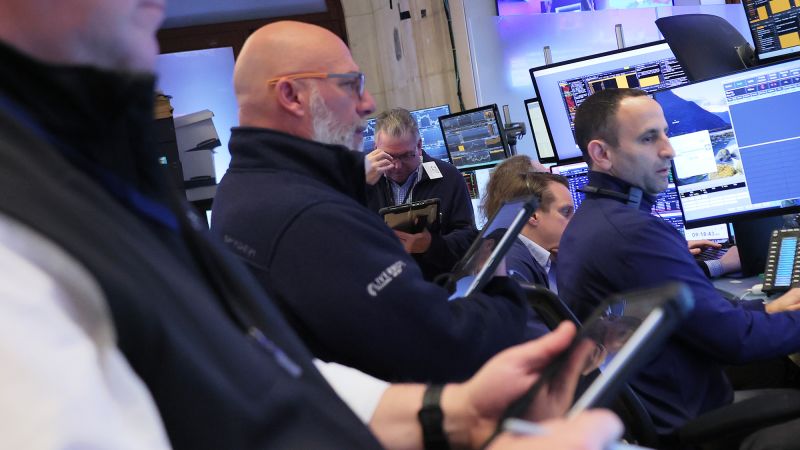
Financial markets experienced extreme turbulence this week as geopolitical uncertainty and shifting policy positions from the White House drove sharp swings in market volatility across stocks, bonds, and commodities. The S&P 500 posted both its worst and best single-day performances in months, while gold surged to record highs and the US dollar slumped to its weakest level in nearly a year.
President Donald Trump’s reversal on proposed tariffs targeting European nations sent investors on a rollercoaster ride. According to market analysts, the week highlighted growing concerns about policy unpredictability and its impact on global financial stability.
Market Volatility Intensifies Following Tariff Flip-Flop
Trump announced on Sunday that he would impose a 10% tariff on imports from eight European countries beginning February 1, citing their opposition to his plans regarding Greenland. When US markets opened Tuesday after the Martin Luther King Jr. Day holiday, the Dow Jones Industrial Average plummeted 871 points, or 1.76%, according to trading data.
However, sentiment reversed dramatically by Wednesday. Trump indicated he opposed using force to acquire Greenland and announced a productive meeting with NATO Secretary General Mark Rutte. The proposed tariffs were subsequently canceled, triggering a sharp rally that saw the Dow climb 895 points over two days.
Gold and Silver Surge to Historic Levels
Meanwhile, precious metals posted extraordinary gains as investors sought safe-haven assets amid the uncertainty. Gold soared approximately 8.4% this week, surpassing $4,700, $4,800, and $4,900 per troy ounce for the first time ever, marking its strongest weekly performance since 2020.
Additionally, silver climbed 16% during the week and exceeded $100 per troy ounce for the first time in history. The precious metal is now up almost 46% this year after gaining 141% in 2025, its best annual performance since 1979.


Dollar Weakness Reflects Confidence Concerns
The US dollar index declined roughly 1.9% this week, erasing all gains accumulated so far this year. The currency now stands nearly 10% lower over the past twelve months, reflecting what some analysts interpret as diminishing confidence in US policy stability.
Francesco Pesole, an FX strategist at ING, said in an email that the coordinated selloff in US equities, bonds, and the dollar may have prompted global money managers to increase their protective positions. A weaker dollar can support higher gold prices by making bullion more affordable for international investors.
Japan Bond Market Turbulence Adds to Global Market Volatility
In contrast to the tariff-driven swings, turbulence in Japan’s bond market earlier this week contributed additional pressure to US financial markets. Yields on Japanese government bonds spiked dramatically Tuesday following Prime Minister Sanae Takaichi’s proposal to temporarily cut food taxes and her decision to call a snap election.
Investors dumped Japanese bonds amid concerns about how the government would finance spending plans alongside new tax cuts, given the country’s substantial existing debt load. Those concerns spilled into US bond markets, pushing yields higher and adding pressure to stock prices before stabilizing Wednesday.
Central Banks Continue Gold Accumulation
Central banks worldwide, including China, continue building their gold reserves, reducing reliance on US assets. This institutional demand, combined with momentum from retail investors, has become a significant driver behind gold’s meteoric rise, according to market observers.
Matt Maley, chief market strategist at Miller Tabak + Co, noted in a research report that the president fixed a problem of his own making and markets responded with gains. However, Larry Adam, CIO at Raymond James, suggested that volatility will likely remain elevated due to high stock valuations, investor overoptimism, and upcoming US midterm elections.
Broader Market Participation Emerges
Despite the week’s turbulence, some positive trends emerged for US equities. The Dow is outpacing the tech-heavy Nasdaq so far this year, while the Russell 2000 index of smaller companies has surged 7.5% year-to-date, indicating a broadening rally beyond large-cap technology stocks.
Steve Sosnick, chief strategist at Interactive Brokers, told CNN that while market swings create opportunities for traders, policy reversals may not serve markets’ long-term interests. The S&P 500 ultimately finished the week down just 0.35% despite the dramatic intraday movements.
Investor attention now shifts to fourth-quarter earnings reports from major companies including Meta, Microsoft, and Tesla next week. The Federal Reserve will hold its first policy meeting of the year on Wednesday, though further policy uncertainty from the White House could continue driving elevated market volatility in the weeks ahead.


